

.webp)

.svg)


Your Daikin Compressor When Tukwila Hits 95 Degrees
When a July Pacific Northwest Heatwave Pushes Your System to the Limit
When ambient outdoor temperatures jump from a mild 75 degrees to a blistering peak, the cooling load on a standard home can increase by more than 50 percent. At the Daikin Seattle Experience Center, our team fields countless questions from homeowners wondering exactly what happens to your Daikin compressor when Tukwila hits 95 degrees. During a severe July Pacific Northwest heatwave, homes that are heavily insulated to retain winter warmth suddenly act like thermal ovens. As the indoor temperature climbs, your outdoor unit must work significantly harder to reject that heat into an already sweltering outdoor environment.
Understanding your Daikin heat pump is the first step toward optimizing your whole house HVAC solutions for extreme weather. In our experience, many homeowners become understandably concerned when they hear their outdoor units running continuously or sounding noticeably different than they do on a mild spring day. The immediate fear is that the system is struggling, overheating, or on the verge of a catastrophic breakdown.
However, understanding the mechanical reality of these advanced systems prevents unnecessary panic and emergency service calls. Modern variable-speed equipment is specifically engineered to adapt to these sudden temperature extremes rather than simply shutting down or burning out. The continuous operation we often point out to our customers is by design, utilizing sophisticated internal logic to manage the immense thermal load while protecting the core mechanical components.
The Thermal Mass of Pacific Northwest Homes
To understand why your compressor works so hard, you must look at the home itself. Houses in this region feature robust insulation, double-pane windows, and tight building envelopes designed to keep freezing winter air out. During a mid-summer heat spike, these same features trap solar gain. Once the interior walls, floors, and furniture absorb heat, they create a massive thermal mass. Your outdoor unit is not just cooling the air inside your living room; it is actively fighting to pull heat out of the physical structure of your house while pushing against the oppressive outdoor heat.
How the Tukwila Valley Microclimate Amplifies Compressor Stress
In our years of optimizing cooling systems across the Green River Valley, we've seen firsthand how the specific geography of your neighborhood plays a massive role in how your cooling equipment performs. Tukwila's position within the valley creates a distinct topography that actively traps heat. While coastal areas might benefit from a brisk ocean breeze as the sun goes down, this valley microclimate prevents the rapid evening cool-downs typical of the broader Puget Sound region. This means your outdoor unit is forced to work against 90-plus degree ambient temperatures well into the evening hours.
The physics of high ambient heat place a direct physical strain on your system. As outside temperatures rise to a 95°F ambient outdoor temperature, the refrigerant head pressure inside your condenser increases significantly. Head pressure is essentially the resistance the compressor must push against to move refrigerant through the outdoor coil and successfully reject heat into the outside air. When the air outside is already hot, the system must compress the refrigerant to an even higher temperature to ensure heat transfer occurs.
The Ripple Effect of High Head Pressure
This increased pressure does not happen in a vacuum. It requires the compressor to draw more electrical amperage to maintain the necessary mechanical force. The motor must work harder, generating its own internal heat in the process. Because the prolonged evening heat in the valley means the system cannot rely on cooler night air to naturally recover, this sustained mechanical effort can last for hours.
• Evening Temperature Drop — Standard Coastal Cooling: Rapid cooling after 6:00 PM — Tukwila Valley Microclimate: Heat trapped, remains 85°F+ late into evening
• Compressor Recovery Time — Standard Coastal Cooling: Frequent off-cycles overnight — Tukwila Valley Microclimate: Sustained operation to overcome thermal mass
• Refrigerant Head Pressure — Standard Coastal Cooling: Drops quickly as ambient air cools — Tukwila Valley Microclimate: Remains elevated, requiring higher amperage
• System Wear — Standard Coastal Cooling: Standard baseline wear — Tukwila Valley Microclimate: Increased continuous load during heatwaves
This sustained operation is exactly why understanding the specific engineering of your equipment is so important. A system designed for brief bursts of cooling will struggle here, whereas a system designed for continuous modulation will thrive, even when the valley refuses to cool down.
Why Daikin Inverter-Driven Outdoor Units Run Differently in Extreme Heat
To grasp why your system behaves the way it does, we always encourage homeowners to contrast traditional single-stage compressors with modern variable-speed inverter technology. A standard single-stage compressor only has one speed: 100 percent capacity. When the thermostat calls for cooling, it blasts on with a massive surge of electricity, runs until the house cools down, and then shuts off completely. During a severe heatwave, a single-stage unit will short-cycle, slamming on and off repeatedly as it loses the battle against the creeping indoor temperature.
Daikin inverter-driven outdoor units utilize a fundamentally different mechanical approach. Inverters modulate capacity, meaning they can adjust their operating speed anywhere from roughly 30 percent up to 100 percent, depending on the exact cooling demand. During extreme heat, they are designed to run continuously at higher speeds to maintain indoor setpoints without ever shutting off. This continuous ramping avoids the massive electrical draw and harsh mechanical wear of hard starts under high pressure.
The Value of Continuous Modulation
When local homeowners visit the Daikin Seattle Experience Center to touch, hear, and visualize these systems in real settings, our team walks them through how the equipment actually functions. Seeing the mechanics firsthand makes it clear: continuous operation during a heatwave is a feature of efficiency and comfort, not a sign that the unit is struggling or failing.
By running constantly, the inverter compressor continuously removes humidity while matching the exact thermal load of the house. It is similar to driving a car on the highway at a steady 60 miles per hour, rather than flooring the gas pedal, slamming on the brakes, and flooring it again. The steady, continuous run is far better for the longevity of the internal motors and valves, even if it means the unit runs for ten hours straight on the hottest day of the year.
Built-In Defenses: Thermal Overloads and Oil Return Cycles
When the system is pushed to its absolute limits, it relies on a sophisticated array of internal mechanical protections to prevent catastrophic failure. As the official Daikin Seattle Experience Center, our experts provide manufacturer-direct technical authority on these proprietary inverter protections that standard contractors often misunderstand. These built-in defenses are what separate a smart system from a standard appliance.
The primary line of defense is the proprietary thermal overload switch. This component constantly monitors internal compressor temperatures. If the motor begins to generate too much heat due to high amperage draw in a 95°F ambient outdoor temperature, the thermal overload will safely interrupt power to the compressor before permanent winding damage occurs. This protective shutdown allows the unit to cool off.
Another critical, yet rarely discussed, protection involves compressor oil. Refrigerant carries a specialized lubricating oil through the copper lines to keep the compressor moving smoothly. High heat affects compressor oil viscosity, thinning it out and sometimes causing it to pool in the indoor coil rather than returning to the outdoor unit. To combat this, the system may run specific oil return cycles—temporarily adjusting refrigerant flow and pressure to force the oil back to the compressor to maintain critical lubrication.
How the System Actively Manages Stress
Modern inverters do not just run blindly; they constantly adjust to the environment using a network of sensors. Keeping up with your Daikin AC maintenance ensures these sensors remain accurate and clean.
1. Pressure Monitoring: Transducers constantly measure the exact pressure of the refrigerant entering and exiting the compressor.
2. Electronic Expansion Valve (EEV) Adjustment: Based on pressure readings, the system micro-adjusts the EEV to throttle refrigerant flow, ensuring the compressor is never starved or flooded.
3. Fan Speed Modulation: The outdoor condenser fan will ramp up to maximum RPM to pull as much air across the hot coils as possible.
4. Protective Lockout: If pressures exceed safe operating limits, the system will temporarily lock out, shutting down to protect the compressor from exploding valves or burnt electrical windings.
If your unit temporarily shuts down during peak afternoon heat, it may be executing one of these protective measures rather than suffering from a broken part. Giving it time to reset and cool is often the best immediate action.
Decoding the Sounds of Your Daikin Compressor Under Maximum Load
Auditory changes are often the first thing homeowners notice during a heatwave. When residents visit our interactive displays at the Experience Center to learn more about heat pumps and inverter technology, we let them hear the equipment run in a simulated environment. This provides valuable firsthand insight into what normal operation actually sounds like, preventing unnecessary worry when summer arrives.
It is perfectly normal for Daikin inverter-driven outdoor units to produce different sounds depending on the outdoor temperature and the indoor demand. When the system needs to overcome a massive heat load, the inverter frequency increases. This creates a normal "ramping up" sound, similar to a jet engine slowly building thrust. It is a steady, escalating hum that indicates the compressor is doing exactly what it was programmed to do.
Sounds You Might Hear During Extreme Heat
• The high-pitched hum: A louder, higher-pitched hum is simply the sound of the inverter working at peak electrical capacity to compress high-pressure refrigerant.
• Aggressive wind noise: The outdoor condenser fan will spin at maximum RPM to reject heat, creating significantly more wind noise and minor casing vibration than during a mild 75-degree day.
• Clicking and buzzing (Thermal Overload): What does a tripping thermal overload actually sound like? You will typically hear sudden silence as the compressor cuts out, followed later by a distinct buzzing or clicking sound as the system attempts to restart before fully cooling down.
• Refrigerant whooshing: As the electronic expansion valve opens fully to allow maximum flow, you may hear a more pronounced rushing or whooshing sound from the copper lines.
Understanding these acoustic signatures helps you differentiate between a system working hard and a system crying out for help. A loud, steady hum is safe; violent, irregular noises are not.
Normal High-Load Behaviors vs. Signs You Need a Service Call
Knowing when to call a professional versus letting the system work is the most crucial decision you will make during a heatwave. Unnecessary service calls waste your time, while ignoring actual mechanical failures can destroy your equipment. When considering HVAC system upgrades, evaluating how your current system handles these extremes is a great baseline.
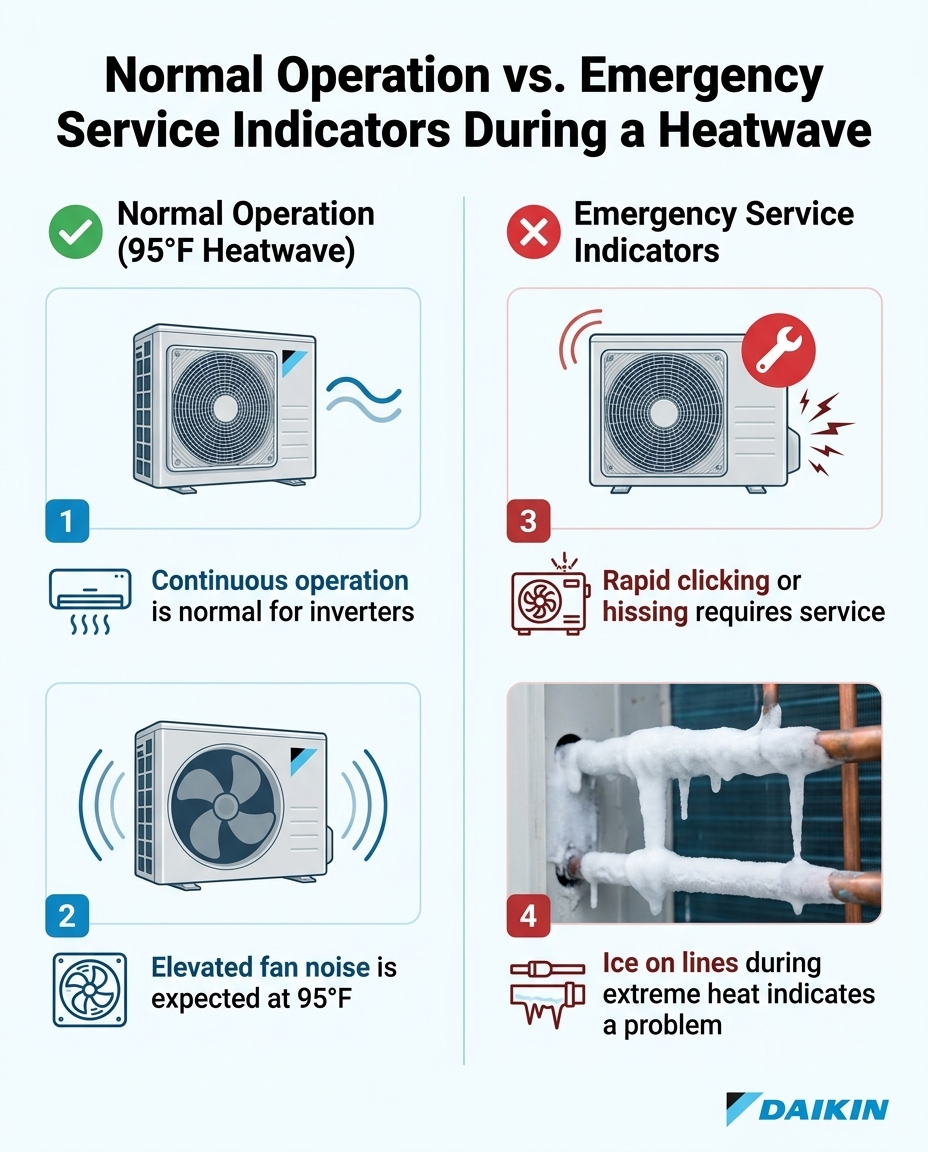
Based on the patterns our service team sees during every major Pacific Northwest heatwave, use the following checklist to evaluate your system's behavior when faced with a 95°F ambient outdoor temperature.
Normal Behaviors (Let the System Run)
• Continuous operation: Running for four, six, or even eight hours at a time without shutting off is the intended behavior of an inverter system under maximum load.
• Elevated fan noise: The outdoor fan moving at top speed to reject heat is required for survival.
• Very warm exhaust air: The air blowing out of the top of the outdoor unit should feel significantly hotter than the surrounding air. This proves the system is successfully pulling heat out of your house.
• Slow temperature drops: If your indoor temperature takes hours to drop a single degree during the hottest part of the afternoon, the system is simply matching the massive heat gain of the house.
Abnormal Behaviors (Call for Service)
• Rapid clicking or chattering: A contactor rapidly clicking or a compressor violently shaking indicates an electrical failure or a severe hard-start issue.
• Hissing noises: A loud, continuous hissing sound from the outdoor unit often indicates a high-pressure refrigerant leak.
• Immediate short-cycling: If the unit repeatedly tries to start, runs for ten seconds, and immediately shuts down violently, it is locked in a failure loop.
• Ice formation: Ice forming on the thick copper refrigerant lines outside, even in 95-degree heat, is a massive red flag. This indicates a severe airflow restriction inside the house or a dangerously low refrigerant charge.
Frequently Asked Questions
Is it normal for my Daikin compressor to run constantly in 95 degree heat?
Yes, continuous operation is completely normal and actually preferred. Variable-speed inverter systems are designed to modulate their capacity and run non-stop to precisely match the cooling demand of your home. This steady operation removes humidity effectively and avoids the harsh mechanical wear of turning on and off constantly.
What does a tripping thermal overload sound like?
A tripping thermal overload usually results in sudden silence from the compressor while the fan may continue to run. Later, you might hear a distinct buzzing or humming sound as the system attempts to restart before the internal motor has sufficiently cooled down. If you hear this, it is best to turn the system off at the thermostat and let it rest.
Why does my Daikin outdoor unit sound different when it's hot?
Your outdoor unit sounds different because both the compressor and the condenser fan are ramping up to their maximum speeds to handle the extreme heat load. The inverter compressor will produce a louder, higher-pitched hum, and the fan will create significantly more wind noise as it pulls maximum air across the coils.
Does an AC compressor shut off if it gets too hot?
Yes, modern compressors are equipped with internal thermal overload switches that monitor the motor's temperature. If the internal heat exceeds safe manufacturing thresholds, this switch will automatically break the electrical connection, shutting the compressor down to prevent the electrical windings from melting or burning out.
How can I help my Tukwila heat pump recover during a severe heatwave?
You can help your system recover by reducing the thermal load inside your home. Keep all blinds and curtains closed during the day to block solar gain, avoid using heat-generating appliances like ovens or dryers in the afternoon, and ensure your indoor air filters are completely clean to allow maximum airflow over the indoor coil.
Keeping Your Home Comfortable and Protected
Navigating a rare extreme heat event is much easier when you have a clear mechanical explanation of what your compressor is doing. By understanding how internal protections work under extreme heat, you can confidently distinguish between normal high-load operation and an actual emergency. If you notice any abnormal signs, our team is always ready to help secure professional whole house HVAC solutions, ensuring your system remains reliable long after the heatwave breaks.

Schedule a Visit

your individual indoor comfort needs
products firsthand
with an authorized Daikin Dealer
.webp)
See why our customers Choose Us

“Jem is very inviting and knowledgeable. She gave us a walk through of the Daikin Experience Center and patiently answered all our questions. Learned a lot about HVAC’s through this visit.”
“Jem did a great job walking us through the various Daikin products and efficiencies of the products. She was very knowledgeable on everything Daikin. Highly recommend coming in for a tour prior to picking out your various AC systems.”
“Great experience at Daikin Seattle Experience Center: pre-purchase demos of home heating system (Daikin Fit), list of HVAC companies, working Daikin staff and external contractors to ensure highest quality. This experience sets the bar of how any home HVAC experience should be. Have got the Daikin Fit installed and so far seems to work very well – quiet, good home heating in peak winter (heat transfer/BTU/air handling); Functionality of Daikin thermostat and the iPhone app makes it very easy to use.”
“This place is awesome! If you are in the market for a new HVAC system, visit the Daikin Experience Center to get educated on the newest technology as well as available rebates and incentives for where you live. They’ll even connect you with local contractors in your area who install Daikin equipment.”
