

.webp)

.svg)


Decode Heat Pump Troubleshooting Charts: DIY or Pro?
Staring at a Blinking LED: The Reality of Heat Pump Troubleshooting
Your thermostat reads 82 degrees inside, the afternoon sun is beating down on your roof, and your cooling equipment has suddenly stopped running. Instead of cold air, you are greeted by a blinking LED light or a cryptic alphanumeric code on your thermostat display. Understanding the reality of heat pump troubleshooting charts: when to DIY and when to call a Tukwila tech becomes your immediate priority. You pull out the manufacturer's manual, flip to the back pages, and find a massive grid of symptoms, flashes, and technical jargon.
While a diagnostic table can point you in the right direction, it often lacks the crucial context a homeowner needs. The chart might tell you that a sequence of three blinking lights means a "pressure switch lockout," but it will not tell you if that requires a simple system reset or if your compressor is on the verge of catastrophic failure. The immediate stress of a sudden cooling failure when summer temperatures spike often leads homeowners to make rushed decisions.
The core decision point you face is determining whether the error code indicates a safe, straightforward maintenance task you can perform yourself, or a critical system fault that requires specialized tools. Modern heat pump systems communicate their operational status constantly, acting as an early warning system to protect their internal components. Translating those warnings into practical action is the key to restoring your home's comfort without risking further damage to your equipment.
How to Read a Standard Heat Pump Troubleshooting Chart
Before you can decide on your next steps, you need to understand how diagnostic tables are structured. Most manufacturer manuals divide their troubleshooting sections into two distinct categories: symptom-based diagnostics and code-based diagnostics. Knowing the difference between the two helps you triage the problem accurately.
Symptom-based troubleshooting relies on what you can physically observe. This includes broad issues like "system running but not cooling," "strange grinding noises," or "short-cycling." These sections of the chart are usually geared toward older or more basic equipment that lacks digital communication capabilities.
Code-based diagnostics rely on the system's internal logic board. Modern equipment, especially advanced Daikin heat pump systems, use sophisticated microprocessors to monitor refrigerant pressures, electrical currents, and internal temperatures. When a sensor detects an anomaly, the logic board shuts down the compressor to prevent damage and outputs a specific error code.
A troubleshooting chart is a triage tool, not a step-by-step repair manual. It is designed to help you communicate effectively with a technician and rule out obvious external factors. For example, if you are comparing Daikin heat pump models, you will notice that their advanced inverter systems have highly granular codes. Understanding how to read these charts prevents you from panicking over a dirty filter while ensuring you do not ignore a severe electrical fault.
• Symptom-Based — Common Indicators: Noisy operation, poor airflow, continuous running — Primary Purpose: Identifies broad performance issues and basic maintenance needs.
• LED Flash Codes — Common Indicators: Countable light blinks on the outdoor or indoor unit board — Primary Purpose: Communicates general faults like pressure lockouts or sensor failures.
• Alphanumeric Codes — Common Indicators: Specific letters and numbers (e.g., U0, E4) on a digital thermostat — Primary Purpose: Pinpoints exact component failures for precise professional repair.
Safe DIY Resets for Common Summer Cooling Issues
During peak July heat, your cooling equipment operates under maximum stress. This continuous demand for airflow and thermal transfer means that minor maintenance oversights quickly trigger system faults. There is a clear boundary defining which specific issues a homeowner in Tukwila WA can safely resolve without calling a licensed professional. These safe DIY steps are strictly limited to external maintenance and power cycling, never internal mechanical work.
Airflow Restrictions and Filter Warnings
One of the most common mid-summer faults stems from severe airflow restrictions. When your system runs continuously to combat 90-degree heat, it pulls a massive volume of air—and airborne debris—through your return vents.
• Identifying the code: Your chart may list symptoms like "low pressure fault," "indoor coil freezing," or a specific code for restricted airflow.
• The physics of the fault: A clogged filter chokes the blower motor. Without enough warm indoor air moving over the indoor coil, the refrigerant drops below freezing, turning the coil into a block of ice and triggering a safety shutdown.
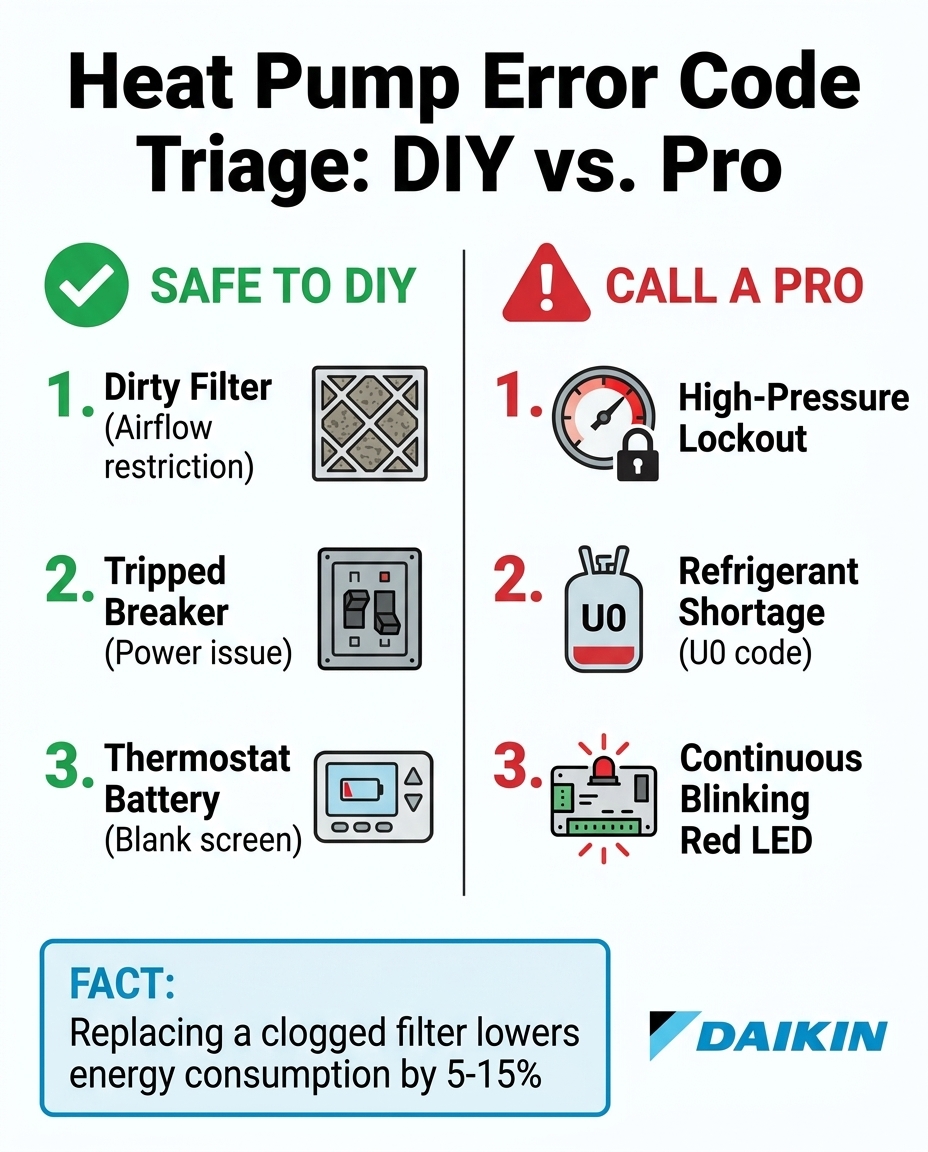
• The DIY solution: Check your air filter immediately. According to the U.S. Department of Energy, replacing a dirty, clogged filter with a clean one can lower your air conditioner's energy consumption by 5% to 15%. Slide out the old filter, verify the size, and install a fresh one. Once replaced, allow the system to thaw if necessary before restarting.
Tripped Breakers and Thermostat Blank Screens
Sometimes the issue is not mechanical, but a temporary electrical interruption or a logic glitch in the thermostat itself.
• Checking the electrical panel: If your thermostat is completely blank or the outdoor unit refuses to turn on, check your home's main electrical panel. A power surge during a summer storm can trip the dedicated breaker. Firmly push the breaker switch to the "Off" position, then snap it back to the "On" position.
• Rebooting the thermostat: Transient logic errors can sometimes cause a system to freeze up digitally. If your chart suggests a communication error, you can often clear it by removing the thermostat faceplate from the wall, replacing the batteries if applicable, and waiting five minutes before reattaching it to reboot the interface.
When Blinking LEDs Indicate a Pro-Only Problem
While clearing a dirty filter is perfectly safe, there is a hard boundary where DIY troubleshooting becomes dangerous to both you and the equipment. When your diagnostic chart points to internal pressures, refrigerant levels, or complex electrical components, it is time to step back. Attempting to bypass safety sensors or opening the sealed cabinet voids manufacturer warranties and exposes you to severe electrical hazards.
High-Pressure Lockouts
A high-pressure error code is a critical warning that the compressor is struggling against immense resistance. This typically happens when the outdoor unit cannot reject the heat it has absorbed from inside your home.
The underlying causes: The outdoor condenser coil might be heavily impacted with dirt, cottonwood seeds, or grass clippings. Alternatively, the outdoor fan motor may have failed. When the heat cannot escape, the pressure inside the copper lines spikes dramatically. The system's logic board detects this dangerous spike and initiates a high-pressure lockout to prevent the compressor from physically bursting or burning out its motor. Diagnosing the exact cause of a high-pressure fault requires a licensed technician to attach specialized digital gauges and measure the system's operating pressures in real-time.
Refrigerant System Failures
Another severe category of chart indicators involves low refrigerant. You might notice the system running continuously with zero cooling effect, accompanied by a specific fault code for low pressure.
The mechanical reality: Heat pumps do not consume refrigerant like a car consumes gas. If the system is low on refrigerant, there is a physical leak in the copper lines, the coils, or the brazed joints. The compressor relies on the returning cold refrigerant gas to cool its internal motor. Operating a system with a leak causes the compressor to overheat rapidly. Furthermore, handling refrigerant is strictly regulated by federal environmental laws. Only certified professionals have the equipment to locate the microscopic leak, repair the brazed joint, pull a deep vacuum on the system, and recharge it to factory specifications. If you are exploring ductless HVAC options or traditional central systems, the rules of refrigerant management remain identical and strictly pro-only.
Decoding Specific Daikin Diagnostic Behaviors
Generic troubleshooting charts only take you so far. Premium manufacturers utilize proprietary logic boards that offer much deeper insights into system performance. Daikin heat pump systems, for instance, use highly specific alphanumeric codes rather than generic blinking lights to communicate faults.
Instead of a vague "system fault" light, a Daikin thermostat might display a "U0" code. This specific designation indicates a refrigerant shortage, telling the system exactly why it is failing to reach the target temperature. Other codes might isolate a communication failure between the indoor and outdoor units, or pinpoint an exact thermistor (temperature sensor) that has drifted out of calibration. This advanced diagnostic logic is engineered to protect the system from catastrophic failure by shutting down operations before a minor sensor drift turns into a major mechanical breakdown.
Interpreting these complex error codes correctly saves homeowners from expensive, unnecessary repairs. However, because these systems utilize variable-speed inverter technology, they require specialized diagnostic tools to test. This is where Daikin Certified Dealer expertise becomes invaluable. Brand-certified technicians are uniquely qualified to interface with these proprietary logic boards, clear specific critical lockouts, and recalibrate the inverter drive. They understand the exact parameters the system needs to operate efficiently, ensuring that the root cause of the code is permanently resolved rather than just temporarily bypassed.
The Risks of Repeatedly Resetting Your System During a Heatwave
When a home gets uncomfortably hot, the temptation to simply flip the breaker off and on to force the system to run is strong. However, a heat pump troubleshooting chart is fundamentally designed to prevent equipment damage, and ignoring its warnings defeats that exact purpose.
Tukwila's increasingly hot summer temperature spikes push heat pumps to continuous operation. Under these peak cooling loads, the compressor is already working near its maximum thermal limits. When a logic board throws an error code and shuts the system down, it is doing so to let the equipment cool off or to prevent a mechanical failure.
The danger of the forced reset: If you reset the breaker, the system will clear its memory and attempt to start cooling again. If the root problem—like a failed fan motor or a refrigerant leak—is still present, the compressor will run in a highly dangerous state until the logic board detects the fault and trips the lockout again. Forcing a system to run with a continuous error code during peak summer heat can literally boil the lubricating oil inside the compressor, leading to a complete motor burnout.
The rule of thumb is simple: you can attempt one standard system reset. If the error code returns immediately, or if the system shuts down again within the same day, professional intervention across your local service areas is absolutely mandatory. Continuing to reset the system transforms a minor repair into a complete system replacement.
Frequently Asked Questions About Heat Pump Error Codes
What does the red light on my heat pump mean?
A red light on your heat pump usually indicates a system lockout or a critical fault detected by the control board. This safety mechanism prevents the compressor from running under dangerous conditions, such as extreme high or low pressure. While you can check your air filter to ensure airflow isn't restricted, a persistent red light requires a professional technician to read the specific flash sequence and diagnose the internal failure.
How do I safely reset my heat pump?
To safely reset your heat pump, locate the dedicated circuit breaker for the system in your home's main electrical panel. Turn the breaker completely to the "Off" position, wait for a full five minutes to allow the logic board to clear its memory, and then firmly switch it back to "On." If the system resumes normal operation, it may have been a temporary power fluctuation; if the error code returns immediately, do not attempt a second reset.
Why is my heat pump running but not cooling?
When a heat pump runs without producing cold air, it typically points to a refrigerant leak, a severely clogged air filter, or a malfunctioning reversing valve. The indoor fan will continue to circulate room-temperature air, but the system cannot extract heat from your home without the proper refrigerant charge. Check and replace your filter first, but if the issue persists, you will need a certified technician to inspect the sealed refrigerant lines.
Where is the reset button on a heat pump?
Most modern residential heat pumps do not feature a traditional, physical "reset button" on the exterior cabinet. Instead, the system is reset by cycling the power at the main electrical breaker or through the digital thermostat interface. Some outdoor units have high-pressure reset switches inside the service panel, but these should only be accessed and reset by licensed professionals after verifying system pressures.
What do Daikin heat pump error codes indicate?
Daikin heat pump systems use specific alphanumeric codes to pinpoint exact component failures, taking the guesswork out of troubleshooting. For example, a U0 code specifically indicates a refrigerant shortage, while other codes might flag a faulty thermistor or an inverter drive issue. These advanced codes allow certified technicians to arrive with the correct parts and diagnose the system much faster than older, symptom-based methods.
Can a dirty filter cause a heat pump error code?
Yes, a severely dirty filter is one of the most common causes of heat pump error codes during peak cooling season. The clogged filter restricts airflow over the indoor coil, causing the coil's temperature to drop rapidly and potentially freeze solid. The system's sensors will detect this abnormal temperature drop and trigger a low-pressure or low-temperature lockout code to protect the compressor from damage.
Make the Right Call for Your Cooling System
Navigating a complex diagnostic manual doesn't have to end in frustration. A clear breakdown of safe versus pro-only codes empowers homeowners to make smart, decisive actions when their cooling equipment malfunctions. You can confidently replace a clogged filter or perform a single power reset, knowing exactly where your DIY limits end and when professional expertise is required.
Do not gamble with your home's comfort or the lifespan of your equipment during the intense summer heat. If your system is trapped in a continuous lockout loop, or if you are facing a complex alphanumeric fault, it is time to talk to an expert. Accurately diagnosing persistent error codes ensures your system runs efficiently and reliably. Reach out to a Tukwila WA expert for professional heat pump solutions and get your home back to the perfect temperature today. The reality of heat pump troubleshooting charts: when to DIY and when to call a Tukwila tech is that knowing when to ask for help is the best way to protect your investment.

Schedule a Visit

your individual indoor comfort needs
products firsthand
with an authorized Daikin Dealer
.webp)
See why our customers Choose Us

“Jem is very inviting and knowledgeable. She gave us a walk through of the Daikin Experience Center and patiently answered all our questions. Learned a lot about HVAC’s through this visit.”
“Jem did a great job walking us through the various Daikin products and efficiencies of the products. She was very knowledgeable on everything Daikin. Highly recommend coming in for a tour prior to picking out your various AC systems.”
“Great experience at Daikin Seattle Experience Center: pre-purchase demos of home heating system (Daikin Fit), list of HVAC companies, working Daikin staff and external contractors to ensure highest quality. This experience sets the bar of how any home HVAC experience should be. Have got the Daikin Fit installed and so far seems to work very well – quiet, good home heating in peak winter (heat transfer/BTU/air handling); Functionality of Daikin thermostat and the iPhone app makes it very easy to use.”
“This place is awesome! If you are in the market for a new HVAC system, visit the Daikin Experience Center to get educated on the newest technology as well as available rebates and incentives for where you live. They’ll even connect you with local contractors in your area who install Daikin equipment.”
