

.webp)

.svg)


Upgrading to a Daikin Residential Heat Pump Before Winter
Navigating the Shift to Heat Pump Comfort This Fall
If you are researching what to expect when upgrading to a Daikin residential heat pump before winter, our team at the Daikin Seattle Experience Center finds that the most surprising adjustment usually happens the very first time you turn the system on. You walk over to the nearest vent, hold your hand out, and wait for that familiar, aggressive blast of intensely hot air. Instead, you feel a gentle, steady stream of air that feels surprisingly mild. For many homeowners making this transition, that first chilly evening triggers an immediate panic: Is the new system broken?
Here is the thing our experts always emphasize: your system is working exactly as designed. The transition from older, combustion-based heating to advanced climate control involves a significant psychological shift. We are conditioned to associate effective heating with the roaring sound and scorching temperatures of a traditional furnace. Modern heat pump technology takes a completely different, far more scientific approach to warming your home.
To learn more about how these systems transform your home environment, exploring Daikin heat pumps is a great starting point.
During the September early fall transition, as overnight temperatures begin to dip, you will notice that your new system operates quietly in the background. It does not wait for the house to get uncomfortably cold before kicking on, and it does not blast heat until the room is stuffy. Instead, it maintains a continuous, even baseline of comfort. Reassuring yourself that a different sensory experience means the system is working perfectly—not malfunctioning—is the first step in mastering your new home climate system.
The Paradigm Shift: Gas Furnace Blasts vs. Steady Heat Pump Warmth
When we walk homeowners through our Tukwila showroom, we explain that to understand why your new system feels different, we have to look at the mechanical differences between traditional heating and modern heat pump technology. A traditional gas furnace operates on a very simple premise: it burns fuel to create a massive amount of heat quickly, blasts that heat into your rooms, and then shuts off completely. This creates a highly noticeable, aggressive cycle of heating.
In contrast, modern heat pumps use advanced inverter technology to move heat rather than generate it. This allows the system to run longer, steadier cycles at lower speeds. These longer cycles use significantly less energy than the constant stop-and-start action of older systems, much like how driving a car at a steady highway speed is more efficient than stop-and-go city traffic.
If you are exploring Seattle heat pump solutions, understanding this operational difference is key to maximizing your comfort.
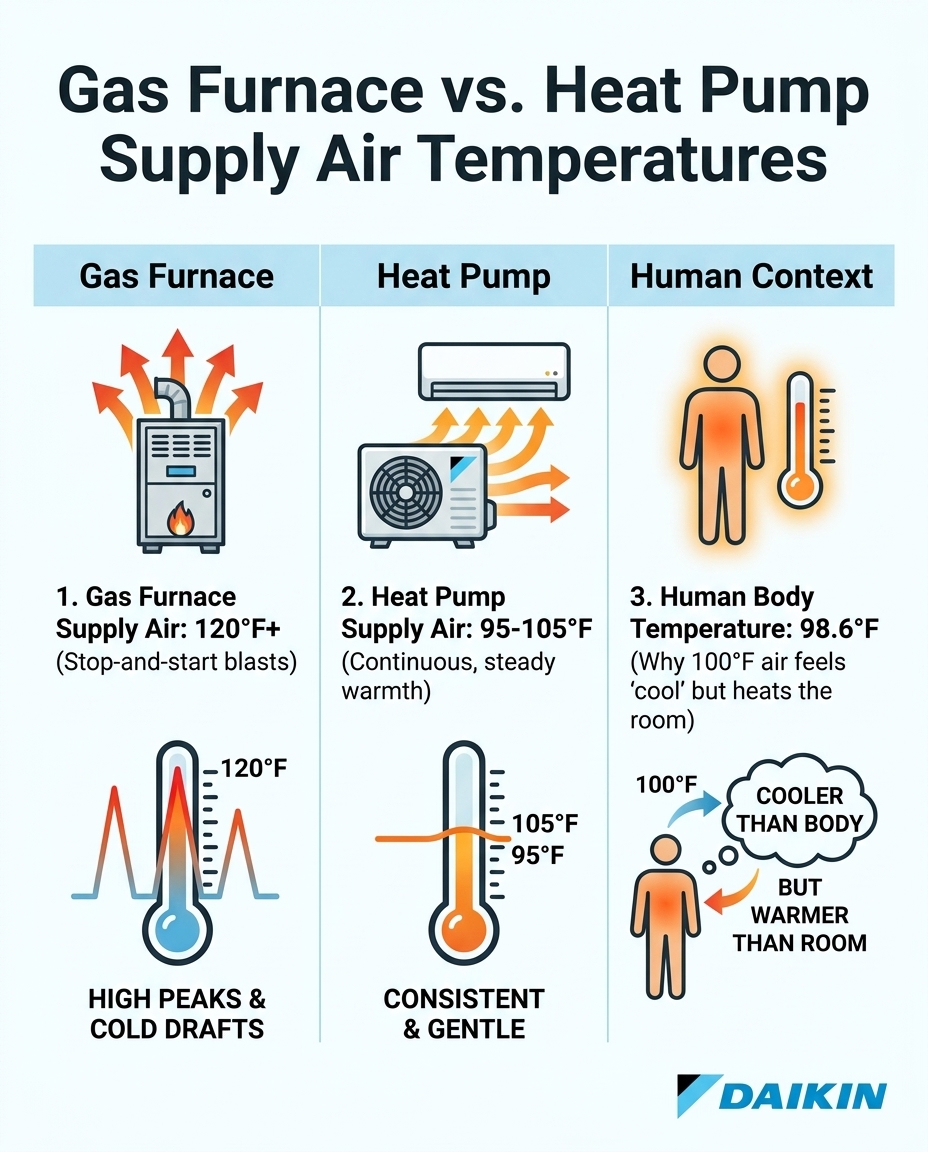
• Supply Air Temperature — Traditional Gas Furnace: 120°F or higher — Modern Daikin Heat Pump: 95-105°F
• Operating Cycle — Traditional Gas Furnace: Stop-and-start blasts — Modern Daikin Heat Pump: Continuous, steady operation
• Energy Usage Pattern — Traditional Gas Furnace: High spikes during startup — Modern Daikin Heat Pump: Low, consistent energy draw
• Temperature Swings — Traditional Gas Furnace: Noticeable fluctuations (too hot/too cold) — Modern Daikin Heat Pump: Even, precise temperature maintenance
Why 100°F Air Feels 'Cool' at First
In our years of demonstrating these systems, we have learned that the core of the perceived "cold blow" issue comes down to basic human biology. The typical human body temperature is around 98.6°F. Skin temperature is slightly lower, usually in the low 90s. When a gas furnace pushes air out at 120°F or higher, it feels distinctly hot to the touch because it is significantly warmer than your skin.
However, the 95-105°F heat pump supply air vs 120°F+ gas furnace air creates a different sensation. Because 100°F air is very close to your body temperature, it does not feel "hot" when it blows across your hand. Add in the slight wind chill effect created by the system's blower fan moving air across your skin, and that 100°F air can actually feel cool to the touch.
Despite how it feels on your hand, we assure our customers that 100°F air is mathematically perfect for steadily raising an indoor space to a comfortable 68°F or 70°F. The system is actively warming the room; it is just doing so gently rather than aggressively.
The End of the Temperature Rollercoaster
Older heating systems force you to ride a temperature rollercoaster. The house drops to 65°F, the furnace kicks on, blasts the house up to 72°F, and shuts off. You feel cold, then you feel uncomfortably hot, and then the cycle repeats. By running continuously at a lower temperature, a heat pump flattens that curve. Eliminating those dramatic temperature swings improves overall household comfort, keeping the ambient temperature exactly where you set it all day long.
Why 'Cooler' Supply Air Delivers Superior Winter Comfort
Our HVAC experts believe that connecting the mechanical operation of your new system to the tangible comfort benefits you will experience is essential. The steady, continuous operation of a heat pump does much more than just change the number on the thermostat—it actively manages the entire climate inside your home.
When assessing whole house HVAC solutions, the benefits of continuous air circulation become obvious. Traditional furnaces allow air to stagnate between cycles, which causes heat to rise to the ceiling while cold air settles near the floor. A heat pump's continuous fan operation keeps the air mixed, eliminating cold spots, drafty hallways, and freezing floors.
Furthermore, lower-temperature, continuous heating is significantly better for your home's interior. The intense, scorching heat from a gas furnace can aggressively dry out the air, leading to cracked woodwork, shrinking hardwood floors, and static electricity. The milder heat from a heat pump protects your home furnishings while providing a more natural-feeling warmth.
Combating the Damp Winter Chill
As locals serving the Tukwila and greater Seattle area, we know that winter in our region is rarely just cold—it is cold and wet. Damp, chilly Pacific Northwest winters present a unique challenge because high indoor humidity makes the air feel significantly colder than the thermostat indicates. This is where steady heat pump cycles truly shine.
Because the system runs for longer periods, it continuously passes indoor air over the indoor coil. This steady operation actively manages indoor humidity alongside the temperature, preventing the bone-chilling dampness that often settles into homes during the rainy season. By gently removing excess moisture while adding steady heat, the system naturally conditions the air for optimal comfort, making 68°F feel much warmer and cozier than it would in a damp environment.
Thermostat Best Practices for Your First Chilly Evening
To get the most out of your new system and prevent any frustration during the transition, we highly recommend operating your thermostat differently than you did with a gas furnace. The old habits of micromanaging the temperature will actually work against the advanced technology in your new equipment.
Whether you have a centralized system or multi-zone mini split systems, our team suggests following these operational guidelines to ensure maximum efficiency across Seattle and Tukwila WA:
1. Stop cranking the temperature up: With an old furnace, turning the thermostat up to 80°F might have felt like a way to "warm up the house faster." A heat pump does not work this way. Setting it higher will not make the air coming out of the vents any hotter; it will simply force the system to run longer, potentially engaging less efficient auxiliary heating modes.
2. Find your baseline: Start by setting the thermostat to a comfortable baseline temperature—usually between 68°F and 72°F—and leave it there for a full 24 hours. Let the system stabilize the home's temperature and humidity.
3. Utilize continuous fan settings carefully: While modern systems are designed to circulate air continuously, you can usually adjust the fan speed. Leaving the fan on a low, continuous setting helps keep temperatures even across different rooms, which is especially helpful in multi-level homes.
4. Avoid deep nighttime setbacks: While dropping the temperature by 10 degrees at night saved money with a gas furnace, it forces a heat pump to work incredibly hard to recover that lost heat in the morning. Limit nighttime temperature adjustments to no more than 2 to 4 degrees.
The 'Set It and Forget It' Rule
The golden rule we teach for modern heat pumps is "set it and forget it." The system's internal computers are constantly calculating the most efficient way to maintain your desired temperature based on indoor and outdoor conditions. Dramatic thermostat adjustments disrupt these calculations. Trust the system to do its job, and you will enjoy consistent comfort and optimized energy usage all season long.
Try Before You Buy: Feeling the Difference in Person
We know that reading about a 100°F supply air temperature is very different from actually feeling it. The psychological hurdle of moving away from traditional blast-heating is real, and many homeowners hesitate because they are unsure if they will actually like the way a heat pump feels.
This is exactly why we built the Daikin Seattle Experience Center in Tukwila. We designed it to serve as the ultimate solution for pre-purchase anxiety, allowing you to physically feel the mild supply air and hear the whisper-quiet operation alongside our team before making an upgrade. When you are comparing Daikin heat pump models, doing so in a live environment provides clarity that a brochure simply cannot offer.
Just recently, we helped a local homeowner who found themselves needing a new home heating system during peak winter heating needs. Instead of guessing, they attended one of our pre-purchase demonstrations of the Daikin Fit system at the Experience Center. After experiencing the quiet operation and steady heating firsthand, they had the system installed and reported excellent, reliable comfort throughout the season.
Exploring Live System Demonstrations
Our facility features state-of-the-art displays that mimic real home environments. You can walk through a house-like setup, stand under the vents, and experience exactly what the system feels like when it is running. This allows you to compare different models side-by-side in a no-pressure environment, asking technical questions to our experts who understand the nuances of Pacific Northwest climate control.
Planning Your Installation Timeline Before the Cold Sets In
Timing your upgrade properly is just as important as choosing the right equipment. The September early fall transition is the absolute optimal time for HVAC upgrades. Waiting until the first freezing night to replace a failing furnace limits your options and adds unnecessary stress to the process.
We frequently see homeowners wanting to understand heat pump technology before making a major decision visit us at the Daikin Experience Center. By taking the opportunity to see, hear, and experience the products in person, they gain a much clearer understanding of how the equipment operates before scheduling their installation.
Here is a recommended timeline our team suggests for a fall upgrade:
• Early September: Visit our showroom to experience live demonstrations and finalize your equipment choices.
• Mid-September: Schedule site visits with authorized contractors to evaluate your home's ductwork and electrical capacity.
• Late September: Complete the installation process while the weather is still mild, ensuring your home is never exposed to freezing temperatures during the swap.
• October: Test the system during the mild autumn weeks, learning the thermostat controls and finding your perfect comfort settings.
Testing Your System in Mild Weather
Testing your new setup during milder weather gives you a chance to learn its features without the pressure of a winter storm outside. It allows you to adjust to the new sensory experience of steady, continuous warmth. Additionally, federal tax credits or local utility incentives may apply to qualifying high-efficiency installations; we always advise checking current programs during the planning phase to help optimize your investment.
Ultimately, knowing what to expect when upgrading to a Daikin residential heat pump before winter takes the anxiety out of the transition. By understanding the science of steady warmth, utilizing our showroom to feel the difference yourself, and planning your installation early, you will be perfectly prepared for a comfortable, cozy winter.
Frequently Asked Questions
Why does heat pump air feel cooler than a furnace?
Heat pump air feels cooler because it typically exits the vents between 95°F and 105°F, which is very close to your normal body temperature. Traditional furnaces blast air at 120°F or higher, which feels distinctly hot against your skin. Even though the heat pump air feels milder to the touch, it is still perfectly calibrated to steadily raise your room's temperature to a comfortable level.
How should I set my thermostat for a heat pump in winter?
We recommend adopting a "set it and forget it" approach by choosing a comfortable baseline temperature and leaving it there. Avoid dropping the temperature drastically at night or cranking it up to "warm the house faster," as this forces the system to work harder and less efficiently. Minor adjustments of 2 to 4 degrees are fine, but steady settings yield the best comfort and efficiency.
Why does my heat pump run constantly in cold weather?
Modern heat pumps use inverter technology designed to run continuously at lower speeds rather than stopping and starting constantly. This steady operation maintains a perfectly even temperature in your home and actually uses less energy than the heavy power spikes required to constantly restart a traditional furnace. Continuous running means the system is actively managing your comfort, not struggling.
Is a heat pump better than a gas furnace for damp climates?
Yes, a heat pump is exceptionally well-suited for damp climates like the Pacific Northwest. Because it runs longer, steadier cycles, it continuously circulates air over the indoor coil, which helps naturally manage the indoor environment. This prevents the heavy, bone-chilling dampness from settling into your home during the wet winter months.
Does a heat pump manage indoor humidity during the winter?
While heat pumps are famous for dehumidifying during the summer cooling season, their steady air circulation in the winter also helps balance the indoor environment. Unlike gas furnaces that can aggressively dry out the air and cause static electricity or cracked wood, a heat pump provides a gentler heat that maintains a much more comfortable and natural indoor humidity level.
Schedule a Visit

your individual indoor comfort needs
products firsthand
with an authorized Daikin Dealer
.webp)
See why our customers Choose Us

“Jem is very inviting and knowledgeable. She gave us a walk through of the Daikin Experience Center and patiently answered all our questions. Learned a lot about HVAC’s through this visit.”
“Jem did a great job walking us through the various Daikin products and efficiencies of the products. She was very knowledgeable on everything Daikin. Highly recommend coming in for a tour prior to picking out your various AC systems.”
“Great experience at Daikin Seattle Experience Center: pre-purchase demos of home heating system (Daikin Fit), list of HVAC companies, working Daikin staff and external contractors to ensure highest quality. This experience sets the bar of how any home HVAC experience should be. Have got the Daikin Fit installed and so far seems to work very well – quiet, good home heating in peak winter (heat transfer/BTU/air handling); Functionality of Daikin thermostat and the iPhone app makes it very easy to use.”
“This place is awesome! If you are in the market for a new HVAC system, visit the Daikin Experience Center to get educated on the newest technology as well as available rebates and incentives for where you live. They’ll even connect you with local contractors in your area who install Daikin equipment.”
