

.webp)

.svg)


September Daikin Heat Pump Prep: Cooling to Heating
Navigating the Late-Summer HVAC Transition
As August winds down and the back-to-school season begins, preparing your Daikin heat pump for the shift from cooling to heating in September becomes a critical priority for home comfort. The daytime hours might still bring heavy late-summer heat, but evening temperatures are already beginning to dip, signaling that the heating season is just around the corner. This seasonal crossover places a unique demand on your HVAC equipment, requiring it to seamlessly toggle between rejecting heat from your home and pulling heat inside.
The core challenge of the late-summer cooling to early-fall heating transition is ensuring that your system is mechanically prepared to switch modes without causing unnecessary strain on its internal components. After months of continuous cooling, outdoor units often accumulate dust, while indoor filters become saturated with summer allergens. Addressing these issues now prevents minor inefficiencies from developing into major mechanical failures when the first true cold snap arrives.
Here at the Daikin Seattle Experience Center, a pattern we see often is homeowners wondering which late-summer mechanical checks are safe to perform themselves, and when it is time to schedule a licensed professional. By taking a proactive approach, you can protect the longevity of your equipment and maintain a safe, comfortable indoor environment. Whether you are maintaining your current Daikin heat pump or exploring new heat pump solutions in Seattle, our team believes mastering this seasonal transition is the foundational step for winter readiness.
The Impact of September's Unpredictable Temperature Swings
In our experience serving Tukwila and the surrounding areas, the Pacific Northwest is known for its distinct shoulder seasons, and September frequently delivers a highly unpredictable climate. It is entirely common to experience warm, sun-drenched afternoons that demand robust indoor cooling, followed immediately by chilly, damp nights that require reliable heating. These rapid temperature swings force your HVAC system into a demanding 24-hour cycle of mode toggling.
The Mechanical Strain of Mode Toggling
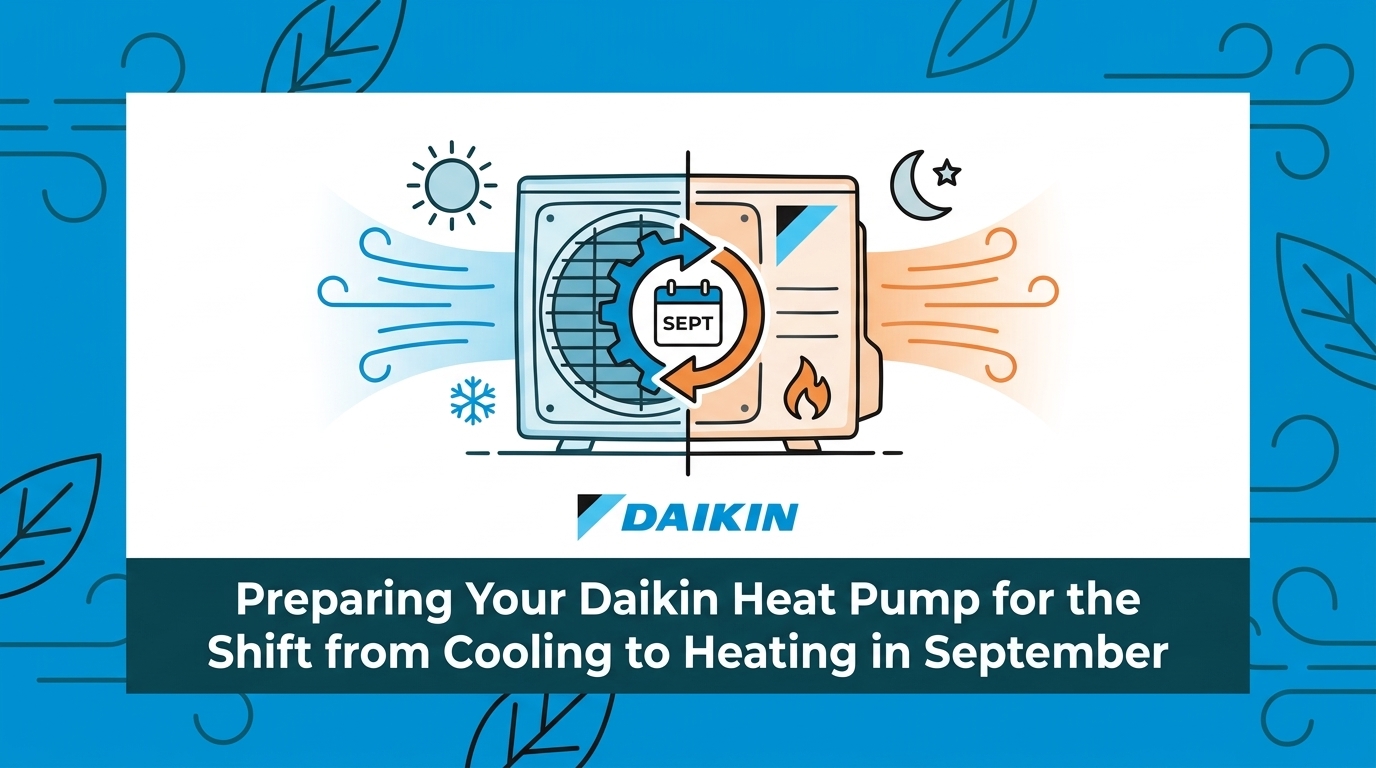
When a heat pump switches from cooling to heating, a critical internal component called the reversing valve physically shifts to change the direction of the refrigerant flow. During the late-summer cooling to early-fall heating transition, this valve may engage and disengage multiple times within a single day. If the system is struggling with restricted airflow or low refrigerant, this frequent toggling forces the compressor to work significantly harder, accelerating wear and tear and driving up energy consumption.
The Threat of Late-Summer Debris
Just as the heating demand begins to overlap with cooling needs, outdoor units face a barrage of environmental obstructions. By late August and early September, the landscape sheds dry leaves, late-season pollen, and airborne dust. When this debris gets pulled into the fins of the outdoor condenser coil, it chokes off the airflow necessary for the heat pump to extract ambient heat from the outside air.
Why early preparation matters: Attempting to run a heat pump in heating mode with a suffocated outdoor coil drastically reduces its efficiency. The system will run longer cycles, struggle to reach the set temperature on the thermostat, and place undue stress on the blower motor. Proactive preparation before the first significant temperature drop ensures that when you finally need consistent evening heat, the system can breathe freely and operate at peak capacity.
How Daikin Inverter Technology Manages Shoulder Season Demands
Modern climate control relies heavily on advanced engineering to handle the erratic weather of the shoulder season. Daikin residential heat pump systems are specifically designed to manage these exact environmental challenges through the use of proprietary inverter technology. Unlike older systems that operate on a rigid, binary cycle, inverter-driven systems adapt dynamically to the immediate needs of the home.
The Science of Inverter Modulation
Traditional single-stage HVAC systems only know two speeds: 100% on or 100% off. During mild fall weather, a single-stage system will blast a massive amount of cold or warm air into the home, quickly overshoot the target temperature, and abruptly shut down. This excessive on-and-off cycling is highly inefficient and creates uncomfortable temperature fluctuations.
Daikin inverter technology, by contrast, modulates power much like the accelerator pedal in a vehicle. It smoothly ramps up the compressor speed to reach the desired indoor temperature and then gently dials back the power to maintain that exact climate. This continuous, low-speed operation is incredibly efficient at handling the mild temperature swings of September, keeping indoor conditions perfectly stable without the harsh mechanical starts and stops.
Smart Sensors and Seamless Transitions
Inside these advanced systems, highly sensitive internal sensors continuously monitor both the indoor ambient temperature and the outdoor weather conditions. When the thermostat is set to an auto-changeover mode, these sensors calculate exactly when to toggle the reversing valve from cooling to heating.
Homeowners frequently seek out information on home comfort solutions to understand this technology better. At our Tukwila facility, visitors exploring interactive displays at our educational center often gain a deeper understanding of how heat pumps and inverter technology operate, ultimately connecting with qualified contractors for quality installations. As long as the physical equipment is mechanically clear of obstructions, homeowners can trust that the inverter technology is fully capable of managing the late-summer cooling to early-fall heating transition automatically.
Safe Mechanical Checks for Homeowners: The Late-Summer Checklist
While complex diagnostics are reserved for professionals, our team typically recommends a clear, actionable list of safe mechanical checks that every homeowner should complete as summer winds down. Performing these tasks ensures that your Daikin residential heat pump systems have the foundational airflow and clearance required to operate efficiently.
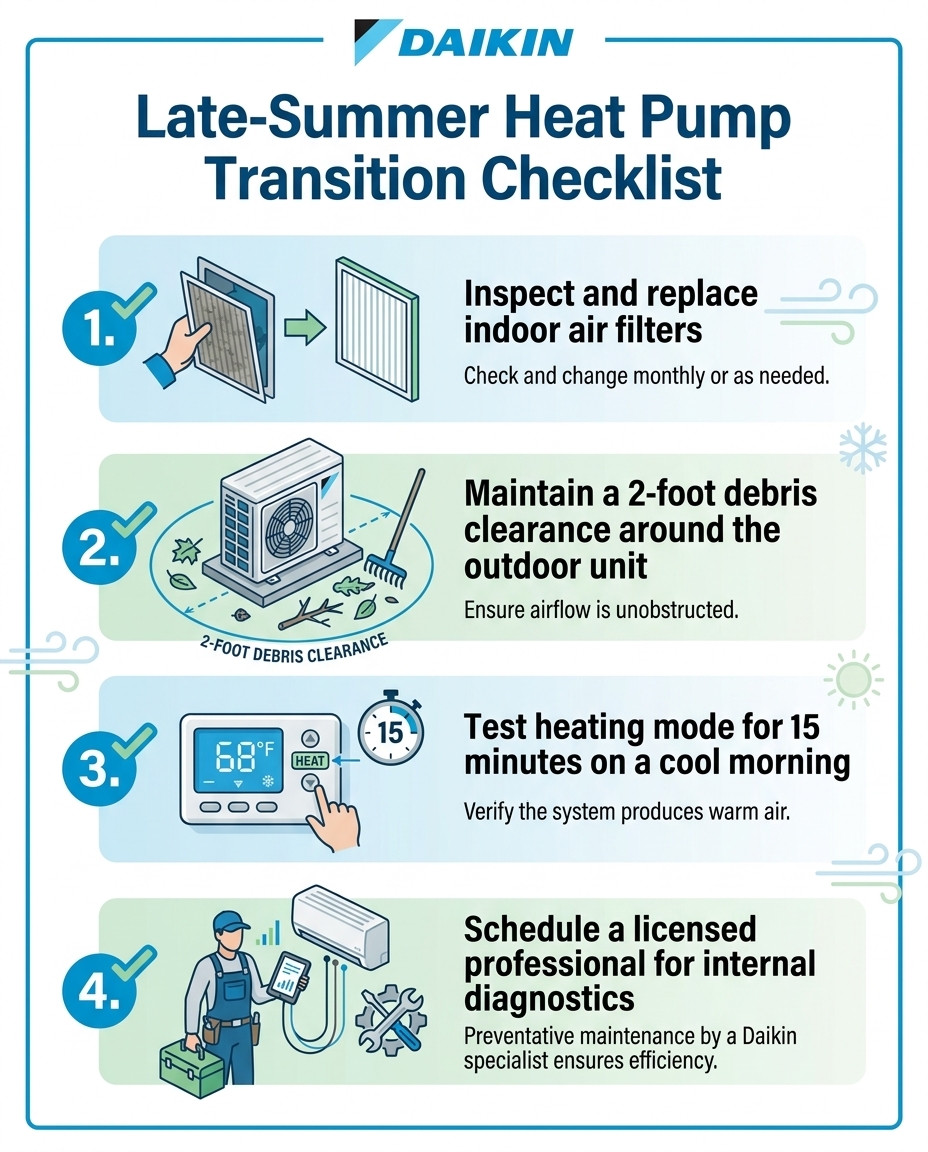
• Inspect and replace indoor air filters: After a long summer of filtering out dust, wildfire smoke, and pollen, your indoor air filter is likely saturated. A clogged filter forces the blower motor to work harder, reducing the volume of warm air pushed into your living spaces. Swap out standard filters every 30 to 90 days.
• Clear the outdoor unit of late-summer debris: Walk around your outdoor condenser and safely remove any dry leaves, twigs, or overgrown vegetation. You must maintain a strict two-foot clearance zone around the entire unit to guarantee unrestricted airflow across the coils.
• Test the heating mode proactively: Do not wait for a freezing night to discover a problem. On a cool September morning, switch your thermostat to heating mode and let it run for 15 minutes. Verify that the reversing valve engages and that warm air steadily flows from the registers.
• Inspect visible condensation lines: During the heavy cooling months, the system extracts gallons of humidity from the indoor air. This moisture drains through a condensation line. Inspect the visible portions of this PVC pipe for signs of summer algae buildup or blockages before transitioning fully to heating.
Staying on top of these basic tasks is a core part of responsible Daikin AC maintenance and sets the stage for a trouble-free winter.
Optimizing Thermostat Settings for Fall
Your thermostat strategy must shift alongside the seasons. To let the inverter technology work as efficiently as possible, we advise against programming drastic temperature swings. Setting the thermostat 10 degrees lower while you are at work forces the system to consume massive amounts of energy trying to recover when you return. Instead, keep temperature adjustments within a narrow 2-to-3-degree window.
Furthermore, utilize the "Auto" mode cautiously during days with extreme high and low variances. If the thermostat is set too tightly, the system might fight itself—cooling the house at 3:00 PM and then immediately heating it at 6:00 PM. Widening the deadband (the temperature gap between the cooling setpoint and heating setpoint) prevents unnecessary mode toggling.
Recognizing the Boundary: When to Call a Licensed Professional
While proactive homeowner checks are vital for the late-summer cooling to early-fall heating transition, there is a strict boundary between DIY preparation and required professional maintenance. A pattern we see often is well-meaning individuals attempting to service internal electrical or refrigerant components without proper licensing—this is dangerous and can void your manufacturer warranty.
Warning Signs That Require a Pro
During your late-summer checklist, pay close attention to how the system behaves. If you notice grinding, squealing, or rattling noises when the system toggles into heating mode, the reversing valve or compressor may be struggling. Similarly, if the air coming from the vents feels lukewarm rather than distinctly warm after 15 minutes of operation, you likely have an internal issue that requires a technician's gauge manifold to diagnose.
Safe Homeowner Checks vs. Licensed Professional Diagnostics
• Airflow Management — Homeowner Approved: Replacing indoor air filters and clearing exterior leaves. — Strictly Professional: Cleaning delicate indoor evaporator coils and blower wheels.
• Refrigerant Levels — Homeowner Approved: None. Do not touch refrigerant lines. — Strictly Professional: Connecting gauges, checking subcooling/superheat, and charging.
• Electrical Systems — Homeowner Approved: Testing the thermostat interface and replacing thermostat batteries. — Strictly Professional: Testing capacitors, contactors, and high-voltage wiring.
What happens during a fall tune-up? A licensed technician brings specialized tools to evaluate the complex inverter systems. They will measure the exact electrical draw of the compressor, verify that the refrigerant charge is perfectly balanced for heating operations, and chemically clean the internal coils to remove baked-on summer dust. Our team knows that this level of pro-level diagnostic work is what guarantees the system will survive the freezing months ahead.
Adapting to Fall with Multi-Zone Configurations
For homes equipped with ductless technology, managing the seasonal transition offers even more precision. Daikin residential heat pump systems configured for multiple zones allow homeowners to customize the climate on a room-by-room basis, which is incredibly advantageous during the unpredictable weather of early fall.
The Efficiency of Independent Room Control
We regularly demonstrate to Seattle homeowners how, during September, a south-facing living room might stay comfortably warm from afternoon sun exposure, while a north-facing bedroom becomes uncomfortably chilly by 7:00 PM. Traditional central systems would force you to heat the entire house just to warm that single bedroom. Zoned systems eliminate this waste.
By utilizing multi-zone mini split systems, you can activate the heating mode strictly in the rooms that need it, leaving the rest of the home unheated or even in a light cooling mode if the sun is still strong. This independent room control maximizes energy efficiency and prevents the system from overworking during the mild shoulder season.
Maintenance remains critical: It is important to note that these wall-mounted units require the exact same late-summer attention as central systems. Homeowners must pop the front covers open, remove the reusable mesh filters, and wash away the summer dust before relying on the units for daily heating.
Hands-On Education at the Daikin Experience Center
Navigating the nuances of modern HVAC equipment can feel overwhelming, but you do not have to figure it out alone. At our Daikin Seattle Experience Center in Tukwila, our team places a massive emphasis on hands-on homeowner education, empowering customers to truly understand the equipment that regulates their home environment.
Visualizing how heat pump systems operate in real settings before the winter rush is incredibly valuable. When shopping for a new heating and cooling system, many homeowners want to experience the products firsthand. Visitors frequently come to our showroom to touch, hear, and visualize systems in real settings with expert staff explanations. This hands-on approach leads to a positive learning experience, leaving them confident in choosing Daikin.
The center provides a neutral, pressure-free environment where you can receive expert explanations regarding your system's specific operation. Whether you need clarity on how to safely perform mechanical checks, want to hear exactly how quiet an inverter compressor sounds at full capacity, or need assistance connecting with qualified local contractors for your fall maintenance, our educational staff is there to bridge the gap between complex engineering and everyday home comfort.
Finalizing Your Seasonal Transition Strategy
Successfully managing the late-summer cooling to early-fall heating transition comes down to timely, proactive preparation. By following a clear, actionable list of safe mechanical checks—like replacing filters, clearing outdoor debris, and testing your thermostat—you lay the groundwork for an efficient and reliable heating season.
The window for this preparation is brief. Our team strongly recommends completing your DIY checks before September temperatures drop significantly and emergency service calls flood local HVAC companies. While your homeowner checklist handles the basics, remember that internal electrical and refrigerant systems require specialized care. Schedule your professional end-of-season maintenance today to ensure your system is fully optimized, deeply cleaned, and mechanically ready for whatever the winter weather brings.
Frequently Asked Questions
When should I switch my heat pump from cool to heat?
You should switch your heat pump from cool to heat when indoor temperatures consistently drop below your comfort threshold, typically in early-to-mid September. We suggest testing the heating mode on a cool morning before the first major cold snap arrives. Doing this early ensures the reversing valve engages properly while you still have time to schedule maintenance if needed.
How do I prepare my heat pump for winter?
Preparing your heat pump for winter starts with replacing the indoor air filter and clearing all late-summer debris from the outdoor unit to ensure a two-foot clearance. Next, test the system in heating mode for 15 minutes to verify warm airflow. Finally, schedule a licensed professional to perform a comprehensive fall tune-up, which includes checking refrigerant levels and inspecting electrical components.
What temperature should I set my heat pump in fall?
In the fall, it is recommended to set your heat pump thermostat to a consistent, comfortable temperature, usually between 68°F and 70°F. Avoid drastic temperature setbacks when you leave the house, as inverter systems operate most efficiently when maintaining a steady climate. Keeping adjustments within a narrow 2-to-3-degree window prevents the system from overworking.
Does a heat pump need maintenance before winter?
Yes, a heat pump absolutely requires professional maintenance before the heavy winter heating season begins. A licensed technician must clean the internal coils, verify the electrical draw of the compressor, and ensure the refrigerant charge is correct for heating mode. Skipping this end-of-season maintenance drastically increases the risk of unexpected breakdowns during freezing weather.
How does frequent mode toggling affect my Daikin heat pump in September?
Frequent mode toggling forces the internal reversing valve to shift constantly between cooling and heating operations within a 24-hour period. While Daikin inverter technology is specifically engineered to handle this shoulder-season demand efficiently, it still places mechanical strain on the system. Ensuring the unit is clean and well-maintained minimizes this strain and prevents excessive wear during unpredictable weather.
Schedule a Visit

your individual indoor comfort needs
products firsthand
with an authorized Daikin Dealer
.webp)
See why our customers Choose Us

“Jem is very inviting and knowledgeable. She gave us a walk through of the Daikin Experience Center and patiently answered all our questions. Learned a lot about HVAC’s through this visit.”
“Jem did a great job walking us through the various Daikin products and efficiencies of the products. She was very knowledgeable on everything Daikin. Highly recommend coming in for a tour prior to picking out your various AC systems.”
“Great experience at Daikin Seattle Experience Center: pre-purchase demos of home heating system (Daikin Fit), list of HVAC companies, working Daikin staff and external contractors to ensure highest quality. This experience sets the bar of how any home HVAC experience should be. Have got the Daikin Fit installed and so far seems to work very well – quiet, good home heating in peak winter (heat transfer/BTU/air handling); Functionality of Daikin thermostat and the iPhone app makes it very easy to use.”
“This place is awesome! If you are in the market for a new HVAC system, visit the Daikin Experience Center to get educated on the newest technology as well as available rebates and incentives for where you live. They’ll even connect you with local contractors in your area who install Daikin equipment.”
