

.webp)

.svg)


The Impact of Clogged Condensate Drains on Your Daikin
When August Humidity Overwhelms Your Ductless Unit
Late summer in the Seattle area is only weeks away, and the sudden shift to muggy, marine-influenced weather means the impact of clogged condensate drains on your Daikin ductless system during humid weeks becomes a very real threat to your home. Most homeowners are caught completely off guard when they are sitting in their living room and suddenly notice water dripping down the wall from their indoor unit. That startling drip is one of the most common late-summer service calls our team at the Daikin Seattle Experience Center fields, directly tied to the sudden spike in August late-summer humidity.
As families gear up for the back-to-school transition and the dry heat of July transitions into the thick, heavy air of August, your cooling equipment is forced to work twice as hard to remove moisture from your indoor environment. As the system extracts all that excess water, the internal components become continuously damp, setting the stage for unexpected blockages. Recognizing that a leaking unit requires prompt attention is the critical first step. Rather than attempting dangerous DIY fixes that can permanently damage the equipment, reaching out for professional help ensures your Daikin ductless systems continue to protect your home's comfort and your drywall's integrity.
The Hidden Dehumidification Process in Your Home
To understand why your indoor unit is suddenly leaking, you first have to understand how your system manages moisture. Ductless systems do not just cool the air; they actively dehumidify it. When warm, muggy indoor air is pulled over the freezing cold evaporator coils inside your wall unit, the airborne water vapor rapidly condenses into liquid water. This is the exact same physical process that causes condensation to sweat down the outside of a cold glass of ice water on a hot day.
During high humidity events in the Seattle/Tukwila area, our technicians observe that these systems can extract several pints of moisture per hour from your living space. The normal path for this extracted water is to drip safely into a built-in condensate pan located just beneath the coils. From there, gravity pulls the water down a narrow, flexible drain line that runs through your wall and safely deposits the water outside your home. This constant, steady flow of water is actually a sign of a perfectly working system. However, it also creates a continuously damp internal environment that requires regular professional ductless service to maintain.
Why High Humidity Pushes Systems to the Limit
Under normal, dry conditions, the condensate pan and drain line handle a light, manageable trickle of water. The system has plenty of time to drain, and the internal components occasionally get a chance to dry out between cooling cycles. But when a heavy August late-summer humidity spike hits the region, we consistently see the volume of water test the absolute capacity of the condensate pan and the narrow drain line.
The system runs longer cycles, extracting massive amounts of water vapor to make the room feel comfortable. The drain line never gets a chance to dry. This relentless, heavy condensate load means that even a minor restriction inside the drain tube can quickly cause water to back up, overwhelming the shallow pan and eventually spilling over the edge.
The Catalyst: How Algae Thrives in Condensate Drains
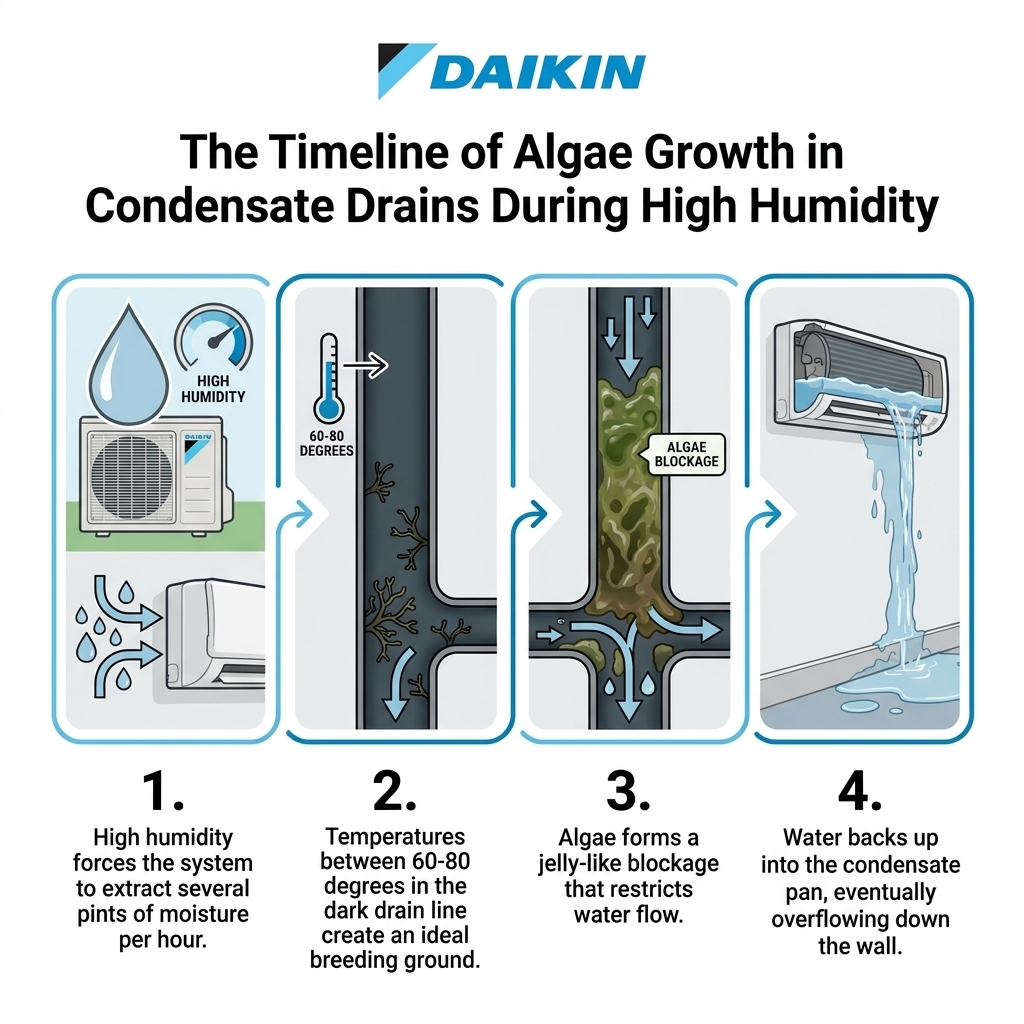
In our years of troubleshooting ductless systems across Tukwila and the greater Seattle area, we've found that the exact mechanism behind most late-summer indoor water leaks is rarely a manufacturing defect or a broken mechanical part. It is a completely natural biological reaction to the environment. The inside of a condensate drain line provides the perfect storm for biological growth: it is pitch black, constantly wet, and hovers at temperatures between 60 and 80 degrees Fahrenheit.
When the heavy August late-summer humidity forces a continuous flow of water through the system, any microscopic airborne spores that were pulled into the unit find the exact conditions they need to thrive. Algae forms a thick, jelly-like substance that clings to the ribbed walls of the drain line. Because the drain tube is relatively narrow, it does not take much of this biological buildup to start constricting the flow of water.
From Slow Drain to Complete Clog
Based on what our field technicians encounter daily, the progression from a perfectly clear line to a catastrophic leak usually follows a predictable seasonal timeline during humid weeks. Here is how the blockage develops:
1. The Spore Introduction: As the system pulls in warm room air, microscopic biological spores settle into the damp condensate pan and wash into the drain line.
2. The Incubation Phase: Constant moisture from the humidity spike feeds the spores. A thin, slimy biofilm begins to coat the inside of the plastic tubing.
3. The Jelly Buildup: The algae rapidly multiplies in the dark, warm environment, forming a thick, jelly-like mass that restricts the pipe's diameter by half. Water begins draining sluggishly.
4. The Complete Blockage: The algae mass catches a piece of household dust or pet hair, creating a total dam. The heavy flow of condensation backs up into the pan until it overflows down your wall.
Recognizing Common Daikin Heat Pump Problems Tied to Moisture
Catching a restricted drain line before it turns into a massive indoor leak can save you from extensive property damage. While a sudden drip is the most obvious sign, our team always advises homeowners that your system will often give you subtle early warning signs that the condensate line is struggling to keep up with the moisture load.
If you live in the Seattle/Tukwila area and notice any of the following symptoms during a humid stretch of weather, it usually means a clog is actively forming:
• Musty, damp odors: Often referred to as "dirty sock syndrome," a stale or swampy smell coming from the indoor unit is a prime indicator of standing water and active biological growth in the pan.
• Gurgling or dripping sounds: If you hear water bubbling, slurping, or dripping inside the wall casing while the unit is running, the drain line is likely restricted, causing water to pool abnormally.
• Unexplained system shutdowns: Many modern units are equipped with built-in float switches. If the pan fills dangerously high, this safety switch will automatically shut the system down to prevent a flood. If your unit turns off and refuses to run on a hot day, a full pan is a likely culprit.
• Indoor vs. outdoor leaks: It is perfectly normal for the outdoor compressor unit to drip condensation onto the ground during the winter heating cycle. However, water pooling under the indoor wall unit is never normal and requires immediate intervention.
The True Cost of Ignoring a Leaking Indoor Unit
Our team has seen firsthand how ignoring a dripping unit, even for just a few days during an August late-summer humidity spike, can escalate a simple maintenance task into a major home renovation project. When a condensate pan overflows, the water does not just disappear. It travels the path of least resistance, which is almost always down the interior of your drywall.
The immediate structural risks: Drywall acts like a sponge. As water cascades behind the wall casing, it saturates the sheetrock, compromising its structural integrity. Paint begins to bubble and peel, and if the water reaches the floor, it can permanently warp wooden baseboards and ruin expensive hardwood or laminate flooring.
The hidden air quality risks: Beyond the visible water damage, standing water inside the wall cavity creates a secondary breeding ground for hazardous mold spores. As the system blows air into the room, it can circulate these biological contaminants throughout your living space, severely degrading your home's air quality. Investing in comprehensive indoor environmental quality solutions starts with ensuring your equipment is draining properly.
• Immediate Professional Service — System Impact: Line is cleared, system runs efficiently, float switch resets. — Property Impact: Drywall remains intact, no flooring damage, air quality preserved.
• Delayed Action (Ignoring the Drip) — System Impact: System repeatedly shuts down, internal components remain soaked. — Property Impact: Drywall saturation, bubbling paint, warped baseboards.
• Long-Term Neglect — System Impact: Severe algae overgrowth, potential electrical shorts from water. — Property Impact: Hidden mold growth inside wall cavities, requiring structural repair.
Daikin Mini Split Troubleshooting: Why DIY Fixes Fall Short
When homeowners see water dripping from their unit, the immediate temptation is to grab a ladder and try to unclog the drain themselves. The internet is full of terrible advice suggesting the use of wire coat hangers, harsh bleach, or high-pressure compressed air. At the Daikin Seattle Experience Center, our professionals frequently get called out to fix the catastrophic aftermath of these well-intentioned DIY attempts in Tukwila homes.
The problem with physical probing: The condensate drain line hidden inside your wall is often made of relatively thin, flexible, corrugated plastic tubing. Shoving a stiff wire coat hanger or a plumbing snake down this tube will almost certainly puncture the plastic. Once the line is punctured behind the drywall, you have created a permanent, hidden leak that will destroy the wall from the inside out every time the system runs.
The problem with harsh chemicals: Pouring undiluted bleach into the condensate pan can degrade the plastic components of the pan itself, leading to cracking and structural failure. It can also cause toxic fumes to circulate through your home when the fan turns on.
The professional difference: To safely prevent Daikin ductless water leaks, our professionals use specialized, low-suction vacuums to pull the algae clog out from the outside of the house, rather than pushing it further in. We also apply safe, manufacturer-approved biocide treatments that prevent algae from returning, and we verify that the pan is pitched at the correct angle for optimal gravity drainage. Clearing a deep algae clog requires technical knowledge of the unit's internal components that simply cannot be replicated with a shop-vac and a coat hanger.
Empowering Homeowners Through HVAC Education
Understanding how your home comfort system interacts with the local climate is the single best way to prevent future issues. When you know why your unit produces water and how humidity affects it, you can make proactive decisions about maintenance rather than reacting in a panic when water starts dripping down the wall.
This philosophy of education over aggressive sales tactics is the foundation of the Daikin Seattle Experience Center. Just recently, our team welcomed a local homeowner who visited because they wanted to learn about the latest HVAC solutions before making any decisions for their property. They spent time at the Experience Center interacting with live displays, receiving clear education on current Daikin technology from our experts, and ultimately left with the deep HVAC knowledge they needed to make an informed, confident choice for their home.
When you visit the Experience Center, you can see these systems in actual operation. You can learn exactly where the filters are, how the condensate process works, and discuss proper, proactive maintenance schedules with true technical experts. Our goal is to build your confidence as a homeowner, ensuring you understand your equipment's needs without ever feeling pushed into unnecessary repairs or upgrades.
Frequently Asked Questions About Ductless Condensate Drains
Why is my Daikin mini split leaking water inside?
In our experience, your Daikin mini split is likely leaking water inside because the condensate drain line has become clogged with dirt, dust, or algae. When the system cools the air, it extracts moisture that normally drains outside. If that narrow drain line is blocked, the water backs up into the internal drain pan and eventually overflows down your interior wall.
Does high humidity affect mini split condensate drains?
Yes, high humidity drastically increases the amount of work your mini split condensate drain has to do. During heavy August late-summer humidity, the system extracts significantly more moisture from the air, creating a continuous flow of water. This constant dampness creates the perfect breeding ground for algae, which can quickly grow and clog the line.
Can high humidity cause my AC to leak?
High humidity itself does not directly break the AC, but it produces an overwhelming amount of condensation that can expose an existing partial clog. If your drain line is already slightly restricted by biological growth, the sudden surge of water during a humid week will overwhelm the drain pan, causing it to overflow and leak inside the house.
How do professionals fix a clogged condensate drain on a mini split?
Our professionals fix a clogged condensate drain by using specialized vacuum equipment to safely suction the blockage out from the exterior termination point. We avoid using high pressure or sharp tools that could puncture the delicate drain line inside the wall. Afterward, we typically treat the pan with a safe biocide to prevent algae from rapidly returning.
Why does algae grow in ductless drain lines?
Algae grows in ductless drain lines because the environment provides everything biological spores need to thrive: constant moisture, darkness, and warm temperatures. As the system pulls in warm room air, microscopic airborne spores settle in the damp pan and wash into the drain line, where they multiply into a thick, jelly-like blockage.
How often should a ductless condensate drain be professionally cleaned?
We recommend that a ductless condensate drain be professionally cleaned and inspected at least once a year as part of routine annual maintenance. However, if you live in an area prone to sudden humidity spikes or run your cooling system heavily, having the lines checked before the peak summer season ensures they are clear and ready to handle heavy moisture loads.
Protect Your Walls and Air Quality This Season
Sudden indoor water leaks are startling, but they are ultimately a solvable biological reaction to heavy August late-summer humidity. Recognizing the early warning signs and acting quickly is the best way to protect your home from extensive drywall and flooring damage. Schedule a professional inspection with our team today to clear your condensate lines safely, ensuring your system runs efficiently and your indoor air remains healthy all season long.
Schedule a Visit

your individual indoor comfort needs
products firsthand
with an authorized Daikin Dealer
.webp)
See why our customers Choose Us

“Jem is very inviting and knowledgeable. She gave us a walk through of the Daikin Experience Center and patiently answered all our questions. Learned a lot about HVAC’s through this visit.”
“Jem did a great job walking us through the various Daikin products and efficiencies of the products. She was very knowledgeable on everything Daikin. Highly recommend coming in for a tour prior to picking out your various AC systems.”
“Great experience at Daikin Seattle Experience Center: pre-purchase demos of home heating system (Daikin Fit), list of HVAC companies, working Daikin staff and external contractors to ensure highest quality. This experience sets the bar of how any home HVAC experience should be. Have got the Daikin Fit installed and so far seems to work very well – quiet, good home heating in peak winter (heat transfer/BTU/air handling); Functionality of Daikin thermostat and the iPhone app makes it very easy to use.”
“This place is awesome! If you are in the market for a new HVAC system, visit the Daikin Experience Center to get educated on the newest technology as well as available rebates and incentives for where you live. They’ll even connect you with local contractors in your area who install Daikin equipment.”
