

.webp)

.svg)


Decoding the True Value of the HSPF2 Rating for Heating
Evaluating Heating Efficiency for the Pacific Northwest's Unique Climate
Decoding the True Value of the HSPF2 Rating for Seattle's Prolonged Drizzle Season can feel overwhelming when your current heating system is struggling to keep the damp chill out of your home. At the Daikin Seattle Experience Center, our team regularly helps homeowners navigate the concrete problem of evaluating heat pump efficiency for our local climate, rather than relying on national averages that prioritize peak summer cooling or extreme sub-zero winters. You need equipment built for months of continuous dampness, not just brief cold snaps. Making this decision during the September pre-heating season transition is the smartest way to ensure your home stays comfortable before the heavy rain sets in. If you are ready to upgrade your indoor comfort, our team believes that exploring Daikin heat pumps and professional Seattle heat pump solutions is the best place to start.
The national advice disconnect: When guiding homeowners through our Tukwila showroom, our team typically sees a common pattern of confusion caused by online HVAC research. Most buying guides focus heavily on how well a system performs in a dry, freezing blizzard in the Midwest, or how efficiently it cools a house during a scorching summer in the Sunbelt. Those metrics are helpful for those regions, but in our experience, they do not reflect the reality of living in the Pacific Northwest. Here, the challenge is not necessarily the absolute lowest temperature on the thermometer. The challenge is the sheer duration of the cold, wet weather.
Seattle experiences a dominant 40-degree wet climate that stretches for months on end. This continuous drizzle and high humidity change the way mechanical equipment operates. A system that looks great on paper for a dry climate might struggle to maintain efficiency when pulling heat from moisture-heavy air day after day. This is exactly why we emphasize understanding the HSPF2 rating. It is the ultimate metric for measuring how effectively a system handles sustained, damp cold over an entire season, rather than just during brief, extreme weather events.
What is HSPF2 and Why Did the Testing Standards Change?
The core problem: For decades, the HVAC industry relied on a metric called HSPF (Heating Seasonal Performance Factor) to measure heat pump efficiency. However, as home construction evolved and ductwork systems became more complex, it became clear that the old laboratory testing conditions did not accurately reflect how these systems performed once installed in a real house. We frequently heard from homeowners who bought equipment based on high laboratory scores, only to find that their real-world energy consumption was higher than expected.
The cause of the change: To fix this discrepancy, the Department of Energy (DOE) implemented a new set of testing procedures in 2023, known as the M1 standard. The primary difference in this new testing protocol is the introduction of higher external static pressure. In simple terms, static pressure is the resistance your system fights against when pushing air through your home's ductwork, vents, and filters. The old test used a very low static pressure baseline that rarely existed outside of a laboratory. The new M1 test forces the equipment to operate against a much more realistic level of resistance, simulating the actual ductwork restrictions found in typical homes.
The solution for homeowners: The result of this updated testing procedure is the HSPF2 rating. Because the test is significantly harder to pass, HSPF2 provides a much more accurate and stricter baseline for predicting your actual energy consumption. It calculates the total space heating required during the season divided by the total electrical energy consumed by the heat pump.
The Shift from HSPF to HSPF2
One common point of confusion we address during this transition is the numerical value of the ratings. Because the HSPF2 test is more rigorous, the resulting numbers appear lower on paper than the older HSPF ratings. For example, a heat pump that previously scored a 9.0 HSPF might now score an 8.1 HSPF2.
Key takeaways about the transition:
• The equipment is not less efficient: A lower number on the new scale does not mean the heat pump uses more energy. It simply means the measuring stick has become more accurate.
• Apples-to-apples comparisons: When evaluating new equipment, you must compare HSPF2 to HSPF2. Comparing an older unit's HSPF to a newer unit's HSPF2 will give you a skewed perspective.
• Better real-world expectations: By simulating real-world ductwork restrictions, the new rating ensures that the efficiency you pay for is the efficiency you actually experience in your home.
The 40-Degree Challenge: How Continuous Dampness Tests Your System
To truly grasp why this rating matters, our team explains the physics of how a heat pump operates in our specific regional environment. In a dry, freezing climate, a heat pump works hard to extract whatever ambient heat remains in the frigid air. But in a 40-degree wet climate, a completely different mechanical challenge emerges: the defrost cycle.
When your heat pump pulls heat from the outdoor air, the outdoor coil gets very cold. In a damp climate, the abundant moisture in the air condenses on that cold coil and quickly turns to frost, even if the outside temperature is well above freezing. As frost builds up, it acts as an insulator, preventing the coil from absorbing heat. To fix this, the heat pump must temporarily reverse its operation, going into a defrost cycle to melt the ice before returning to heating mode.
Why this impacts your efficiency:
• Frequent cycling: A continuous drizzle forces the system into frequent defrost cycles, which momentarily pauses the heating of your home.
• Energy drain: Melting ice requires energy. If a system is not optimized for damp conditions, it will spend too much time and electricity managing frost rather than heating your living space.
• The HSPF2 advantage: Heat pumps with strong HSPF2 ratings are engineered to manage these defrost cycles quickly and efficiently, minimizing energy waste and keeping your indoor temperature stable.
Heat pumps are generally most efficient when maintaining temperatures in the 40-degree range, provided they are built to handle the accompanying moisture. When you are evaluating whole-house HVAC solutions, we recommend looking at how the system will perform over a sustained six-month drizzle season. A unit that manages frost buildup intelligently will consistently outperform a unit that struggles with continuous dampness, regardless of what the baseline laboratory numbers suggest.
Why HSPF2 Outweighs SEER2 for Washington State Buyers
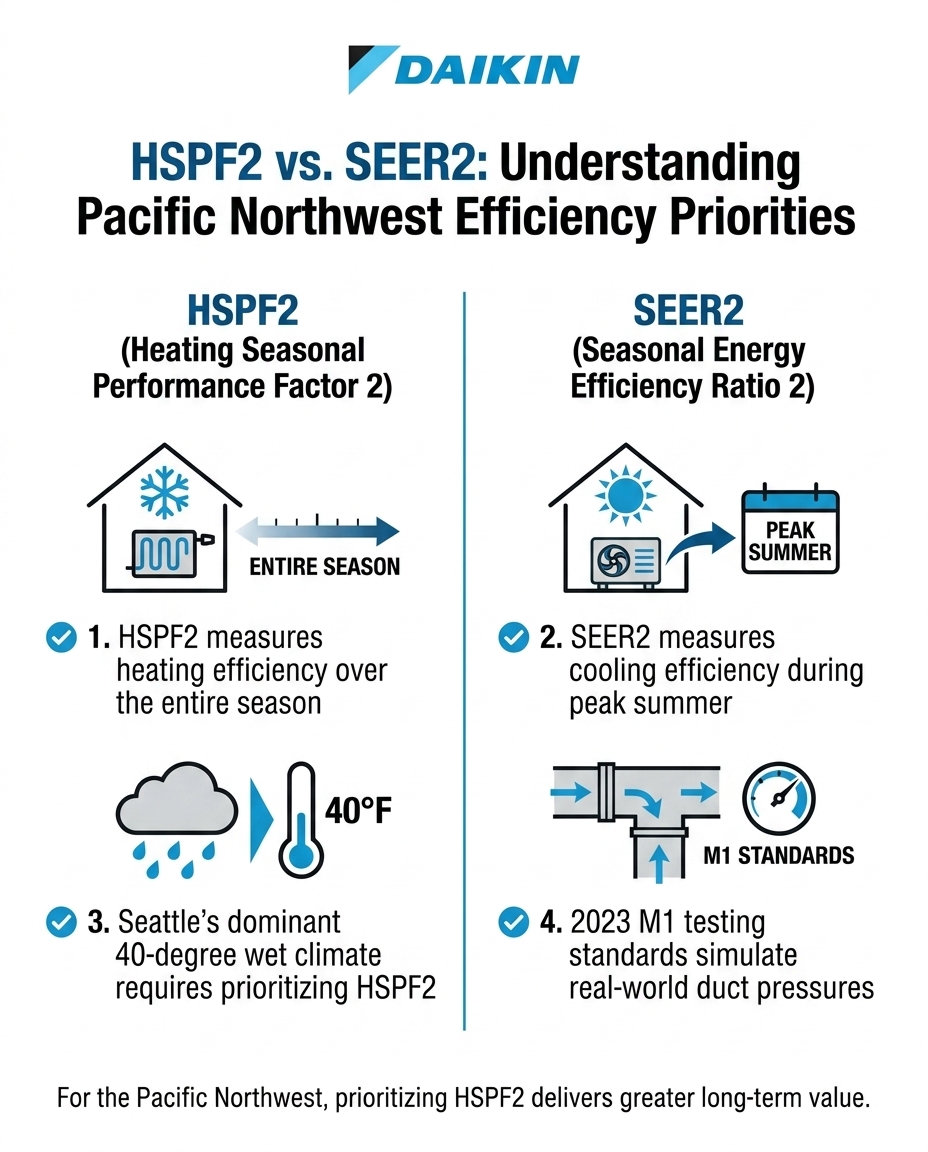
When you look at an energy guide label, you will typically see two prominent numbers: HSPF2 and SEER2. While HSPF2 measures heating efficiency, SEER2 (Seasonal Energy Efficiency Ratio 2) is its cooling counterpart, measuring how effectively the system air conditions your home during the summer.
While summer cooling is certainly becoming more important in the Pacific Northwest, the vast majority of your system's workload still occurs during the heating season. Prioritizing a high SEER2 rating at the expense of a high HSPF2 rating is a mismatch for regional energy consumption. You will spend far more days running your system in November, December, January, and February than you will in July and August.
• HSPF2 — Primary Function: Measures seasonal heating efficiency — Season of Focus: Fall, Winter, Early Spring — Relevance in Washington State: Highly critical. Dictates energy use during the long 40-degree wet season.
• SEER2 — Primary Function: Measures seasonal cooling efficiency — Season of Focus: Summer — Relevance in Washington State: Important for peak summer comfort, but secondary to heating performance.
In our experience consulting with Puget Sound families, focusing on heating efficiency ensures quiet, consistent comfort during the peak winter months. Just recently, our team welcomed a Washington homeowner to the Seattle Experience Center because they needed a quiet, efficient home heating system with easy-to-use controls to handle peak winter heating. By attending pre-purchase demos of the Daikin Fit system, they were able to see and hear the equipment in action. Ultimately, they had the system installed and found it to be exceptionally quiet while providing consistent, high-quality heating throughout the entire damp season. This outcome is directly tied to prioritizing the right metrics for the right climate.
How Inverter Technology Maximizes Your HSPF2 Rating
Understanding the rating is one thing, but understanding the mechanical components that drive a high score is another. The single biggest factor in achieving exceptional heating efficiency in a damp climate is the compressor. Older, traditional heat pumps use single-stage compressors. These units operate on a simple on/off basis: they blast heated air at 100% capacity until the thermostat is satisfied, then shut down completely. This constant cycling is loud, inefficient, and creates noticeable temperature swings in the home.
Modern, high-efficiency heat pumps solve this problem using variable speed components. We see the impact of this firsthand. Recently, our team guided a local homeowner wanting to learn more about heat pumps and inverter technology before making a major investment. By visiting us at the Daikin Experience Center for an educational walkthrough, they gained valuable insights into leading home comfort solutions and were able to confidently connect with certified contractors for their installation.
Here is exactly how inverter technology maximizes your system's efficiency score:
1. Eliminating the constant stop-and-start: Instead of shutting down completely, an inverter-driven compressor acts like the gas pedal in a car. It ramps up smoothly to reach the desired temperature, avoiding the massive energy spikes associated with hard starts.
2. Making continuous micro-adjustments: Once the target temperature is reached, the inverter dials back its speed, running at a low, continuous capacity to maintain the climate. This steady operation drastically improves the seasonal efficiency score.
3. Managing indoor humidity levels: Because the system runs longer at lower speeds, it has more time to cycle air over the indoor coil. This extended runtime is highly effective at managing indoor humidity during the damp winter months, making the air feel warmer and more comfortable.
4. Smoothing out the defrost cycle: Variable speed systems can adjust their output to manage frost buildup on the outdoor coil more intelligently, reducing the energy penalty of frequent defrosting in a 40-degree wet climate.
Navigating Minimum Requirements and Efficiency Incentives
Because heating and cooling account for a massive portion of residential energy use, the federal government heavily regulates the minimum efficiency standards for new equipment. The Department of Energy divides the country into regions, recognizing that a home in the North has vastly different heating requirements than a home in the South.
Understanding the regional baseline: For the northern region, which includes Washington state, the Department of Energy has established specific minimum HSPF2 requirements for all new heat pump installations. Any new system installed must meet or exceed this baseline to comply with federal regulations. This ensures that all new equipment provides a baseline level of energy conservation, even at the entry-level tier.
The financial benefits of upgrading: While meeting the minimum requirement is mandatory, exceeding those minimum standards often qualifies homeowners for various energy incentives. High-efficiency systems that boast top-tier HSPF2 ratings frequently meet the criteria for specialized programs designed to encourage energy conservation.
Federal tax credits and local utility rebates may apply to qualifying heat pump installations that meet specific efficiency thresholds. These programs are designed to offset the initial investment of high-performance equipment, making it easier to choose a system that will deliver superior comfort and lower operating usage over its lifespan. Because these programs change frequently and have very specific qualification criteria, we strongly advise readers to verify current programs, eligibility requirements, and specific HSPF2 thresholds with their local utility provider or a qualified tax professional before making a purchase decision.
Evaluating Heat Pump Models Before the Drizzle Sets In
Synthesizing all of this technical information into a confident purchase decision requires looking closely at specific equipment during the right time of year. The September pre-heating season transition is the optimal window for this evaluation. Waiting until your old system fails in the middle of a November rainstorm forces you into an emergency decision, often leading to rushed choices and compromised efficiency.
Reading the EnergyGuide label: When comparing models, the yellow EnergyGuide label is your primary tool. It prominently displays the HSPF2 rating, allowing you to compare the heating performance of different units side-by-side. However, a label can only tell you so much. To truly understand how a system will perform, we recommend comparing different Daikin heat pump models based on their specific heating capabilities, sound levels, and airflow characteristics.
The value of an educational approach: This is where a hands-on environment makes all the difference. Our team at the Daikin Experience Center takes a strictly educational, no-pressure approach to HVAC upgrades. Instead of sitting at your kitchen table looking at brochures, you can touch, hear, and visualize the equipment in operation. This interactive experience helps demystify technical metrics, allowing you to understand the HSPF2 rating as a long-term comfort investment rather than just a sales feature. You can feel the gentle airflow of an inverter system and hear how quietly it operates, translating numbers on a page into real-world comfort.
Frequently Asked Questions About Heat Pump Efficiency
Why is HSPF2 important for Seattle winters?
HSPF2 is critical for Seattle winters because it specifically measures a heat pump's efficiency during prolonged, damp cold. Unlike national averages that focus on extreme sub-zero temperatures, this rating reflects how well a system handles the continuous 40-degree wet climate that dominates the Pacific Northwest. A higher rating ensures the system can manage frequent defrost cycles without wasting energy.
What is a good HSPF2 rating for a 40-degree wet climate?
A strong HSPF2 rating for a wet climate is one that comfortably exceeds the Department of Energy's minimum regional requirements. In our professional experience, systems utilizing variable speed inverter technology typically offer the best ratings for these conditions. These higher-rated units are specifically engineered to maintain steady temperatures and manage moisture effectively throughout a long drizzle season.
How does HSPF2 differ from SEER2 for Washington state homeowners?
The primary difference is the season of focus: HSPF2 measures winter heating efficiency, while SEER2 measures summer cooling efficiency. For Washington state homeowners, HSPF2 is the more important metric because the heating season lasts significantly longer than the cooling season. Prioritizing heating performance ensures your system operates efficiently during its highest usage months.
What is the difference between HSPF and HSPF2?
The difference lies in the testing conditions used to calculate the score. HSPF2 uses the updated 2023 M1 testing standards, which apply a higher external static pressure to simulate real-world ductwork restrictions. Because the new test is more rigorous, HSPF2 ratings appear numerically lower than older HSPF ratings, but they provide a much more accurate prediction of real-world energy consumption.
What is the minimum HSPF2 requirement for the northern region?
The Department of Energy sets specific minimum HSPF2 requirements that all new heat pump installations in the northern region must meet. These federal baselines ensure a standard level of energy conservation. Exceeding these minimums often qualifies homeowners for various energy incentives, though specific thresholds vary by program and utility provider.
How do defrost cycles impact a heat pump's HSPF2 efficiency?
Defrost cycles temporarily reverse the heat pump's operation to melt ice off the outdoor coil, which consumes energy and pauses indoor heating. In a damp climate, excessive moisture causes frequent frost buildup. Systems with high HSPF2 ratings are designed to execute these defrost cycles quickly and intelligently, minimizing energy waste and maintaining consistent indoor comfort.
Make an Informed Decision for Your Winter Comfort
Understanding the true value of your equipment's ratings is the key to mastering comfort in a 40-degree wet climate. By prioritizing heating performance over cooling metrics, and recognizing the importance of real-world testing standards, you can choose a system that will quietly and efficiently manage the continuous dampness of the Pacific Northwest. Do not wait for the cold weather to force an emergency replacement. Take advantage of the fall transition to explore your options, ask questions in a no-pressure educational setting, and discover how modern inverter technology can transform your home. When you are ready to take the next step, our team in Tukwila invites you to learn more about professional Seattle heat pump solutions and secure your comfort for the long winter ahead.
Schedule a Visit

your individual indoor comfort needs
products firsthand
with an authorized Daikin Dealer
.webp)
See why our customers Choose Us

“Jem is very inviting and knowledgeable. She gave us a walk through of the Daikin Experience Center and patiently answered all our questions. Learned a lot about HVAC’s through this visit.”
“Jem did a great job walking us through the various Daikin products and efficiencies of the products. She was very knowledgeable on everything Daikin. Highly recommend coming in for a tour prior to picking out your various AC systems.”
“Great experience at Daikin Seattle Experience Center: pre-purchase demos of home heating system (Daikin Fit), list of HVAC companies, working Daikin staff and external contractors to ensure highest quality. This experience sets the bar of how any home HVAC experience should be. Have got the Daikin Fit installed and so far seems to work very well – quiet, good home heating in peak winter (heat transfer/BTU/air handling); Functionality of Daikin thermostat and the iPhone app makes it very easy to use.”
“This place is awesome! If you are in the market for a new HVAC system, visit the Daikin Experience Center to get educated on the newest technology as well as available rebates and incentives for where you live. They’ll even connect you with local contractors in your area who install Daikin equipment.”
