

.webp)

.svg)


Heat Pump Rattling Noise? Late Summer Wear Explained
Is That Rattling Normal? Decoding Your Heat Pump's Late Summer Noises
Are you suddenly hearing a loud, aggressive vibration coming from your outdoor unit, leaving you wondering if something is seriously wrong? Assessing late summer wear on your heat pump: what that rattling noise actually means is a critical skill for any homeowner, especially when the sound appears out of nowhere during the hottest part of the year. By late August after continuous summer cooling, your system has endured hundreds of hours of non-stop operation, and the mechanical stress can manifest in surprising auditory ways.
If you need to understand the baseline operation of Heat Pump Systems, knowing the difference between normal operational hums and problematic rattling is the first step. Hearing an unfamiliar, heavy vibration from your outdoor cabinet instantly causes anxiety. You rely on this equipment to keep your home comfortable, and a sudden change in sound profile often triggers fears of catastrophic failure.
However, that disruptive noise usually points to one of two very different culprits: a completely harmless loose exterior panel, or a highly critical internal compressor failure. To the untrained ear, these two issues can sound remarkably similar, echoing through the metal cabinet and amplifying across your yard. Setting the right expectations is essential. You do not need to be a licensed technician to safely observe the symptoms from the outside.
By learning how to distinguish between superficial vibrations and deep mechanical distress, you can make an informed, confident decision about whether to let the system keep running or shut it off immediately at the thermostat to prevent severe damage.
The Cumulative Toll of Pacific Northwest Heatwaves
Understanding why these mechanical noises emerge specifically at this time of year requires looking at the regional climate context. Homeowners in Tukwila and the greater Seattle area are experiencing shifting weather patterns. Increasing summer heatwaves in the region require heat pumps to run longer and harder than historical averages. This prolonged operation accelerates a very specific type of late-summer mechanical wear.
Every time your heat pump's compressor and outdoor fan motor engage, they generate micro-vibrations. During a mild season with plenty of downtime, these vibrations have minimal impact. But during a prolonged heatwave, the system might run for weeks with only brief off-cycles. This continuous, heavy cooling demand increases the cumulative vibration across the entire outdoor unit.
Over thousands of operational hours, this constant shaking takes a toll. The persistent mechanical stress gradually loosens the screws holding the exterior fan grilles and access panels in place. It also places immense pressure on the internal rubber grommets and mounts designed to absorb the compressor's torque. When you are looking for reliable Seattle Heat Pump Solutions, it is important to recognize that late-summer rattling is rarely a random occurrence. It is almost always a direct symptom of cumulative operational stress.
By late August, the hardware securing the cabinet has simply vibrated loose, or the internal dampeners have reached their fatigue limit. Recognizing this seasonal pattern helps demystify the noise and frames it as a predictable outcome of heavy usage rather than a mysterious, sudden break.
Superficial Vibrations vs. Deep Mechanical Distress
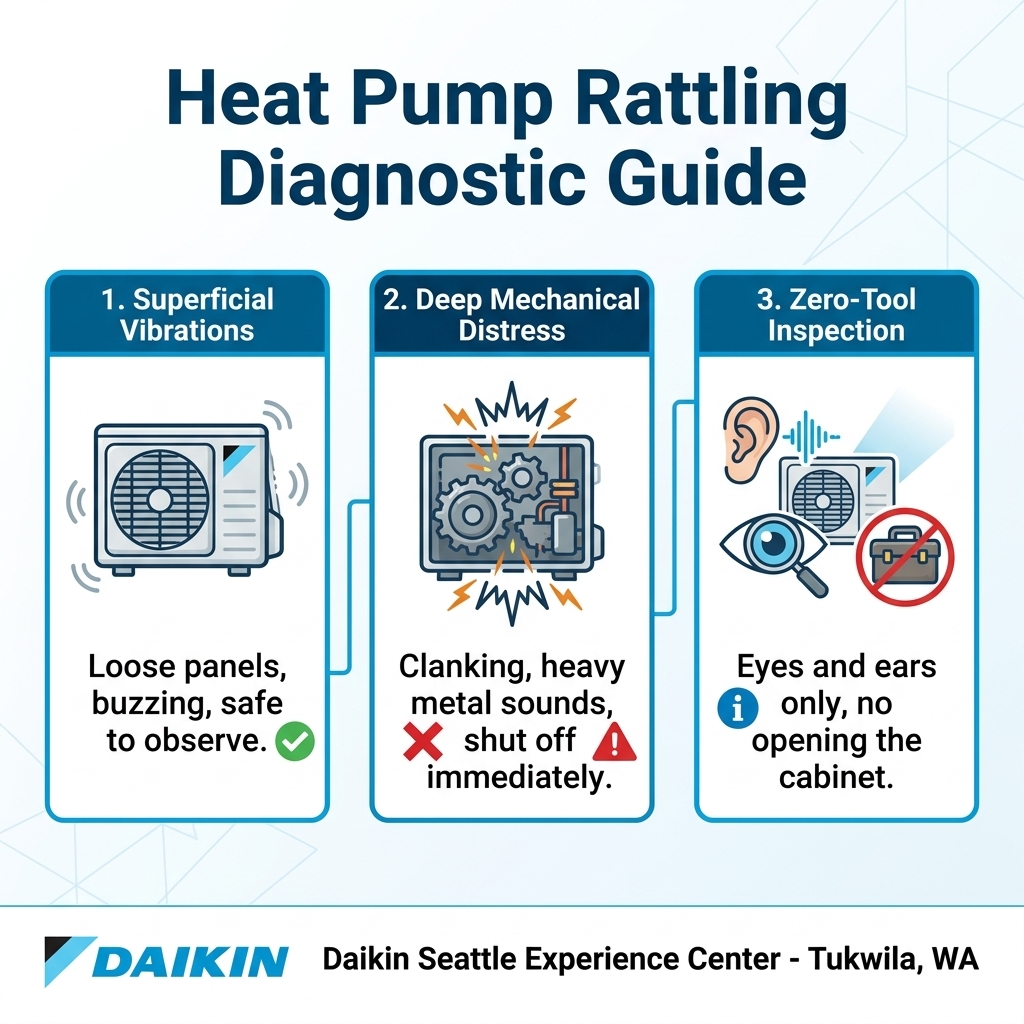
When diagnosing a new noise by late August after continuous summer cooling, the most important distinction is separating superficial cabinet vibrations from deep mechanical distress. Both issues cause the metal chassis to rattle, but they require entirely different responses.
Superficial vibrations are annoying but generally safe. These include loose cabinet screws, unseated service panels, or small pieces of yard debris lightly striking the fan blades. Because the cabinet acts like an acoustic amplifier, a single loose screw on an aluminum panel can create a startlingly loud, high-pitched buzzing sound that carries into the house.
Deep mechanical distress, on the other hand, involves the heavy, moving parts that drive the cooling process. This includes failing motor bearings, vibrating high-pressure refrigerant piping, or failing compressor isolation mounts. When these components fail, the system is in immediate danger of destroying itself if left running.
Proper Daikin AC Maintenance can prevent many of these issues, but if you are hearing the noise now, you need to know the difference. The table below breaks down the key distinctions between the two categories.
• Superficial Vibration — Common Causes: Loose exterior screws, unseated panels, minor debris — Sound Profile: High-pitched buzzing, tinny rattling, localized to the cabinet walls — Immediate Action Required: Safe to observe; visually locate the loose panel
• Deep Mechanical Distress — Common Causes: Failing compressor mounts, bad fan bearings, piping stress — Sound Profile: Heavy metal clanking, deep grinding, localized to the internal base — Immediate Action Required: Shut system off immediately at the thermostat
• Fan Blade Interference — Common Causes: Sticks, heavy leaves, or ice buildup hitting the blades — Sound Profile: Rhythmic slapping or rapid ticking that matches fan speed — Immediate Action Required: Shut off system; clear visible debris without opening cabinet
• Refrigerant Line Rattle — Common Causes: Copper lines vibrating against the metal cabinet chassis — Sound Profile: Consistent, localized tapping where lines enter the home — Immediate Action Required: Schedule professional service to secure the lines
While superficial issues are frustrating to listen to, they will not destroy your compressor. Deep distress, however, requires immediate professional intervention to save the core components of your system.
How to Perform a Safe, Zero-Tool Exterior Inspection
When you hear a concerning noise from your outdoor unit, your first instinct might be to grab a screwdriver and start taking off panels to see what is wrong. You must resist this urge. Heat pumps contain high-voltage electrical capacitors and highly pressurized refrigerant lines that present severe safety hazards to anyone without proper training and licensing.
Instead, we strongly advocate for an educational approach that empowers you to "listen" to your system confidently, removing the fear of the unknown without pressuring you into an immediate service call for a harmless loose screw. One local homeowner shopping for a new heating and cooling system visited the Daikin Experience Center in the spring to touch, hear, and visualize systems in real settings. That hands-on learning experience gave them the confidence to know exactly how a healthy unit should sound and operate. You can apply those same confident observation skills in your own backyard in the Tukwila and greater Seattle area using a strict "eyes and ears only" policy.
1. Isolate the location of the sound: Walk slowly around the operating unit. Listen carefully to determine if the rattling is coming from the top fan grille, the side aluminum panels, or deep within the heavy base of the unit. High-up buzzing is usually a grille; deep clanking is usually internal.
2. Perform a visual sweep for debris: Without touching the unit or inserting anything through the grilles, look down into the fan area. Check for small branches, heavy pinecones, or other debris that might have bypassed the guard and is now striking the spinning fan blades.
3. Observe the cabinet panels: Look closely at the exterior metal panels while the unit is running. If you see a panel visibly vibrating or notice a missing exterior screw, you have likely found the source of a superficial rattle. You may gently press a flat hand against the center of a vibrating exterior panel (avoiding the fan grille) to see if the noise stops, which confirms it is just loose sheet metal.
4. Listen during the startup and shutdown sequence: Stand near the unit when it first turns on or powers down. The torque generated during these transitions often causes the entire chassis to twist slightly. If the rattling is violently loud right at startup but smooths out somewhat while running, it points heavily toward failing internal mounts that can no longer handle the motor's torque.
By following these steps, you can gather crucial diagnostic information safely. This zero-tool inspection gives you the exact details you need to describe the problem accurately to a professional, without ever exposing yourself to internal mechanical dangers.
The Distinct Sound of a Failing Compressor Isolation Mount
If your exterior inspection rules out loose panels and visible debris, the most likely culprit for late-summer rattling is a failing compressor isolation mount. The compressor is the heavy, vital heart of your heat pump, responsible for pressurizing the refrigerant. Because it houses a powerful internal motor, it generates massive amounts of vibration during normal operation.
To prevent this heavy vibration from shaking the entire cabinet apart, the compressor sits on thick rubber isolation mounts (or grommets) bolted to the base pan. These mounts are designed to absorb the mechanical shock. However, by late August after continuous summer cooling, the intense heat and thousands of operational hours can cause these rubber dampeners to dry out, crack, or completely disintegrate.
When an isolation mount fails, the compressor is no longer cushioned. The heavy steel base of the compressor begins to bounce directly against the metal base pan of the cabinet. The auditory signature of this failure is unmistakable. Unlike the light, tinny buzzing of a loose exterior aluminum panel, a failed mount produces a harsh, heavy, metal-on-metal clanking. It sounds like a heavy washing machine that is violently out of balance, and the noise emanates from the very bottom of the unit.
The risks of ignoring this distinct sound are severe. If the compressor is allowed to thrash around violently, it pulls aggressively on the copper refrigerant lines connected to it. Continual thrashing will eventually snap these copper lines, venting your system's refrigerant into the atmosphere and potentially destroying the compressor itself. Recognizing this deep, heavy sound is your cue to take immediate action to protect your investment.
When to Cut the Power and Call for Professional Diagnostics
Once you have observed the unit and identified the nature of the sound, you reach the critical decision boundary. If the rattling is a light, superficial vibration from an exterior panel, you can safely leave the system running while you arrange for a routine maintenance visit to have the hardware tightened.
However, if your zero-tool inspection reveals a deep, metallic clanking, violent shaking from the base, or if the noise is accompanied by poor cooling performance inside the home, you must shut the system off immediately. Do not wait to see if it improves. Go to your indoor thermostat and set the system to "Off." Running a heat pump with an internal mechanical failure guarantees more extensive damage with every minute it operates.
Once the power is cut, it is time to bring in an expert. Only a licensed professional can safely open the cabinet to inspect the electrical capacitors, secure the high-voltage wiring, and evaluate the integrity of the refrigerant lines. Attempting to repair internal components without the proper licensing is dangerous and can void your equipment warranty.
Reviewing Professional Service Details ensures you know what to expect when a technician arrives. A professional diagnostic will pinpoint the exact cause of the rattling without guesswork. For homeowners in Tukwila and the greater Seattle area, calling a licensed technician provides the reassurance that the true root cause—whether it is a degraded compressor mount or a failing fan motor bearing—will be identified and resolved safely, restoring your system to quiet, efficient operation.
Frequently Asked Questions About Late Summer Heat Pump Rattling
Homeowners often have similar concerns when their outdoor unit starts making unexpected noises. Here are the most common questions regarding late-summer heat pump rattling, answered directly.
Why is my heat pump making a loud rattling noise?
A loud rattling noise is often caused by cumulative vibration that slowly loosens exterior fan grilles or access panels over weeks of heavy use. It can also indicate more severe internal issues, such as failing compressor isolation mounts or yard debris striking the fan blades. By late August after continuous summer cooling, the mechanical stress reaches its peak, making these loose components much more apparent. Identifying where the sound is coming from is the first step in diagnosing the severity.
Is it safe to run a heat pump if it is rattling?
It is only safe to run a rattling heat pump if you have visually confirmed that the noise is caused by a superficial loose exterior panel or grille. If the noise is a deep, metal-on-metal clanking or grinding sound, it indicates an internal mechanical failure, and running the system is unsafe and potentially destructive. When in doubt, it is always safer to turn the unit off at the thermostat and request a professional diagnostic to prevent further damage.
What does a bad heat pump compressor sound like?
A bad or failing heat pump compressor typically produces a heavy, clanking, or harsh metallic rattling that emanates from the very base of the outdoor unit. It often sounds like loose metal parts are violently shaking together or grinding during operation. You may also hear a loud screeching or hissing noise if the internal valves are failing or if the violent vibration has caused a refrigerant leak.
How do I fix a rattling noise in my outside AC unit?
Homeowners can safely address superficial rattling by visually inspecting the unit and using a screwdriver to gently tighten any obviously loose screws on the exterior access panels. However, you must never open the cabinet yourself. Internal repairs, such as replacing compressor mounts or fan bearings, require a licensed professional due to the extreme dangers of high voltage capacitors and pressurized refrigerant lines.
Why do heat pump noises seem to get louder at the end of summer?
Heat pump noises often peak at the end of summer because weeks of continuous, heavy cooling cycles maximize the cumulative mechanical stress on the entire system. Vibration naturally loosens fasteners, degrades rubber isolation mounts, and wears down motor bearings over time. By late summer, the system has experienced thousands of hours of uninterrupted torque and vibration, causing these minor mechanical shifts to finally become audible.
Get Peace of Mind with a Professional System Evaluation
Addressing unusual noises before the cooling season completely ends is the best way to protect your home's comfort system. Ignoring a heavy rattling sound might save time today, but it risks catastrophic compressor failure tomorrow. If you have performed a visual exterior inspection and are still unsure about the source of the noise, the safest choice is to rely on expert guidance.
Homeowners in Tukwila and the greater Seattle area can benefit from an educational, zero-pressure diagnostic approach. Scheduling a professional inspection provides total peace of mind, ensuring that an expert accurately identifies the difference between a harmless loose panel and a critical internal failure. Don't let a mystery noise cause ongoing anxiety—get a clear, professional evaluation and keep your system running smoothly.
Schedule a Visit

your individual indoor comfort needs
products firsthand
with an authorized Daikin Dealer
.webp)
See why our customers Choose Us

“Jem is very inviting and knowledgeable. She gave us a walk through of the Daikin Experience Center and patiently answered all our questions. Learned a lot about HVAC’s through this visit.”
“Jem did a great job walking us through the various Daikin products and efficiencies of the products. She was very knowledgeable on everything Daikin. Highly recommend coming in for a tour prior to picking out your various AC systems.”
“Great experience at Daikin Seattle Experience Center: pre-purchase demos of home heating system (Daikin Fit), list of HVAC companies, working Daikin staff and external contractors to ensure highest quality. This experience sets the bar of how any home HVAC experience should be. Have got the Daikin Fit installed and so far seems to work very well – quiet, good home heating in peak winter (heat transfer/BTU/air handling); Functionality of Daikin thermostat and the iPhone app makes it very easy to use.”
“This place is awesome! If you are in the market for a new HVAC system, visit the Daikin Experience Center to get educated on the newest technology as well as available rebates and incentives for where you live. They’ll even connect you with local contractors in your area who install Daikin equipment.”
