

.webp)

.svg)


How Daikin Inverter Systems Run Quieter: 2026 #1 Choice
Why Your HVAC System's Noise Level Matters More Than You Think
How Daikin inverter systems run quieter than traditional units comes down to one core difference: variable-speed operation versus the all-or-nothing cycling of a standard compressor.
Here's a quick breakdown:
- Traditional AC units run at 100% capacity or shut off completely, creating loud startup surges of 70-80 decibels and steady operational noise of 65-75 decibels
- Daikin inverter systems modulate compressor speed continuously, operating as low as 56 dB(A) — quieter than a normal conversation
- The Daikin Fit runs between 58-60 dB during normal operation, which is actually quieter than a common electric toothbrush
- Specific models like the DH6VS can reach as low as 45 dB(A) in quiet mode
For Seattle homeowners, that difference is hard to ignore. Traditional systems kick on with a jarring thud — loud enough to interrupt sleep, break your concentration on a video call, or cut through a quiet evening on the patio. In a city where homes sit close together and indoor-outdoor living is part of the culture, an HVAC system that hums along softly in the background isn't a luxury. It's a real quality-of-life upgrade.
We'll walk through exactly how Daikin's inverter technology achieves that quieter operation — from the compressor mechanics to the physical design of the outdoor unit.
How Daikin inverter systems run quieter than traditional units through variable-speed technology
To understand why traditional units are so noisy, we first have to look at how they work. Most standard air conditioners and heat pumps use single-stage compressors. This means they are either "all on" (running at 100% capacity) or "all off." When the thermostat detects a temperature change, it sends a signal to the unit to blast cold or warm air at full speed until the target temperature is reached.
This binary operation is the primary source of HVAC noise. It’s like driving a car where the only two settings are "stationary" and "pedal to the metal." You can imagine the roar of the engine every time you need to move a few feet.
Daikin changes this dynamic entirely with Inverter Technology Air Conditioners. Instead of the stop-and-go method, an inverter system acts like cruise control for your home. It uses Pulse Width Modulation (PWM) to adjust the electrical current sent to the compressor motor. This allows the system to speed up or slow down in tiny increments to match the exact heating or cooling load of your home at any given moment.
By modulating the energy use, the system rarely needs to run at full capacity. Most of the time, it hums along at a low, energy-conserving speed. This steady pace is significantly quieter than a traditional motor that is constantly fighting to overcome the inertia of a dead stop. You can learn more about the mechanics of this in our guide on What is AC Inverter Technology.
Eliminating the jarring startup: how daikin inverter systems run quieter than traditional units
If you’ve ever been startled by your HVAC system "kicking on" in the middle of the night, you’ve experienced the high-decibel surge of a traditional unit. Standard systems require a massive amount of electricity—known as startup amperage—to get the motor spinning from a standstill. This surge often causes a loud "thwack" or humming sound, and in some older homes, it can even cause the lights to flicker momentarily.
How Daikin inverter systems run quieter than traditional units is through "soft start" technology. Because the inverter can control the frequency of the power, it starts the motor at a very low speed and gradually ramps it up. There is no sudden power surge, no jarring mechanical noise, and no flickering lights.
This approach doesn't just benefit your ears; it also reduces mechanical strain. The constant "slamming" on and off of a traditional compressor leads to faster wear and tear. By contrast, the smooth acceleration of a Daikin inverter system extends the life of the components while keeping the peace in your neighborhood. For a deeper dive into these differences, check out our comparison of Inverter vs Non-Inverter AC.
Continuous operation vs. binary cycling
It might seem counterintuitive, but an HVAC system that is "always on" is actually better for your comfort and your noise levels. Traditional systems cycle on and off dozens of times a day. Each time they shut down, the temperature begins to drift and humidity begins to build back up. When they roar back to life, they have to work extra hard to fix the climate.
Daikin inverter systems are designed to run for longer durations at lower speeds. This continuous operation eliminates the frequent, noisy cycling that characterizes standard units. Because the motor isn't constantly stopping and starting, the sound remains a consistent, low-level hum that eventually becomes "white noise" that you don't even notice.
This steady operation also provides superior humidity control. In the humid summers we sometimes experience in the Pacific Northwest, a traditional unit might cool the air quickly and shut off before it has a chance to remove moisture. A Daikin inverter system keeps the air moving and the dehumidification process active without the noise of a full-speed fan. Discover more about these comfort perks in our article on Why Choose an Inverter AC System.
Comparing decibel levels: Daikin Fit vs. standard air conditioners
When we talk about "quiet," it helps to have concrete numbers. Sound is measured in decibels (dB), and because the decibel scale is logarithmic, a small change in the number represents a massive change in perceived loudness. For example, a 10 dB increase usually sounds twice as loud to the human ear.
| System Type | Startup Noise | Normal Operation |
|---|---|---|
| Traditional 1-Stage Unit | 70 - 80 dB | 65 - 75 dB |
| Daikin Fit Inverter | N/A (Soft Start) | 56 - 60 dB |
| Daikin DH6VS (Quiet Mode) | N/A (Soft Start) | As low as 45 dB |
To put these numbers in perspective, a traditional unit at 75 decibels is roughly as loud as a vacuum cleaner or a busy restaurant. Living with that outside your bedroom window can be a challenge.
On the other hand, the Daikin Fit operates at 56-60 dB. According to data from the NIDCD, a normal conversation between two people typically occurs at about 60 dB. This means that how daikin inverter systems run quieter than traditional units is quite literal—you could stand right next to a running Daikin Fit and have a conversation without raising your voice.
In fact, the Daikin Fit is quieter than a common electric toothbrush, which usually hums along at 60-75 dB. If you want to experience this for yourself, we invite you to Hear How Loud a Heat Pump Is Before Buying at our Seattle Experience Center.
Engineering for silence: side-discharge and slim design
The quiet nature of Daikin systems isn't just about the motor; it’s also about the physical architecture of the unit. Most traditional air conditioners are "top-discharge" units. They are large, square cubes with a massive fan on top that blows air upward. These units often vibrate significantly, and the sound of the air being pushed up can echo off the siding of your house.
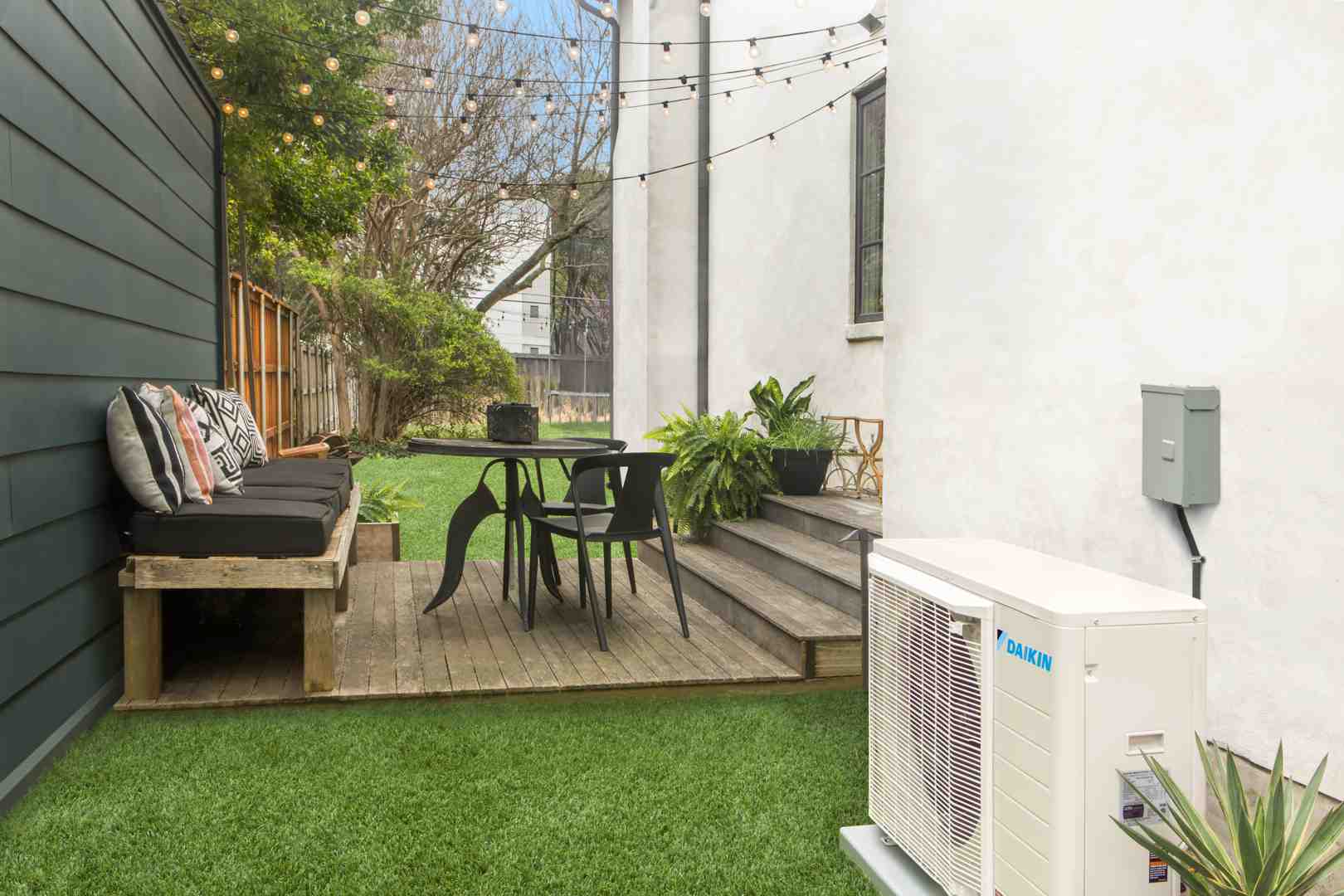
The Daikin Fit features a side-discharge design. It is much slimmer than a traditional unit—often only 12 to 14 inches deep. This design allows the unit to use a different fan blade profile that moves air more efficiently with less turbulence. Less turbulence means less noise.
Additionally, Daikin uses a proprietary "swing compressor." Traditional compressors have many moving parts that can "clatter" over time. The swing compressor reduces friction and vibration, which are the two main culprits of mechanical noise. When you combine this with the Blue Fin corrosion-resistant coating that keeps the unit running smoothly in our salty PNW air, you get a system that stays quiet for a decade or more. You can find more details on these high-performance builds in our post on Advanced HVAC Systems Focused on Comfort and Quiet Operation.
Outdoor living flexibility: how daikin inverter systems run quieter than traditional units
In Seattle and Tukwila, many of us live in zero-lot-line homes or townhomes where space is at a premium. If your outdoor unit has to be installed right next to your patio or directly under a bedroom window, noise becomes a dealbreaker.
Because the Daikin Fit is so quiet and has such a small footprint (requiring as little as 4 inches of clearance from the wall), it offers installation flexibility that traditional units can't match. You can enjoy a BBQ on your patio without the roar of the AC drowning out your music. Your neighbors will also appreciate the upgrade, as the side-discharge design directs sound away from their windows rather than letting it billow out in all directions.
Lifestyle benefits of a whisper-quiet HVAC system
We often don't realize how much "background noise" affects our stress levels until it’s gone. Upgrading to a quieter system isn't just a technical choice; it’s a lifestyle choice.
- Remote Work Focus: In the 2026 work-from-home era, a quiet environment is essential. You shouldn't have to mute your microphone every time the heater kicks on.
- Better Sleep: The "soft start" of an inverter system means you won't be jolted awake by a loud startup cycle at 3:00 AM.
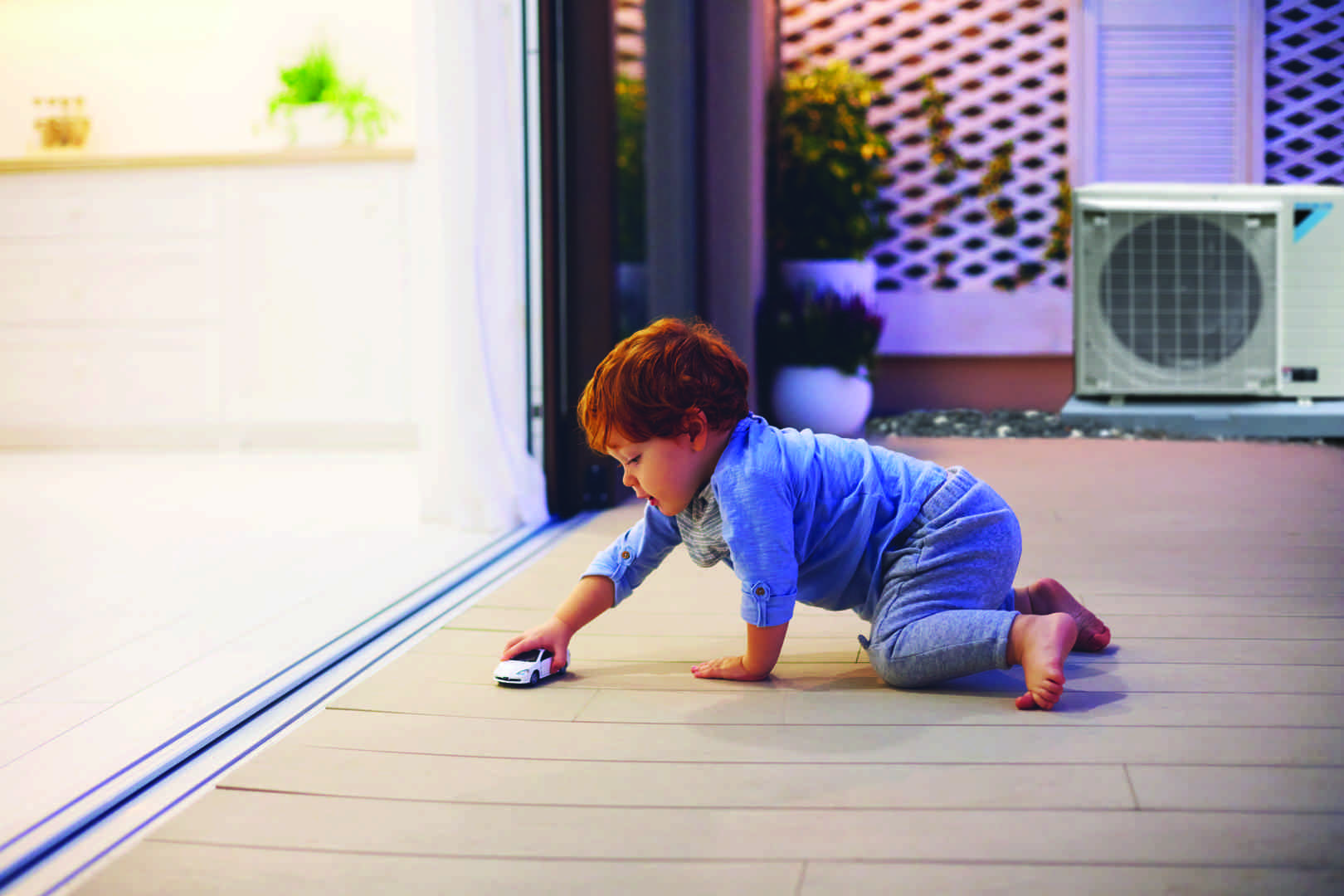
- Nursery Comfort: For families with infants, a quiet HVAC system is a godsend. The steady, low hum of a Daikin unit acts as a gentle white noise machine rather than a disruptive clatter.
- Outdoor Enjoyment: Whether you're gardening or relaxing on the deck, the absence of a loud, vibrating compressor makes your outdoor space feel more like a sanctuary and less like a mechanical room.
By choosing a system that prioritizes acoustic comfort, you’re investing in the overall serenity of your home. We’ve seen how this transforms the daily lives of our clients in the Pacific Northwest.
Frequently Asked Questions about Daikin Inverter Noise Levels
How does the variable-speed compressor reduce indoor noise?
While much of the focus is on the outdoor unit, inverter technology also reduces indoor noise. Because the system runs at lower speeds, the airflow through your ducts is more consistent and less forceful. This eliminates the "whoosh" of air that often accompanies a traditional system's startup and prevents the "popping" sounds caused by ducts expanding and contracting from sudden temperature changes.
Is a Daikin Fit really quieter than an electric toothbrush?
Yes! As we noted earlier, a Daikin Fit typically operates between 58 and 60 decibels. Most electric toothbrushes fall into the 60 to 75 decibel range. It is truly remarkable that a machine capable of cooling an entire house makes less noise than a small device you hold in your hand.
Does continuous operation mean the system is louder over time?
Actually, the opposite is true. Because inverter systems avoid the high-stress on/off cycles, the internal components experience much less wear. A motor that runs at a steady, low pace is under much less mechanical "stress" than one that is constantly being forced to jump to 100% capacity. This means the system stays quieter for a longer portion of its lifespan compared to traditional units.
Conclusion
At Daikin (Seattle), we believe that comfort should be felt, not heard. How Daikin inverter systems run quieter than traditional units is a testament to years of engineering focused on the homeowner experience. From the variable-speed compressor that acts like cruise control to the slim, side-discharge design that fits into the tightest Seattle side yards, every element is built for silence and efficiency.
If you’re tired of the "clunk and hum" of your old HVAC system, it’s time to experience the future of home comfort. We invite you to visit our Pacific Northwest Daikin Experience Center in Seattle, where you can see and—more importantly—hear these systems in action.
Choosing a Daikin inverter system isn't just about lowering your utility bills; it’s about reclaiming the peace and quiet of your home. Whether you're looking to support Decarbonization and Inverter Technology or simply want a better night's sleep, we're here to help you find the perfect fit.
Ready to upgrade to a quieter home? Contact us today to learn more about our inverter solutions and how they can transform your living space.
Schedule a Visit

your individual indoor comfort needs
products firsthand
with an authorized Daikin Dealer
.webp)
See why our customers Choose Us

“Jem is very inviting and knowledgeable. She gave us a walk through of the Daikin Experience Center and patiently answered all our questions. Learned a lot about HVAC’s through this visit.”
“Jem did a great job walking us through the various Daikin products and efficiencies of the products. She was very knowledgeable on everything Daikin. Highly recommend coming in for a tour prior to picking out your various AC systems.”
“Great experience at Daikin Seattle Experience Center: pre-purchase demos of home heating system (Daikin Fit), list of HVAC companies, working Daikin staff and external contractors to ensure highest quality. This experience sets the bar of how any home HVAC experience should be. Have got the Daikin Fit installed and so far seems to work very well – quiet, good home heating in peak winter (heat transfer/BTU/air handling); Functionality of Daikin thermostat and the iPhone app makes it very easy to use.”
“This place is awesome! If you are in the market for a new HVAC system, visit the Daikin Experience Center to get educated on the newest technology as well as available rebates and incentives for where you live. They’ll even connect you with local contractors in your area who install Daikin equipment.”
