

.webp)

.svg)


How Daikin Technology Creates a Self Managing Comfort Ecosystem in 2026
Why a Self-Managing Comfort Ecosystem Is the Future of Home Climate Control
Understanding how Daikin technology creates a self managing comfort ecosystem starts with a simple idea: your home should handle comfort automatically, without you constantly adjusting a thermostat. Here's a quick overview of how it works:
- AI heat load prediction learns your building's thermal behavior and adjusts cooling or heating before temperatures drift
- Inverter-driven compressors run at variable speeds to deliver exactly the right output — no more on/off cycling
- Two-way communicating thermostats act as a central conductor, letting every component "talk" and respond in real time
- IoT and geofencing detect when you're home or away and shift the system automatically
- Integrated IAQ monitoring triggers purification and dehumidification without any manual input
- Cloud platforms like DK-CONNECT scale this intelligence from a single Seattle home to a full commercial building
Most Seattle homeowners deal with the same frustrations: energy bills that spike in summer, rooms that never quite reach the right temperature, and air quality that nobody really tracks. Traditional HVAC systems are reactive — they wait for a problem before doing anything about it. Daikin's approach flips that model entirely, using sensors, machine learning, and cloud connectivity to create a system that anticipates needs, self-corrects, and runs efficiently in the background. The result is consistent comfort throughout the year, less energy waste, and far less manual effort on your part.
How Daikin Technology Creates a Self Managing Comfort Ecosystem Through AI
In the past, "smart" HVAC just meant you could change the temperature from your phone. By May 2026, the definition has evolved. Today, Intelligent Hvac Systems use Artificial Intelligence to act as the brain of your home. This isn't just about following a schedule; it’s about machine learning.
The ecosystem begins by analyzing "heat load." Think of heat load as the amount of thermal energy that needs to be added or removed from a space to keep it comfortable. In a typical Seattle home, this changes constantly based on how many people are in the room, whether you’re cooking, and how much sunlight is hitting your windows. Daikin’s AI doesn’t just react to these changes after they happen; it uses "feed-forward" control to predict them.
By analyzing historical data and real-time sensor inputs, the system performs automated energy tuning. This means it recognizes that your living room tends to heat up at 2:00 PM on a sunny Tukwila afternoon and begins subtly adjusting the cooling capacity at 1:45 PM. This prevents the "swing" that usually happens when a system works too hard to catch up to a rising temperature.
How Daikin Technology Creates a Self Managing Comfort Ecosystem with Inverter Precision
If AI is the brain, then inverter technology is the heart of the ecosystem. Traditional HVAC systems are like a light switch—they are either 100% on or 100% off. This leads to the "pedal-to-the-metal" or "parked" analogy. You’ve likely felt this: the blast of cold air that eventually makes you shiver, followed by a long silence where the room gets stuffy again.
How Daikin Inverter Systems Outperform Single Stage Equipment by operating more like a dimmer switch or a car's cruise control. The variable-speed compressor continuously modulates its output. If your home only needs a tiny bit of cooling to maintain the set point, the inverter runs at a low, whisper-quiet speed.
This continuous modulation is a pillar of the self-managing ecosystem because it reduces energy consumption by up to 30% compared to conventional units. Because the system rarely shuts off completely, it avoids the massive energy surge required to start a motor from a dead stop.
Automating Energy Savings with Heat Load Prediction
One of the most impressive feats of this ecosystem is how it integrates meteorological data. In the Pacific Northwest, our weather can be notoriously fickle. Daikin’s cloud-based systems can pull local weather forecasts and combine them with indoor sensor arrays to refine their heat load models.
Research has shown that this level of automation is incredibly effective. For instance, in large-scale applications, this remote automatic energy-saving control achieved up to 21% energy savings without any sacrifice in occupant comfort. For a homeowner, this means the system handles the heavy lifting of efficiency. It manages thermal radiation from large windows and adjusts for humidity before you even feel the "stickiness" in the air. This is what we mean by Advanced Hvac Systems/—technology that solves problems before the user is even aware they exist.
The Symphony Conductor: Two-Way Communication and Smart Controls
A self-managing ecosystem requires every part to be in sync. In a standard home, the thermostat is a dictator; it sends a one-way command to the furnace or AC to "turn on." In a Daikin ecosystem, we use Smart Hvac Systems Seattle that feature two-way communication.
Imagine a symphony orchestra. If the conductor (the thermostat) just yells "play louder," the results might be chaotic. But if the musicians (the outdoor unit, the indoor fans, the air cleaners) can talk back and say, "I’m running at 40% capacity and the humidity is still 55%," the conductor can make precise adjustments. This constant "talking" between components ensures the entire system works in harmony, rather than as a collection of separate machines.
Orchestrating Components for Total System Harmony
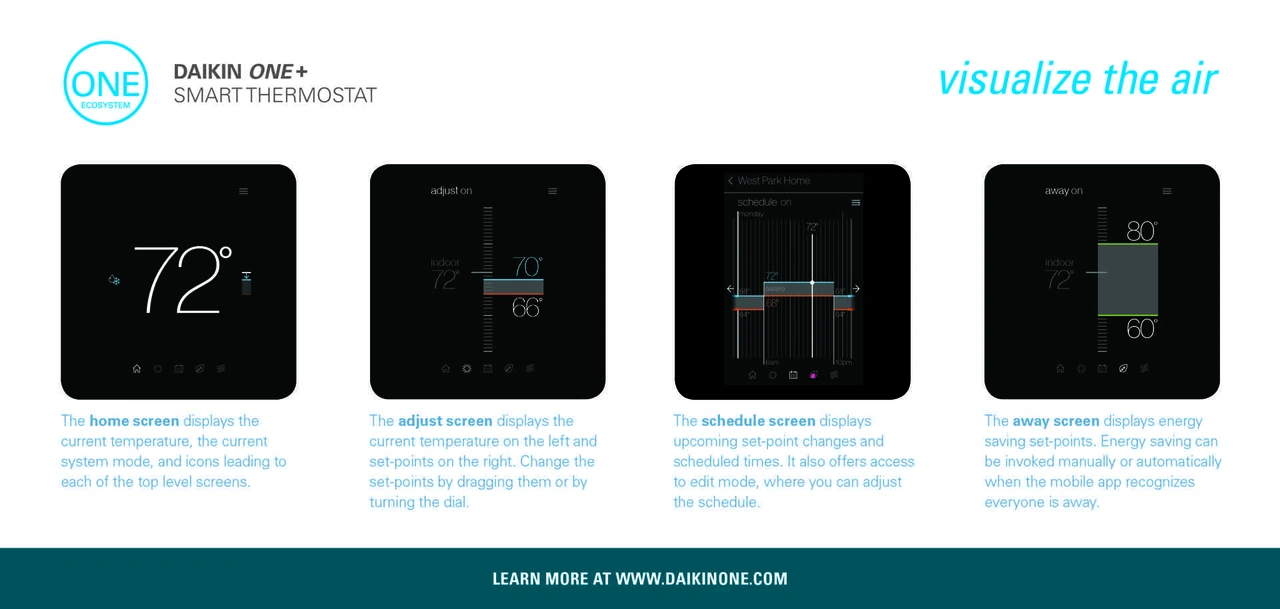
The Daikin One+ smart thermostat serves as this primary conductor. It doesn't just monitor temperature; it’s the gateway for Daikin One Cloud Integration Seattle. This cloud connectivity allows for real-time performance monitoring and predictive maintenance.
Through a feature called SkyportCare, your system can actually send proactive alerts if it detects a performance dip. For example, if the system notices that the compressor is drawing more power than usual to achieve the same cooling result, it can alert us before a breakdown actually occurs. This reduces the need for manual intervention and gives you peace of mind that the ecosystem is looking out for itself.
How Daikin Technology Creates a Self Managing Comfort Ecosystem Using Geofencing
The ecosystem also extends its "senses" to your smartphone. Through IoT connectivity and geofencing, the system understands your lifestyle. When you leave your home in Seattle for work, the system detects your location and automatically shifts into an energy-saving "away" mode.
As you start your commute back home, the geofence triggers the system to return to your preferred comfort settings. This ensures you never waste energy cooling an empty house, yet you always walk into a perfectly conditioned environment. By Customizing Multi Zone Mini Split Settings, you can even have specific rooms—like a home office or a nursery—pre-conditioned based on your expected arrival.
Integrating Air Quality and Humidity into the Ecosystem
True comfort isn't just about the number on the thermometer; it’s about the air you breathe. A self-managing ecosystem must treat temperature, humidity, and air purity as a single, seamless experience. This is where How The Daikin Iaq System Monitors And Actively Improves Your Air becomes vital.
In the Pacific Northwest, we deal with damp winters and increasingly smoky summers. The Daikin ecosystem uses specialized sensors to monitor particulate matter and CO2 levels. If the air quality drops—perhaps because of pollen or outdoor pollutants—the system automatically ramps up its filtration.
Automated Purification and Dehumidification
Daikin’s ecosystem utilizes Titanium apatite photo-catalytic filters and advanced DESICA technology to manage the "latent heat" (humidity) separately from the "sensible heat" (temperature). This is a game-changer for comfort.
High humidity makes a room feel much warmer than it actually is. By automatically triggering dehumidification, the system can make a 72-degree room feel as comfortable as a 68-degree room, allowing you to save energy while feeling cooler. How Daikin Air Quality Monitoring Triggers Your Purification System Automatically ensures that mold spores and odors are captured before they become a nuisance.
For those in the Kent or Seattle area, checking our Daikin One Indoor Air Quality Guide Kent Wa can help you understand how these sensors work together to trigger fresh air intake when CO2 levels rise, which has been shown to improve cognitive function and sleep quality.
Scaling Efficiency from Homes to Net Zero Buildings
The beauty of the Daikin cloud ecosystem is its scalability. The same logic that keeps a Seattle bungalow comfortable is used to manage massive facilities like the Daikin Technology and Innovation Center (TIC), which achieved a 70% reduction in energy consumption through these self-optimizing systems.
| Feature | Daikin One Cloud (Residential) | SiteLine / DK-CONNECT (Commercial) |
|---|---|---|
| Primary Goal | Personalized family comfort | Asset value and labor reduction |
| Automation | Geofencing and lifestyle learning | Predictive heat load modeling |
| Control | Daikin One Home App | Centralized Cloud Dashboard |
| Maintenance | Proactive dealer alerts | Real-time data for facility managers |
| Integration | Smart home devices (Lights/Shades) | Full Building Automation Systems |
As Daikin Is Shaping Future Of Hvac Design, we see a move toward "People-Centered Management." This means using cloud technology like DK-CONNECT to reduce the labor involved in managing air. In commercial settings, this technology has reduced the labor required to create energy models by 90%, allowing buildings to reach Net Zero Energy goals much faster.
Sustainable Comfort with R-32 and Heat Pumps
A self-managing ecosystem isn't just "smart"—it must also be sustainable. Daikin has led the industry in the transition to R-32 refrigerant. With over 280 million units using this technology worldwide, R-32 offers a much lower Global Warming Potential (GWP) than previous standards.
By combining R-32 with high-efficiency heat pumps, we can create Custom Climate Zones Multi Zone Mini Splits that align with global carbon neutrality goals. In fact, our Texas Technology Park uses a massive solar array to reduce carbon emissions by 535 tons annually. This commitment to renewable energy and low-impact refrigerants ensures that your home comfort doesn't come at the expense of the environment.
Frequently Asked Questions about Self-Managing HVAC
How does the system predict my comfort needs without manual input?
The system uses AI to analyze "heat load factors." This includes monitoring the outdoor temperature, the amount of sunlight entering your home, and even the heat generated by your appliances and family members. Over time, it learns the "thermal fingerprint" of your house—how fast it heats up and how well it holds onto cool air—and makes "feed-forward" adjustments to stay ahead of the curve.
Can I manage multiple zones independently through the cloud?
Yes! One of the biggest advantages of a Daikin ecosystem is multi-zone control. You can set different temperatures for your bedrooms, kitchen, and basement. Through the Daikin One cloud, you can manage all these zones from a single interface, ensuring that energy isn't wasted heating or cooling empty rooms.
What is the benefit of R-32 refrigerant in a self-managing ecosystem?
R-32 is more efficient at transferring heat than older refrigerants. This means the compressor doesn't have to work as hard to move heat out of (or into) your home. Because the self-managing ecosystem is always looking for the most efficient way to maintain comfort, using a high-performance refrigerant like R-32 is a core part of reducing your overall energy footprint.
Conclusion
At Daikin (Seattle), we believe that the air you live in should be as intelligent as the rest of your home. By understanding how Daikin technology creates a self managing comfort ecosystem, you can move away from the "set it and forget it" mentality and move toward a system that actually thinks for itself.
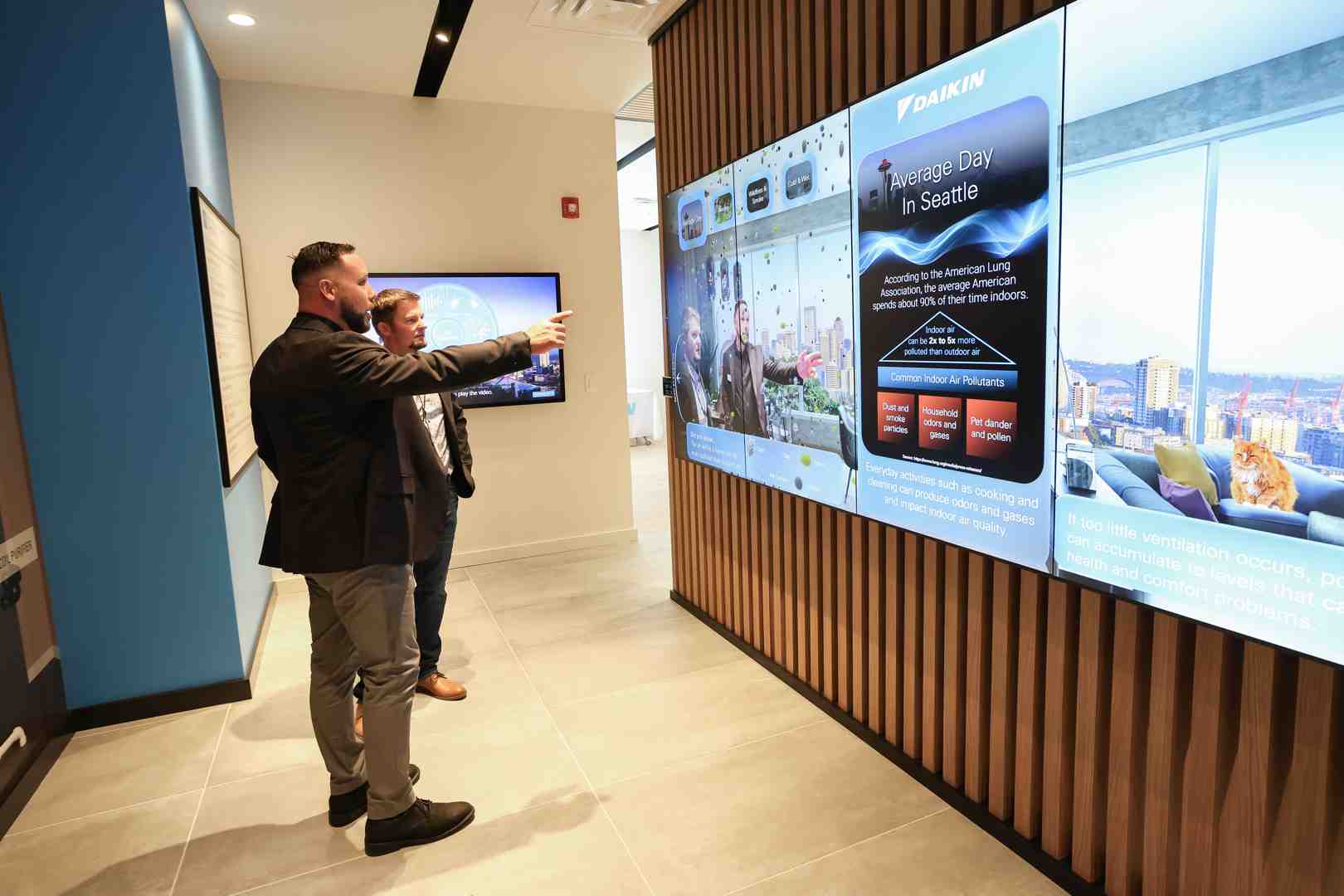
Whether you are looking to reduce your energy bills, improve your indoor air quality, or simply enjoy a home that is always the perfect temperature, the Pacific Northwest Daikin Experience Center in Seattle is the best place to start. You can interact with these technologies firsthand, hear how quiet the inverter systems are, and see the AI dashboards in action.
The future of home comfort isn't just about better machinery; it's about a smarter ecosystem that takes care of you. If you're ready to start Building your self-managing ecosystem, our team is here to help you design a solution that fits your unique lifestyle and home.
Schedule a Visit

your individual indoor comfort needs
products firsthand
with an authorized Daikin Dealer
.webp)
See why our customers Choose Us

“Jem is very inviting and knowledgeable. She gave us a walk through of the Daikin Experience Center and patiently answered all our questions. Learned a lot about HVAC’s through this visit.”
“Jem did a great job walking us through the various Daikin products and efficiencies of the products. She was very knowledgeable on everything Daikin. Highly recommend coming in for a tour prior to picking out your various AC systems.”
“Great experience at Daikin Seattle Experience Center: pre-purchase demos of home heating system (Daikin Fit), list of HVAC companies, working Daikin staff and external contractors to ensure highest quality. This experience sets the bar of how any home HVAC experience should be. Have got the Daikin Fit installed and so far seems to work very well – quiet, good home heating in peak winter (heat transfer/BTU/air handling); Functionality of Daikin thermostat and the iPhone app makes it very easy to use.”
“This place is awesome! If you are in the market for a new HVAC system, visit the Daikin Experience Center to get educated on the newest technology as well as available rebates and incentives for where you live. They’ll even connect you with local contractors in your area who install Daikin equipment.”
