

.webp)

.svg)


Daikin Portable AC vs Mini Split for Rentals
The Renter's Dilemma: Cooling Without Breaking Your Lease
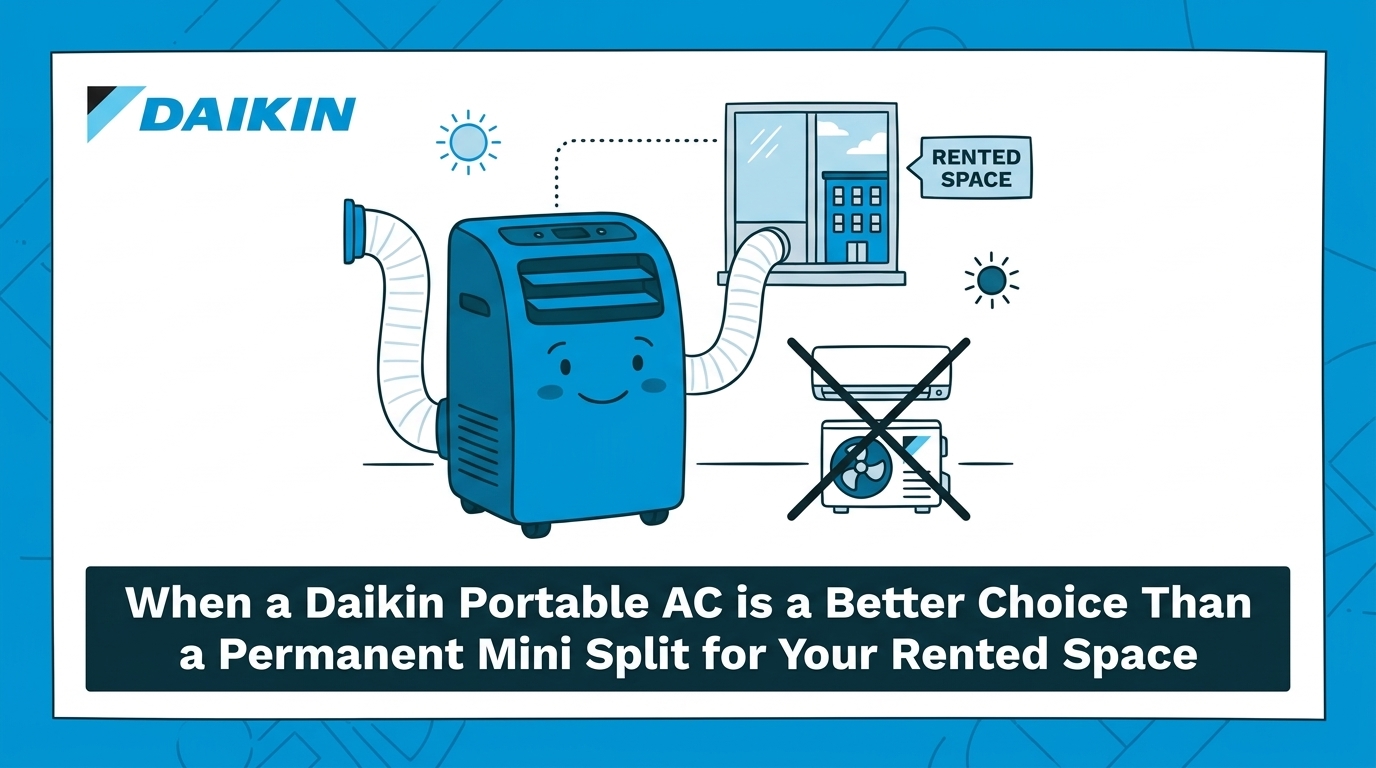
A common myth in the HVAC world is that portable cooling units are simply an inferior downgrade you settle for when you cannot afford a permanent installation. The reality is quite different: knowing exactly when a Daikin Portable AC is a better choice than a permanent mini split for your rented space often comes down to strict property rules rather than cooling preferences. If you are leasing a property, your decision-making process is fundamentally different from that of a homeowner. You are forced to balance the intense desire for high-end, efficient cooling against the rigid restrictions enforced by landlords, property managers, or homeowners associations.
As the August late-summer heat begins to bear down on the region, finding a viable, zero-installation solution becomes an urgent priority. You cannot wait weeks for property management approvals that will likely be denied anyway. While permanent systems offer incredible efficiency and whisper-quiet operation, they are highly invasive to install. Portable units, on the other hand, offer immediate flexibility. You can bring the unit home, set it up in your living room, and start cooling your space within minutes. For many renters, exploring Ductless options is a great starting point, but understanding the boundary between what is legally allowed and what physically works is the key to surviving the hottest weeks of the year.
The Legal Reality of Mini Splits in Leased Properties
Before comparing cooling capacities or energy efficiency, you must address the physical and legal barriers that make permanent installations impossible for the vast majority of renters. Skipping a permanent installation is rarely a matter of compromise; for most people living in Seattle rental apartments, it is a strict legal necessity. Standard residential lease agreements contain explicit clauses prohibiting unauthorized structural modifications, and installing a permanent system violates almost all of them.
Here is a breakdown of the specific installation requirements that typically trigger lease violations:
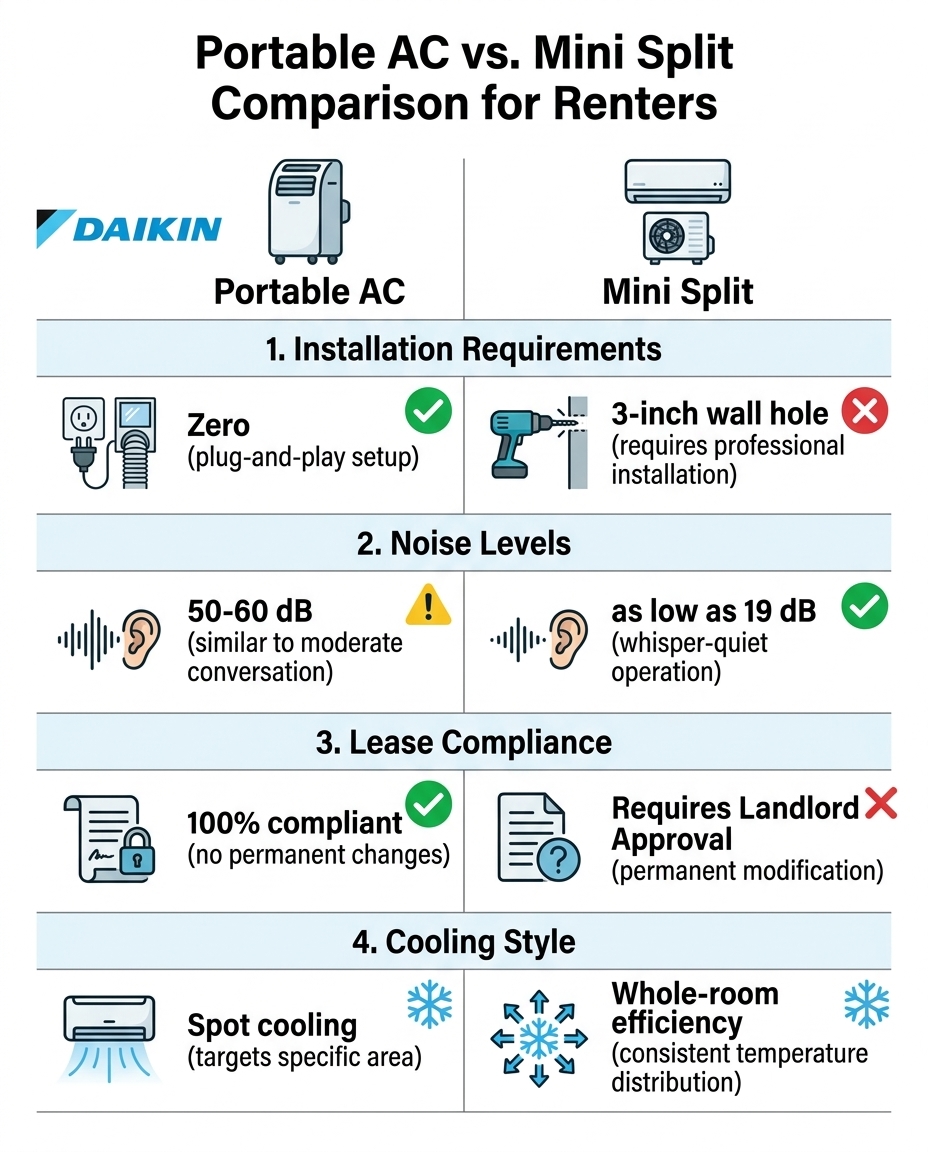
1. The Exterior Wall Penetration: Installing a permanent Single Zone Mini Split requires drilling a 3-inch hole directly through the exterior wall of the building. This hole connects the indoor air handler to the outdoor compressor via refrigerant lines, electrical wiring, and a condensate drain. Landlords almost universally forbid tenants from drilling through exterior siding, insulation, and drywall.
2. Exterior Compressor Placement: Permanent systems require an outdoor condenser unit. If you live in an apartment, this usually means placing a heavy piece of machinery on a shared balcony, a fire escape, or restricted community grounds. Most property managers will not allow private equipment to occupy shared or visible exterior spaces.
3. Aesthetic and HOA Restrictions: Even if a landlord agrees to the installation, the building's Homeowners Association (HOA) or architectural review board often blocks it. Visible exterior line hides and condenser units alter the uniform appearance of the building's facade, which is strictly regulated in multi-family housing.
4. Electrical Modifications: Permanent systems require a dedicated circuit wired directly to the main electrical panel. Renters are legally prohibited from altering a building's electrical infrastructure, and hiring a licensed electrician to pull permits on a property you do not own is incredibly complicated.
Validating your frustration is important here. You are not choosing a lesser option by avoiding a permanent system; you are protecting your security deposit and complying with your legally binding lease agreement.
Evaluating the Daikin Portable Air Conditioner: Honest Trade-Offs
Once you accept that a permanent system is off the table, you need a realistic breakdown of what a portable unit can and cannot do. A portable air conditioner is a highly practical defense mechanism against the August late-summer heat, but it operates differently than a permanent system. Understanding these honest trade-offs ensures you get the relief you need without unexpected surprises.
• Pro: Absolute lease compliance. Because they require zero permanent modifications, portable units keep you in perfect standing with your landlord. You simply plug them in and route the exhaust hose through a slightly opened window.
• Con: Floor space requirements. Unlike a wall-mounted indoor unit that sits high up near the ceiling, a portable unit requires dedicated floor space. You must position it near both an electrical outlet and a window, which can dictate how you arrange your furniture.
• Pro: Immediate deployment. When a sudden heat wave strikes, you do not have to wait for a contractor to schedule an installation. You can purchase the unit, unbox it, and experience immediate temperature relief on the exact same day.
• Con: Lower overall efficiency. Permanent systems are engineered to cool entire zones with minimal energy loss. Portable units house all their working components inside your room, which means they must work harder to achieve the same temperature drop.
Managing Cooling Expectations
To get the most out of your portable setup, you must manage your cooling expectations. These units are designed for spot-cooling specific rooms—like a bedroom at night or a living room during the day—rather than providing whole-apartment temperature control. If you have an open-concept layout, the unit will struggle to cool the entire floor plan. Additionally, radiant heat pouring through large apartment windows will actively fight the portable unit's cooling efforts. Using blackout curtains during peak afternoon sun will significantly improve the unit's effectiveness and keep the room comfortable.
Sound and Sleep: Comparing Decibel Levels Directly
One of the most common concerns for people living in Seattle rental apartments is noise. When you live in a confined space, the acoustic output of your appliances heavily impacts your daily life, especially your sleep. Because a portable unit houses its compressor—the engine that drives the cooling process—directly inside your living space, it will inherently be louder than a permanent system where the compressor sits entirely outside.
• Permanent Mini Split — Compressor Location: Outdoors — Typical Decibel (dB) Level: As low as 19 dB — Impact on Sleep & Activity: Barely audible; similar to rustling leaves. No disruption to sleep or conversation.
• Portable Air Conditioner — Compressor Location: Indoors — Typical Decibel (dB) Level: 50 to 60 dB — Impact on Sleep & Activity: Noticeable white noise; similar to a moderate rainfall or a standard refrigerator hum.
For many renters, the steady white noise of a portable unit is actually a benefit, helping to drown out street traffic and noisy neighbors. However, if you are a light sleeper, the cycling of the compressor turning on and off throughout the night requires an adjustment period. You may need to run the unit heavily in the evening to drop the room temperature, then lower the fan speed when it is time to sleep.
Because sound is so subjective, reading about decibels is rarely enough. When local residents are shopping for a new heating and cooling system and evaluating HVAC system options, they often need to hear the equipment running. By visiting the Daikin Experience Center, which provides hands-on product displays and expert explanations of Daikin products, renters gain a positive learning experience. This allows them to feel confident in choosing Daikin, knowing exactly how the unit will sound in their living room before they commit to bringing it home.
Energy Efficiency and Electrical Load in Older Buildings
When comparing cooling solutions, energy efficiency is a major factor, especially during the August late-summer heat when units run for hours at a time. Permanent systems utilize advanced inverter technology and boast high SEER (Seasonal Energy Efficiency Ratio) ratings. They use the exact amount of power needed to maintain a temperature, never overworking. Standard portable units consume more energy because they must actively exhaust hot air out of a window while cooling the room.
Understanding Hose Dynamics: The way a portable unit vents air directly impacts its efficiency. Single-hose portable systems pull warm air from the room, run it over the cooling coils, and exhaust the heat outside. This process creates a slight negative pressure in the room, which can draw unconditioned air in from under doors or through window cracks. Dual-hose systems are generally more efficient because they use one hose to pull outside air in to cool the compressor, and the second hose to exhaust the heat, leaving your indoor air pressure balanced.
Managing the Electrical Load: Older apartment buildings often feature outdated electrical infrastructure. A modern Heat Pump or mini split operates on a dedicated circuit, meaning it never competes with your television or microwave for power. Portable units plug into standard 120-volt wall outlets. If you live in an older building with 15-amp circuits, plugging a portable AC into the same circuit as a high-draw appliance (like a vacuum cleaner or a hair dryer) can easily trip the breaker. Modern portable technology strives to balance immediate comfort with manageable energy use, but you must still be mindful of what else is running on that specific electrical circuit.
Navigating Window Venting Challenges
A large percentage of older rental housing stock in the Pacific Northwest lacks built-in cooling entirely. Furthermore, these older Seattle rental apartments often feature challenging architectural styles and window types that complicate the venting process. Proper venting directly impacts the cooling efficiency of the portable unit; if hot exhaust air seeps back inside, the unit will run endlessly without actually dropping the room's temperature.
The Problem: Incompatible Window Styles
Most portable units include a venting kit designed for standard single-hung or double-hung windows (windows that slide up and down). However, many older apartments feature horizontal sliding windows or casement windows (windows that crank outward on a hinge). When you try to fit a standard horizontal vent panel into a tall vertical slider or an angled casement window, you are left with massive gaps that let hot outside air and insects inside.
The Cause: Rigid Venting Panels
The hard plastic panels included in the box are only adjustable up to a certain length. They cannot bend to accommodate the triangular gap created by a casement window, and they often aren't long enough to cover a floor-to-ceiling sliding glass door or a very tall vertical window.
The Solution: Flexible Seals and Custom Inserts
To achieve a proper, airtight seal without damaging the window frame or violating your lease agreement, you have a few options. For horizontal sliders, you can purchase extended sliding window kits or use high-density foam weather stripping to fill the gaps around the plastic panel. For casement windows, specialized flexible cloth seals are available; these attach to the window frame with removable adhesive Velcro and zip around the exhaust hose, completely sealing the irregular opening. Temporary installation methods like these ensure that the hot air stays outside where it belongs. For a deeper look at managing upper-floor temperatures in these older buildings, you might explore Daikin Portable Air Conditioner vs. Mini Split: Which Solves the Seattle Upstairs Heat Problem Better.
Frequently Asked Questions About Rental Cooling
Can I install a mini split in a rental?
The short answer is almost always no, unless you have explicit written permission from your landlord. Installing a permanent system requires drilling a 3-inch hole through the exterior wall and mounting a heavy compressor outside. These actions violate standard lease agreements regarding structural modifications and exterior aesthetics. Always consult your lease before attempting any permanent installation.
Are portable air conditioners worth it?
Yes, portable units are absolutely worth it when permanent installations are legally or physically impossible. While they use floor space and operate with slightly less energy efficiency than wall-mounted units, they provide vital, immediate relief during intense heat waves. For renters facing strict property rules, they are often the only legally compliant way to maintain a comfortable indoor temperature.
How loud is a portable air conditioner?
Because the compressor is housed inside the unit in your living space, portable air conditioners typically operate between 50 and 60 decibels. This sounds similar to a standard refrigerator hum or moderate rainfall. While it creates noticeable white noise, most people adapt to it quickly, and the noise is a worthwhile trade-off for the cooling relief it provides.
Is a mini split better than a portable AC?
In terms of pure cooling efficiency, energy usage, and quiet operation, a permanent system is technically superior to a portable unit. However, "better" is relative to your living situation. If your lease forbids structural changes, a permanent system is not an option at all. In that scenario, a portable unit is the best practical choice for your specific constraints.
How do I vent a portable AC in an older apartment window?
Standard venting kits work well for traditional up-and-down windows, but older apartments often have sliding or casement windows. You can use extended plastic panels, high-density foam weather stripping, or specialized flexible cloth seals that attach with removable adhesive. The goal is to create a completely airtight seal around the exhaust hose without using permanent hardware like screws or nails.
Make the Right Cooling Choice for Your Space
Navigating the restrictions of Seattle rental apartments does not mean you have to suffer through the hottest days of the year. Accepting the performance limitations of a portable unit is often the most practical, legally sound choice for renters who cannot modify their walls. While a portable system requires a bit of floor space and produces a steady white noise, it provides vital, immediate relief during intense heat waves without putting your security deposit at risk.
You do not have to guess how a unit will perform in your space. We encourage you to test the equipment in person to ensure the noise levels and airflow meet your expectations before you make a decision. By understanding the honest trade-offs, you can confidently choose a cooling solution that keeps your apartment comfortable and your landlord happy.
Schedule a Visit

your individual indoor comfort needs
products firsthand
with an authorized Daikin Dealer
.webp)
See why our customers Choose Us

“Jem is very inviting and knowledgeable. She gave us a walk through of the Daikin Experience Center and patiently answered all our questions. Learned a lot about HVAC’s through this visit.”
“Jem did a great job walking us through the various Daikin products and efficiencies of the products. She was very knowledgeable on everything Daikin. Highly recommend coming in for a tour prior to picking out your various AC systems.”
“Great experience at Daikin Seattle Experience Center: pre-purchase demos of home heating system (Daikin Fit), list of HVAC companies, working Daikin staff and external contractors to ensure highest quality. This experience sets the bar of how any home HVAC experience should be. Have got the Daikin Fit installed and so far seems to work very well – quiet, good home heating in peak winter (heat transfer/BTU/air handling); Functionality of Daikin thermostat and the iPhone app makes it very easy to use.”
“This place is awesome! If you are in the market for a new HVAC system, visit the Daikin Experience Center to get educated on the newest technology as well as available rebates and incentives for where you live. They’ll even connect you with local contractors in your area who install Daikin equipment.”
