

.webp)

.svg)


Daikin Standard Warranty vs. Extended Labor Coverage
The Reality of Mid-Lifespan Heat Pump Breakdowns
A widespread myth among homeowners is that having a heating and cooling system "under warranty" means you will never have to pay out-of-pocket for unexpected repairs. When exploring the difference between Daikin standard warranty and extended labor coverage for Seattle homeowners, the reality of how these protections actually function is much more nuanced. Many property owners assume that a factory guarantee is a blanket shield against all breakdown costs, but standard industry warranties are specifically divided into parts and labor categories.
To explore the foundation of your equipment's protection, you can learn more about Daikin systems and how they are engineered for longevity.
Consider a highly realistic scenario: it is late August, and your home is experiencing late-summer (August) peak cooling wear. Your system has been running tirelessly to combat the seasonal heat, and suddenly, a major component fails. You are entirely confident because your equipment is only five years old. However, this is the exact moment a critical decision point emerges. While the physical replacement part is likely covered, the specialized labor required to diagnose the issue, remove the broken component, and install the new one is not. Homeowners are left deciding whether they are comfortable risking out-of-pocket labor fees for mid-lifespan repairs, or if investing upfront in extended coverage provides better long-term peace of mind. This guide provides a neutral, expert breakdown of how these warranties function in the real world, stripping away the confusing legal jargon so you know exactly what to expect.
Understanding the Baseline: Daikin's Standard Parts Warranty
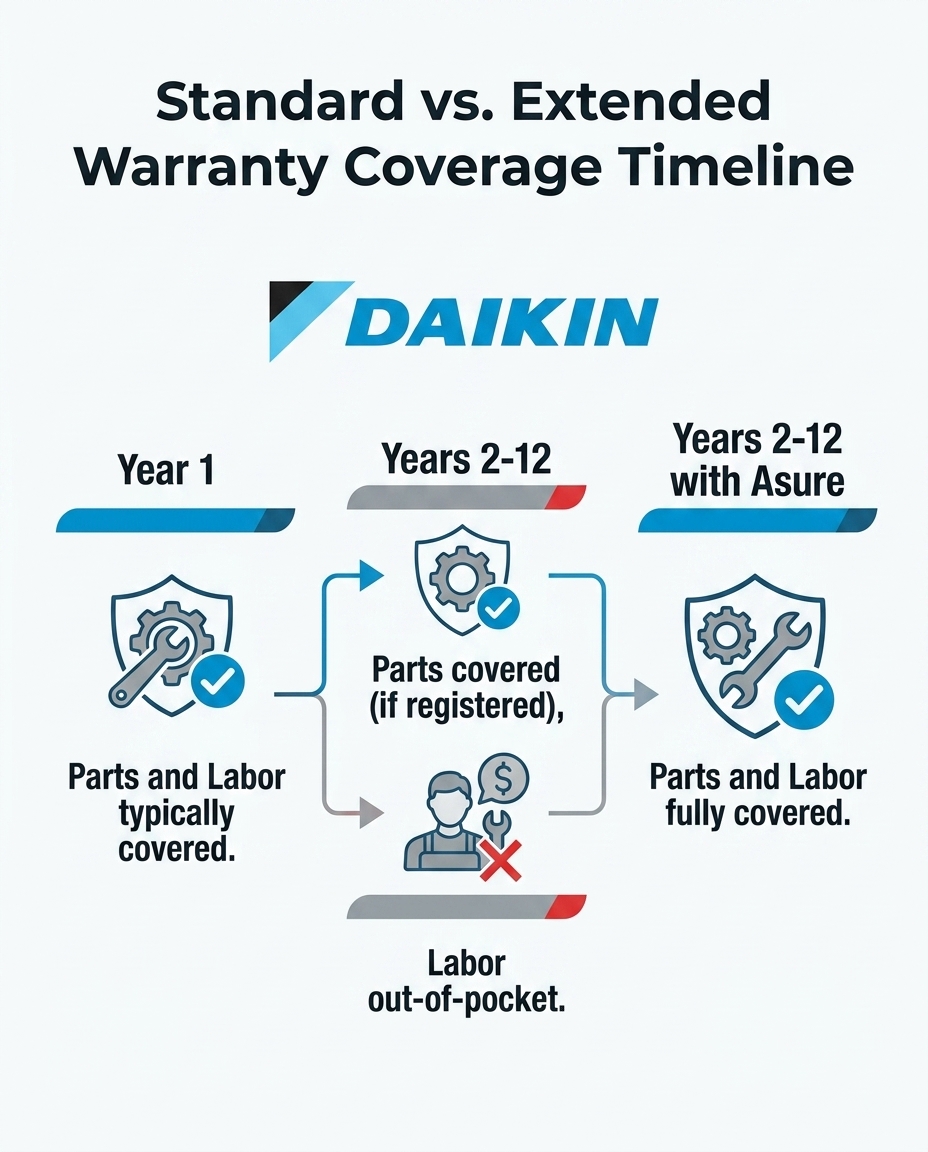
To make an informed decision about your home comfort investment, you first need to understand exactly what the factory provides out of the box. Daikin offers an industry-leading standard registered parts warranty that covers functional components for up to 12 years. However, there is a strict and vital timeline that homeowners must recognize: while the physical parts are protected for over a decade, the standard labor coverage generally expires after the very first year of operation.
Securing this full 12-year term requires timely action. Homeowners must register their new equipment within 60 days of installation. If the system is left unregistered, the parts warranty typically defaults to a much shorter five-year term. This applies across various equipment configurations, whether you have a robust whole-home ducted system or a highly efficient single zone mini split providing targeted comfort to a specific room.
What Constitutes a 'Functional Part'?
The standard warranty covers the internal mechanisms that make your system operate. This includes major, complex components that would otherwise be highly expensive to purchase outright. However, it is crucial to understand the dividing line between the part itself and the service required to replace it.
1. Compressors: The heart of your heat pump, responsible for circulating refrigerant. If it fails in Year 5 of system lifespan, the factory ships a new compressor at no cost, but the extensive labor to reclaim refrigerant, braze the new unit, and recharge the system falls to the homeowner.
2. Blower Motors: The component that physically pushes conditioned air through your home. The motor is free under warranty, but the technician's time to dismantle the air handler and calibrate the new motor is not.
3. Control Boards: The computerized brain of the system. While the circuit board is covered, the intricate electrical diagnostic work required to prove the board failed—and ensure a power surge did not cause it—is a billable service.
Ultimately, the standard warranty ensures you never have to buy the physical hardware twice during the coverage period, but it does not cover the professional expertise required to make that hardware work.
The Hidden Mechanics of a Year 5 Component Failure
The Problem: To truly grasp the value of extended protection, we must look at the hidden mechanics of a breakdown when a system reaches the mid-point of its lifecycle. Around Year 5 of system lifespan, heat pumps have accumulated thousands of run hours. The initial installation phase is a distant memory, and the system has settled into its long-term operational rhythm. When a component like a variable-speed blower motor fails during a heatwave, the homeowner is immediately faced with a loss of comfort and an urgent need for professional intervention.
The Cause: Diagnosing and resolving modern HVAC failures is not a simple swap. One homeowner utilizing older R410A units visited our state-of-the-art facility, complete with working displays and a cold room, specifically to understand the repair parts plan for existing systems as they age. This highlights a common realization: as systems advance technologically, the labor required to fix them becomes more specialized. The repair process involves a multi-step timeline. First, a licensed technician must perform a comprehensive diagnostic visit to isolate the exact point of failure. Next, the specific covered part must be ordered and shipped from the manufacturer. Finally, a second visit is required for the actual installation, testing, and system calibration.
The Solution: During this entire process, the specialized labor is entirely the homeowner's responsibility under a standard warranty. The financial contrast is stark: while the heavy, expensive physical part arrives in a box at zero cost, the hours of highly technical, licensed labor required to safely integrate it into your home's electrical and refrigerant systems generate significant out-of-pocket expenses. Understanding this mechanical reality is the key to evaluating your long-term risk.
How Seattle's Climate Accelerates System Wear and Tear
The likelihood of experiencing a mid-lifespan repair is heavily influenced by where you live. In the Pacific Northwest, the local environment plays a massive role in how quickly a system ages. Seattle's unique maritime climate demands year-round heat pump operation. We experience damp, chilly winters that require consistent, reliable heating, which then shift directly into increasingly hot summers that demand robust cooling power.
This continuous, year-round operation creates a distinct wear-and-tear profile compared to regions that only use their HVAC systems seasonally. In the Midwest, for example, an air conditioner might sit completely idle for six months of the year. In our region, a heat pump is working almost constantly, driving up total annual run hours at an accelerated pace. By the time a system reaches its mid-lifespan, it has endured countless defrost cycles in January and pushed through late-summer (August) peak cooling wear when temperatures spike.
The impact of continuous operation:
• Increased rotational wear: Fan blades, blower motors, and compressor scrolls simply spin more often, reaching their mechanical fatigue points sooner.
• Constant electrical cycling: Capacitors and contactors engage and disengage year-round, increasing the likelihood of electrical component failure.
• Moisture exposure: The persistent dampness of the regional winter requires the system to work harder to manage humidity and perform necessary defrost cycles.
This accelerated accumulation of run hours places peak stress on moving parts right around the five-to-seven-year mark. Because the system rarely gets an off-season, the strategic value of long-term labor protection becomes much higher. If you are exploring comprehensive heat pump solutions in Seattle, factoring in this regional climate reality is an essential part of the planning process.
The Daikin Asure Extended Service Plan Explained
Recognizing the gap between parts coverage and labor realities, the manufacturer offers a proactive solution: the Daikin Asure Extended Service Plan. This plan is designed with a singular core purpose—shielding homeowners from unexpected, out-of-pocket labor fees when a covered component inevitably fails.
The Asure plan dovetails perfectly with the standard parts warranty to create a seamless, comprehensive web of coverage. While the standard warranty handles the cost of the physical hardware, the Asure plan steps in to cover the diagnostic time, the repair labor, and the installation expertise. When gathering quotes for heating and cooling, one local resident visited the Daikin Experience Center to learn about the Daikin promise, gaining the exact knowledge needed to influence their decision on equipment and long-term protection.
Core Benefits of the Asure Extended Service Plan:
• Comprehensive Labor Protection: Covers the specialized technician hours required to diagnose and replace functional parts during a breakdown in Year 5 of system lifespan and beyond.
• Transferability: The Asure plan is fully transferable to a new homeowner if you decide to sell your property. This can add tangible value to your real estate listing, as buyers appreciate inheriting a fully protected home comfort system.
• Certified Expertise: Repairs under the Asure plan are performed by highly trained, authorized dealers who know the intricate details of inverter technology and variable-speed systems.
• Predictable Ownership: It transforms the unpredictable nature of mechanical breakdowns into a known, upfront investment, completely removing the stress of sudden repair bills.
Ultimately, opting into this extended coverage is not just about buying an insurance policy; it is an investment in absolute peace of mind. For a deeper understanding of how these protections apply to your specific installation, you can review our warranty and service details.
Side-by-Side: Standard Parts vs. Extended Labor Coverage
To facilitate a clear, informed decision, it is helpful to look at the exact differences between these two levels of protection. When a system reaches Year 5 of system lifespan, the contrast in your responsibilities becomes highly apparent.
• Duration of Parts Coverage — Standard Registered Parts Warranty: Up to 12 Years (with timely registration) — Asure Extended Service Plan: Up to 12 Years (matches standard warranty)
• Duration of Labor Coverage — Standard Registered Parts Warranty: Typically expires after Year 1 — Asure Extended Service Plan: Up to 12 Years (depending on selected plan)
• Mid-Lifespan Breakdown Costs — Standard Registered Parts Warranty: Homeowner pays full diagnostic and labor fees — Asure Extended Service Plan: Labor and diagnostics are fully covered
• Financial Predictability — Standard Registered Parts Warranty: High unpredictability; labor rates fluctuate — Asure Extended Service Plan: Complete predictability; zero out-of-pocket labor
• Ideal Homeowner Profile — Standard Registered Parts Warranty: Comfortable with unexpected maintenance bills — Asure Extended Service Plan: Prefers fixed costs and long-term peace of mind
Evaluating the upfront investment of the Asure plan versus the long-term unpredictability of standard coverage is a personal choice. Homeowners who plan to stay in their residence for the next decade often find that avoiding just one major labor bill easily justifies the initial cost of the extended plan. For further insights into navigating these choices during extreme weather events, consider decoding the Daikin AC warranty to see how protection holds up when you need it most.
Navigating the Fine Print Without the Sales Pressure
HVAC warranties are inherently complex documents filled with legal stipulations, maintenance requirements, and specific timelines. Reading the fine print can be an overwhelming task for anyone outside the industry. This is why the value of consulting with dedicated experts cannot be overstated.
As a dedicated Daikin Experience Center, our commitment is to act as a neutral, transparent educator. We decode the fine print without high-pressure sales tactics, ensuring you understand exactly what happens if your system faces late-summer (August) peak cooling wear. Another homeowner who wanted to learn more about heat pumps and inverter technology visited the center for educational insights, walking away with valuable information about home comfort solutions and confident connections to qualified contractors.
What to expect from a transparent consultation:
• Patient Answers: No question is too small. We explain exactly what a "functional part" is and how labor rates apply.
• Clear Explanations: We translate confusing factory documentation into real-world scenarios so you know your exact risk profile.
• Proactive Evaluation: We help you assess your current coverage or plan your future coverage before an emergency strikes.
We encourage all property owners to evaluate their coverage proactively. Understanding your protections today prevents stressful, rushed decisions tomorrow.
FAQ
Does the standard Daikin warranty cover labor?
The short answer is that standard labor coverage is highly limited. While the standard factory warranty covers the cost of replacement parts for up to 12 years when registered, the labor to diagnose and install those parts typically expires after the first year of operation. After year one, all labor fees are the responsibility of the homeowner unless an extended plan is purchased.
What happens if a Daikin part fails after 1 year?
If a covered functional part fails after the first year, the manufacturer will provide the physical replacement part at no cost. However, you will be required to pay a licensed HVAC technician for the diagnostic visit, the labor to remove the broken component, and the installation of the new part. These specialized labor costs can be significant depending on the complexity of the repair.
What is the Daikin Asure extended warranty?
The Daikin Asure Extended Service Plan is an optional coverage upgrade designed to protect homeowners from unexpected repair bills. It covers the labor costs associated with replacing functional parts that fail due to normal wear and tear. This plan dovetails with the standard parts warranty to provide comprehensive, out-of-pocket protection for up to 12 years.
Is an extended labor warranty worth it for a heat pump?
For many homeowners, an extended labor warranty is highly beneficial because heat pumps operate year-round for both heating and cooling. This continuous operation accelerates system wear, increasing the likelihood of mid-lifespan component failures. Shielding yourself from the specialized labor rates required to repair modern, complex inverter technology often outweighs the upfront cost of the plan.
Is the Daikin warranty transferable to a new homeowner?
Yes, under specific conditions, the standard warranty and the Asure Extended Service Plan can be transferred to a new property owner. There are usually strict timelines and nominal processing fees associated with transferring the coverage, so it is vital to review the specific terms. Transferable warranties can serve as an excellent selling point when putting your home on the market.
How do I verify if my Daikin heat pump is registered for the 12-year warranty?
You can verify your system's registration status by locating the serial numbers on your indoor and outdoor units and visiting the official Daikin manufacturer website. If you are unsure of how to find these numbers or navigate the portal, a certified Daikin dealer or Experience Center can look up your equipment's history and confirm your exact coverage timeline.
Understanding your long-term protection shouldn't require a law degree. By providing a clear, objective contrast between standard parts coverage and extended labor protection, we ensure you know exactly what is covered. Secure your peace of mind and evaluate your warranty options with a trusted local expert today.
Schedule a Visit

your individual indoor comfort needs
products firsthand
with an authorized Daikin Dealer
.webp)
See why our customers Choose Us

“Jem is very inviting and knowledgeable. She gave us a walk through of the Daikin Experience Center and patiently answered all our questions. Learned a lot about HVAC’s through this visit.”
“Jem did a great job walking us through the various Daikin products and efficiencies of the products. She was very knowledgeable on everything Daikin. Highly recommend coming in for a tour prior to picking out your various AC systems.”
“Great experience at Daikin Seattle Experience Center: pre-purchase demos of home heating system (Daikin Fit), list of HVAC companies, working Daikin staff and external contractors to ensure highest quality. This experience sets the bar of how any home HVAC experience should be. Have got the Daikin Fit installed and so far seems to work very well – quiet, good home heating in peak winter (heat transfer/BTU/air handling); Functionality of Daikin thermostat and the iPhone app makes it very easy to use.”
“This place is awesome! If you are in the market for a new HVAC system, visit the Daikin Experience Center to get educated on the newest technology as well as available rebates and incentives for where you live. They’ll even connect you with local contractors in your area who install Daikin equipment.”
