

.webp)

.svg)


Furnace vs. Daikin Inverter Heat Pump Trade-Offs
Is It Time to Rethink Your Heating Strategy Before Winter?
At the Daikin Seattle Experience Center, our team regularly speaks with homeowners who are wondering if their aging heating system can handle another damp season. Many are actively weighing the trade-off between a high-efficiency furnace and a Daikin inverter heat pump in Tukwila. For decades, the automatic response to a failing gas furnace was simply to swap it out for a newer model. But as technology advances and homeowners prioritize daily comfort over baseline heating, we are seeing that default choice shift. You are now faced with a critical decision point: prioritizing the operational feel of continuous electric comfort versus the upfront investment of transitioning away from traditional combustion.
During the September pre-heating season, making this choice becomes urgent. Evaluating your options before emergency bottlenecks occur ensures you get the exact system you want, rather than settling for whatever happens to be in stock during a mid-winter breakdown. When evaluating your next system, exploring Daikin heat pumps helps clarify your heat pump solutions before the cold weather sets in.
Beyond Basic Heating: The Mechanics of Inverter Modulation
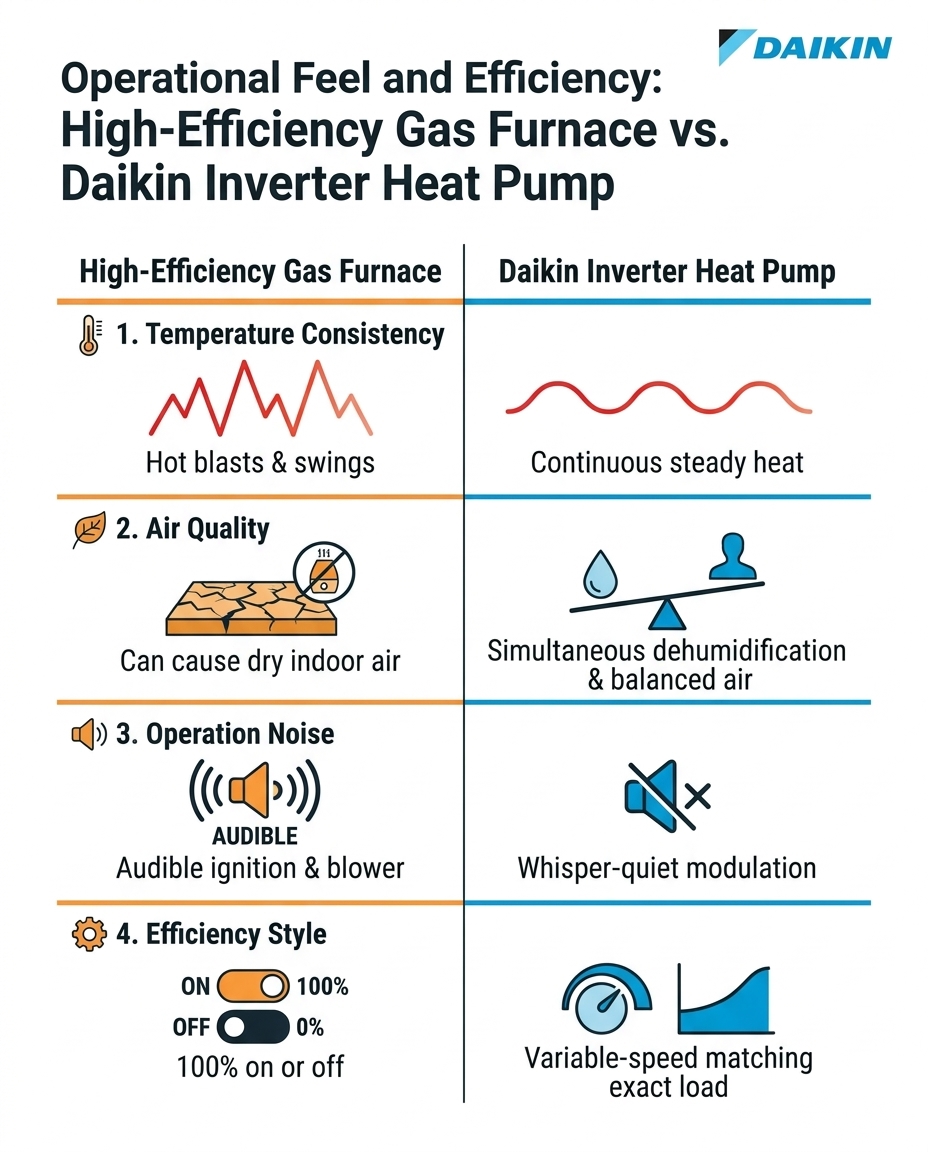
To understand the difference between these two heating approaches, you have to look closely at how they consume energy and distribute air. Traditional single-stage gas furnaces operate on a binary cycle. They are either 100% on, blasting hot air at maximum capacity, or 100% off. There is no middle ground. This start-and-stop operation means your home is constantly fluctuating between slightly too warm and slightly too cool, requiring massive energy surges every time the system ignites.
The variable-speed advantage: A Daikin inverter heat pump operates on an entirely different mechanical principle. Instead of turning on and off, the inverter acts like the accelerator pedal in a car. It modulates the compressor speed in real-time, ramping up or down to match the exact heating load of the home. If your living room only needs a tiny amount of heat to maintain the set temperature, the inverter system runs at a low, continuous speed to provide exactly that amount.
This advanced modulation eliminates the energy-wasting surges associated with traditional furnaces. By running continuously at lower speeds, the system maximizes energy efficiency while maintaining a perfectly steady indoor climate. As a secondary benefit, adopting inverter technology supports broader decarbonization efforts, allowing homeowners to reduce their reliance on on-site fossil fuel combustion without sacrificing an ounce of warmth.
Operational Feel: Traditional Gas Blasts vs. Continuous Comfort
The most noticeable difference between a high-efficiency gas furnace and an inverter heat pump is the subjective comfort experience—what industry professionals call the "operational feel." High-efficiency gas furnaces deliver intensely hot air directly at the register. While this feels immediately warm, it creates noticeable room temperature swings. The system blasts heat until the thermostat is satisfied, shuts down, and then waits for the house to cool off enough to trigger the next ignition cycle.
Furthermore, combustion heating often results in excessively dry indoor air during the colder months, which can irritate sinuses and damage wood floors. In contrast, an inverter system maintains a steady, continuous ambient temperature. The air coming from the vents feels pleasantly warm rather than scorching, and the gentle, continuous circulation prevents cold spots from forming in distant rooms.
We frequently witness this "aha" moment in person. For instance, one local homeowner shopping for a new system during peak winter needed to understand the Daikin Fit home heating system before installation. They attended pre-purchase demos of the equipment, received a list of qualified HVAC companies, and ultimately enjoyed a highly positive home heating experience with a whisper-quiet, efficient Daikin Fit system. This quietness is a major factor we always point out; while gas furnaces announce their presence with loud ignition clicks and roaring blowers, modern inverter systems operate so quietly you often have to check the thermostat to confirm they are running.
Comparing the Daily Comfort Experience
• Temperature Delivery — High-Efficiency Gas Furnace: Intermittent, intense hot blasts — Daikin Inverter Heat Pump: Continuous, gentle warmth
• Indoor Air Quality — High-Efficiency Gas Furnace: Often leads to excessively dry winter air — Daikin Inverter Heat Pump: Better balanced humidity and circulation
• Operating Noise — High-Efficiency Gas Furnace: Audible ignition, loud blower cycles — Daikin Inverter Heat Pump: Whisper-quiet, variable-speed operation
• Temperature Swings — High-Efficiency Gas Furnace: Noticeable peaks and valleys between cycles — Daikin Inverter Heat Pump: Steady, even ambient temperature
Conquering Damp, Chilly Winters in the Pacific Northwest
A persistent, outdated myth suggests that heat pumps cannot handle winter weather. While early-generation models struggled in sub-zero climates, that narrative completely ignores the reality of modern engineering and specific regional weather patterns. In our years of guiding Tukwila residents through heating upgrades, we consistently emphasize that our winters are characterized by damp, chilly conditions rather than extreme, dry freezes.
Average winter lows in this region hover in the mid-30s. This temperature range is actually the optimal sweet spot where a Daikin inverter heat pump operates at peak efficiency. Because there is still plenty of ambient heat energy in 35-degree air, the inverter compressor easily extracts that warmth and transfers it indoors without straining the system.
Managing winter moisture: Tukwila's damp, chilly winters present a unique challenge that inverter heat pumps handle brilliantly: moisture management. During rainy cold snaps, a Daikin inverter heat pump excels at simultaneous dehumidification. Because the system runs continuously at lower speeds, it constantly passes indoor air over the coils, naturally removing excess dampness from the home. Gas furnaces, by comparison, tend to bake the moisture out of the air entirely, often over-drying the home to the point where homeowners feel forced to install add-on whole-house humidifiers just to breathe comfortably.
Upfront Investment and Long-Term Efficiency Trade-Offs
Transitioning from a traditional combustion system to an all-electric inverter model requires careful consideration of the financial trade-offs. Sticking with a standard gas furnace replacement often presents a lower initial installation cost, simply because the existing gas lines and venting infrastructure are already in place. However, that upfront savings must be weighed against the long-term operational costs.
A Daikin inverter heat pump boasts high HSPF (Heating Seasonal Performance Factor) and SEER (Seasonal Energy Efficiency Ratio) ratings. Because the variable-speed compressor only uses the exact amount of electricity needed to maintain the temperature, the long-term operational energy savings can be substantial over the lifespan of the equipment.
Furthermore, the gap in upfront investment is often narrowed by available incentives. Generic federal tax credits and local utility rebates may apply to qualifying heat pump installations, making the transition to high-efficiency electric heating much more accessible. We always recommend that homeowners in Tukwila and the greater Seattle area evaluate the total lifecycle savings—factoring in reduced energy consumption and potential tax incentives—rather than looking solely at the initial equipment quote.
Try Before You Buy: Feeling the Difference in Person
Reading about abstract technical specifications, HSPF ratings, and decibel levels often fails to convey what a system actually feels like once it is installed in your living room. You can research variable-speed compressors all day, but that data will not tell you how the air feels on your skin or how quiet the unit is when you are trying to sleep.
This is where our local resources completely change the shopping experience. At the Daikin Seattle Experience Center, we provide homeowners with the rare opportunity to touch, hear, and visualize the equipment operating in real settings. You can step into a cold room simulation to physically test the continuous heat delivery of a Daikin inverter heat pump and verify the whisper-quiet operation for yourself.
Another homeowner shopping for a new heating and cooling system needed to compare Daikin products directly. Rather than guessing from a brochure, they decided to visit the Experience Center to touch, hear, and visualize the systems in real settings. This resulted in a highly positive learning experience that confidently guided their choice to go with Daikin. Taking the time to test the equipment directly answers lingering comfort concerns and empowers you to make a confident, educated decision before hiring a contractor.
Avoiding the Winter Rush: Why Timing Your Upgrade Matters
Heating systems rarely fail on a convenient Tuesday in spring. Our team typically fields the highest volume of emergency calls during the very first major cold snap of the year, right when an aging system is forced to work its hardest after sitting idle all summer. When a furnace fails in November, homeowners are often forced into rushed decisions, selecting whichever baseline unit a contractor happens to have in their warehouse that day.
Taking action during the September pre-heating season is the smartest way to protect your home. Replacing equipment during the early fall avoids emergency scheduling bottlenecks and the stress of living in a freezing house while waiting for parts.
Using this early window allows you to evaluate different Daikin heat pump models thoroughly. You have the time to compare efficiency ratings, visit the Experience Center, and ensure your chosen system perfectly matches your home's square footage and layout. Heading into winter with a fully optimized, reliable system provides a level of security that a patched-up old furnace simply cannot match.
Frequently Asked Questions About Tukwila Heating Upgrades
Is a heat pump better than a gas furnace in Washington state?
For most homes in Washington state, a heat pump offers superior year-round comfort and efficiency. Because our region experiences mild, damp winters rather than extreme sub-zero freezes, heat pumps can easily extract ambient warmth from the outside air. Additionally, heat pumps provide both heating and cooling, giving you a complete climate control solution in a single system.
Can a heat pump replace a furnace entirely in the Pacific Northwest?
Yes, modern inverter heat pumps can entirely replace a traditional gas furnace in the Pacific Northwest. Tukwila and the greater Seattle area have winter climates that align perfectly with the peak operating efficiency of these systems. With advanced variable-speed technology, an inverter heat pump can comfortably maintain indoor temperatures even when the outside air drops near freezing.
Why does inverter heat feel different than traditional gas heat?
Inverter heat feels different because it provides a continuous, gentle stream of warm air rather than intermittent, intense blasts. A gas furnace turns on at full capacity, heats the room rapidly, and shuts off, creating noticeable temperature swings. An inverter system modulates its speed to run continuously at lower levels, resulting in an even, steady ambient temperature without the hot and cold spikes.
Are heat pumps efficient in Seattle area winters?
Heat pumps are highly efficient in Seattle area winters due to our moderate average low temperatures. While older heat pumps struggled in extreme cold, modern inverter technology thrives in the mid-30s weather common to our region. They use electricity to move existing heat rather than burning fuel to create it, resulting in exceptional energy efficiency throughout the damp winter months.
What are the disadvantages of an inverter heat pump?
The primary disadvantage of an inverter heat pump is the initial upfront investment, which is generally higher than simply swapping out a baseline gas furnace. Because the technology utilizes complex variable-speed compressors and advanced sensors, the equipment costs more to manufacture and install. However, this initial cost is often offset over time by lower monthly energy bills and potential incentive programs.
How does Tukwila's damp winter weather affect heat pump performance?
Tukwila's damp winter weather actually highlights one of the major strengths of an inverter heat pump: simultaneous dehumidification. Because the system runs continuously at a low speed, it constantly circulates indoor air over the coils, naturally removing excess moisture. This prevents the home from feeling clammy while avoiding the severely over-dried air commonly caused by traditional gas furnaces.
Secure Your Winter Comfort with the Right Heating System Today
The choice between a high-efficiency gas furnace and a Daikin inverter heat pump ultimately comes down to prioritizing your daily comfort. While traditional gas systems deliver intermittent blasts of hot air, modern inverter technology provides continuous, whisper-quiet climate control that perfectly manages the damp chill of a Pacific Northwest winter.
The September pre-heating season is the ideal time to make this critical upgrade. By acting before the cold sets in, you avoid emergency installations and give yourself the time to make an informed, confident choice. Take the next step today by exploring your options, visiting the Experience Center, and booking a consultation with a local expert to secure your home's comfort for the seasons ahead.

Schedule a Visit

your individual indoor comfort needs
products firsthand
with an authorized Daikin Dealer
.webp)
See why our customers Choose Us

“Jem is very inviting and knowledgeable. She gave us a walk through of the Daikin Experience Center and patiently answered all our questions. Learned a lot about HVAC’s through this visit.”
“Jem did a great job walking us through the various Daikin products and efficiencies of the products. She was very knowledgeable on everything Daikin. Highly recommend coming in for a tour prior to picking out your various AC systems.”
“Great experience at Daikin Seattle Experience Center: pre-purchase demos of home heating system (Daikin Fit), list of HVAC companies, working Daikin staff and external contractors to ensure highest quality. This experience sets the bar of how any home HVAC experience should be. Have got the Daikin Fit installed and so far seems to work very well – quiet, good home heating in peak winter (heat transfer/BTU/air handling); Functionality of Daikin thermostat and the iPhone app makes it very easy to use.”
“This place is awesome! If you are in the market for a new HVAC system, visit the Daikin Experience Center to get educated on the newest technology as well as available rebates and incentives for where you live. They’ll even connect you with local contractors in your area who install Daikin equipment.”
