


Why a Daikin Multi Zone Ductless System for Whole Home Comfort Is the Smarter Choice for Seattle Homeowners
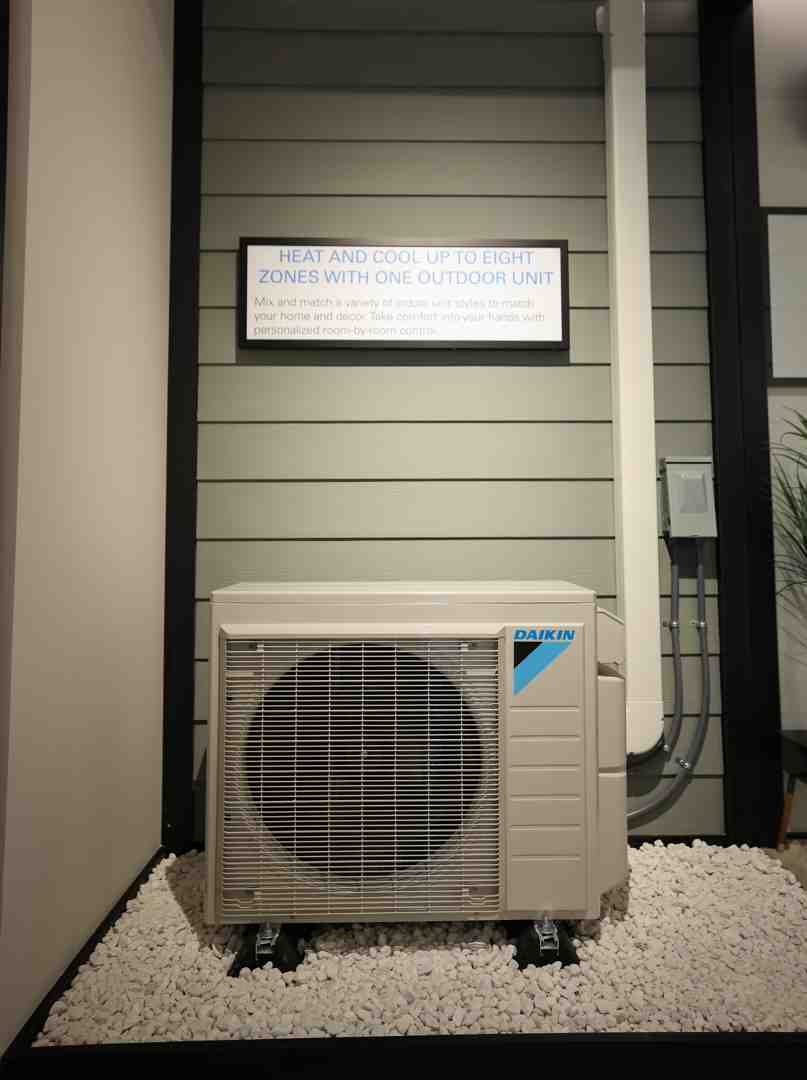
A Daikin multi zone ductless system for whole home comfort lets you heat and cool every room in your home independently — using a single outdoor unit connected to multiple indoor air handlers, with no ductwork required.
Quick answer: What does a Daikin multi-zone ductless system do?
- Connects 2 to 8 indoor units to one compact outdoor unit
- Gives each room its own temperature setting, independently controlled
- Eliminates energy loss from leaky ducts common in traditional HVAC
- Uses inverter technology to run efficiently without cycling on and off
- Works in extreme temperatures, heating reliably down to -13°F
- Achieves efficiency ratings up to 21 SEER2 and 10 HSPF2
If you live in a Seattle-area home with uneven temperatures, rooms that never feel right, or energy bills that keep climbing, you're not alone. Many Pacific Northwest homeowners deal with the same frustrations — a stuffy upstairs in summer, a cold home office in winter, or a thermostat battle that nobody wins.
Traditional ducted systems treat your whole home as one zone. That means one temperature setting for every room, whether you're in it or not. A Daikin multi-zone ductless system changes that entirely, giving you precise, room-by-room control while using significantly less energy in the process.
What is a Daikin Multi Zone Ductless System for Whole Home Comfort?
A Daikin multi-zone ductless system is a heat pump system that connects one outdoor condenser to multiple indoor units placed throughout the home. Each indoor unit serves a separate zone, such as a bedroom, office, living room, or finished basement.
Instead of pushing conditioned air through long duct runs, the system uses slim refrigerant lines and electrical communication wiring between the outdoor and indoor units. That means less demolition, more flexibility, and much better control over how each part of the house feels.
For many Seattle and Tukwila homeowners, this setup makes sense because our housing stock is mixed. Some homes have no ducts at all. Others have older ducts that are hard to upgrade or poorly sized for modern comfort expectations. A ductless multi-zone system can solve those comfort issues without forcing the house into a one-size-fits-all layout.
If you want a deeper breakdown of the mechanics, our guide on How Multi-Zone HVAC Systems Work explains the basics in a homeowner-friendly way.
Key Benefits of a Daikin Multi Zone Ductless System for Whole Home Comfort
The biggest advantage is control. Everyone gets to stop arguing with the hallway thermostat.
Here are the main benefits:
- Individual room comfort
- Each zone can be set independently, so a bedroom can stay cooler while the living room stays warmer.
- Better energy efficiency
- Because there are no ducts, you avoid the energy losses that often come with leaky or poorly insulated ductwork.
- Quiet operation
- Indoor units are designed to run very quietly, and some Daikin indoor units can operate at sound levels as low as 19 dB(A), which is whisper-quiet.
- Flexible installation
- Multi-zone systems work well in older homes, additions, renovated attics, basements, and homes where adding ducts would be disruptive.
- Heating and cooling in one system
- A heat pump provides both summer cooling and winter heating.
- Cleaner, more targeted comfort
- You can condition occupied spaces without over-conditioning rooms nobody is using.
For Seattle-area homeowners thinking about a bigger-picture upgrade, our Whole-House HVAC Solutions page covers how these systems fit into a full-home comfort strategy.
Zoning Capabilities for Large Seattle Homes
Most Daikin residential multi-zone systems are designed for 2 to 5 zones from one outdoor unit, such as the MXM and AURORA multi-zone lines. These are often the sweet spot for whole-home use in small to midsize houses, townhomes, and homes with a few key comfort problem areas.
For larger homes, Daikin also offers systems that can support up to 8 indoor units from a single outdoor unit, such as RMXS multi-zone configurations. These larger-capacity options are especially helpful when a home has:
- Multiple floors
- Distinct day and night living areas
- Guest rooms used occasionally
- Converted garages or bonus rooms
- Home offices with different comfort needs
Some larger Daikin systems also allow a high connection ratio, meaning the combined nominal capacity of the indoor units can exceed the outdoor unit's rated capacity. In plain English: the system is designed for realistic household use, where not every room needs peak heating or cooling at the exact same time.
If you are planning zoning for a larger house, our article on Multi-Zone Mini-Splits for Large Homes can help you think through layout and usage.
Comparing Ductless Flexibility to Traditional HVAC Systems
When homeowners evaluate ductless against a traditional ducted system, the real question is not just "Which one heats and cools?" Both do. The better question is, "Which one fits the home and the way we live in it?"
Here is a practical comparison:
| Feature | Daikin Multi-Zone Ductless | Traditional Ducted HVAC |
|---|---|---|
| Distribution method | Indoor units in individual rooms | Air delivered through ductwork |
| Zone control | Independent room-by-room control | Often one thermostat for large areas |
| Duct losses | None | Possible energy loss through leaks and insulation issues |
| Retrofit suitability | Excellent for older homes and additions | Often more invasive if ducts are missing or inadequate |
| Installation disruption | Usually lower, with slim line-set routing | Can be significant if new ducts are needed |
| Indoor unit choices | Wall, floor, cassette, concealed | Primarily vents and registers |
| Efficiency approach | Inverter-driven, load-matching operation | Depends heavily on equipment type and duct design |
| Space flexibility | Easy to target problem rooms | Harder to fine-tune room-by-room comfort |
For retrofits in Seattle homes, ductless often wins on flexibility. In new construction, the choice depends on the home's design goals. If you want individualized comfort and minimal ductwork, multi-zone ductless can still be a strong option even in a brand-new house.
If you are deciding between one-zone and whole-home zoning, see our Single vs. Multi-Zone Mini-Split Guide.
Indoor Unit Options for Every Room Layout
One of the best features of a Daikin multi-zone system is that it is not limited to one indoor unit style. You can mix and match unit types to fit the room, the layout, and the look you want.
The main indoor unit options include:
- Wall-mounted units
- A popular choice for bedrooms, offices, living rooms, and other spaces with open wall area.
- Mounted high on the wall for strong air distribution.
- Ceiling cassette units
- Good for rooms where wall space is limited or where a more integrated appearance is preferred.
- Installed in the ceiling to distribute air broadly.
- Floor-mounted units
- Useful in rooms with low wall space, knee walls, large windows, or where replacing an old radiant-style comfort approach makes sense.
- Often a practical fit for renovated older homes.
- Concealed ceiling or slim-duct units
- Ideal when you want the system to stay mostly out of sight.
- Installed above the ceiling with only short grilles visible, giving a cleaner finished look.
This flexibility matters because no two rooms behave the same way. A sunny upstairs bedroom, a basement media room, and an open-concept main floor all need different solutions. With a multi-zone system, we can match the indoor unit style to the actual space instead of forcing every room into the same format.
For more ideas on room-by-room design, visit Custom Climate Zones with Multi-Zone Mini-Splits.
Advanced Technology for Efficiency and Climate Performance
Daikin multi-zone systems are built around inverter heat pump technology. This is a major reason they feel different from older on-off HVAC equipment.
Instead of blasting at full power, shutting off, then repeating that cycle over and over, an inverter system adjusts compressor speed to match the home's needs. That gives you:
- More stable temperatures
- Fewer hot and cold swings
- Better humidity control
- Lower energy waste from repeated starts and stops
That steady modulation is especially useful in the Pacific Northwest, where weather can be mild, damp, and changeable. A system that can fine-tune output usually feels more comfortable than one that behaves like a light switch.
Daikin also uses R-32 refrigerant in many multi-zone systems. R-32 is considered a next-generation refrigerant that transfers heat efficiently and has a lower environmental impact than older refrigerants. For homeowners focused on sustainability, that matters.
On the performance side, current Daikin multi-zone options offer strong efficiency and climate capability, including:
- AURORA multi-zone systems with efficiency up to 20 SEER2 and 9.7 HSPF2
- MXM multi-zone systems with efficiency up to 21 SEER2 and 10 HSPF2
- Typical multi-zone outdoor unit capacities ranging from about 1.5 to 4 tons
- Cooling operation in outdoor temperatures up to 115°F for certain models
- Heating operation in cold conditions, with some systems designed to perform down to -13°F ambient temperature
For cold-weather applications, Daikin AURORA is especially important. Research indicates some AURORA models can maintain strong heating performance in very low temperatures, including up to 114% of rated heating capacity at 5°F on certain configurations. That is the kind of capability that helps a heat pump stay dependable during serious winter weather instead of waving a white flag at the first cold snap.
You can learn more about cold-weather comfort in our Multi-Zone Systems for Year-Round Comfort article.
Smart Controls for Your Daikin Multi Zone Ductless System for Whole Home Comfort
A modern zoned system works best when the controls are just as flexible as the equipment. Daikin offers several smart control options compatible with multi-zone systems, including:
- Daikin One+
- Daikin One Touch
- Daikin One Lite
These controls vary by feature set, but the overall goal is the same: make it easier to manage comfort, scheduling, and system awareness.
Depending on the setup, homeowners may have access to features such as:
- Remote control through the Daikin One app
- Scheduling by time of day
- Zone-by-zone comfort adjustments
- System status monitoring
- Two-way communication for better diagnostics and performance feedback
- Voice control compatibility in some applications
That two-way communication is especially valuable because it allows the control platform to receive more detailed information from the equipment. In practical terms, that can support better insight into operation and help streamline service when needed.
Frequently Asked Questions about Multi-Zone Systems
Homeowners usually like the idea of zoning right away, but they still want to know how it works in real life. Fair enough. "It sounds great" is not the same as "It will work in my house."
For a broader overview, our What to Know About Multi-Zone Mini-Splits page is a helpful next read.
How many rooms can one outdoor unit handle?
For many residential Daikin systems, one outdoor unit can support 2 to 5 indoor units. That is a common setup for whole-home comfort in Seattle-area houses.
Larger Daikin multi-zone configurations can support up to 8 indoor units from a single outdoor unit, depending on the series and design. The right number is not just about the maximum allowed by the equipment. It also depends on:
- The size of each room
- Insulation levels
- Window area and sun exposure
- Ceiling heights
- Whether the system is serving the full home or selected priority areas
That is why proper load calculations matter. Oversizing or undersizing leads to disappointing comfort, and no homeowner wants a fancy system that still leaves one room feeling like a walk-in freezer and another like a sauna.
If you are in the Seattle area and want a local overview, visit Multi-Zone HVAC System in Seattle.
What is the warranty for these systems?
Daikin commonly offers a 12-year limited parts warranty on eligible ductless systems when the equipment is installed by a qualified contractor and registered online within the required period, often 60 days after installation.
Warranty terms can vary by product, so it is important to confirm the specific coverage for the exact system being installed. In general, registration is a simple step that helps homeowners receive the full available parts coverage.
For a local service page that touches on warranty-related planning, see Multi-Zone HVAC System in Kent.
How do these systems perform in extreme PNW winters?
Very well, when the system is selected correctly for the home and climate.
Seattle winters are not usually defined by months of deep Arctic cold, but we do get damp, chilly weather and occasional freezing events. A cold-climate Daikin multi-zone heat pump is built to keep delivering heating in those conditions.
Key performance points from current Daikin product research include:
- Heating operation down to -13°F for some AURORA systems
- Heating range commonly listed down to 5°F on other multi-zone models
- Strong retained heating capacity at 5°F on select systems
- Stable comfort through inverter modulation rather than constant full-on/full-off cycling
That means these systems are not just "good at air conditioning with a bonus heating mode." They are designed as year-round heat pump solutions.
Conclusion
For many homeowners in Seattle, Tukwila, and the broader Pacific Northwest, a Daikin multi-zone ductless system is one of the most practical ways to improve whole-home comfort without the disruption of adding or rebuilding ductwork.
It combines the things people actually care about:
- Room-by-room comfort
- High efficiency
- Quiet operation
- Flexible installation
- Smart controls
- Reliable heating and cooling through changing Northwest weather
If you are exploring whether a Daikin multi zone ductless system for whole home comfort is the right fit, we invite you to keep researching with our local resources, including Multi-Zone HVAC System in Bellevue. You can also visit our Pacific Northwest Daikin Experience Center in Seattle to interact with Daikin technology and get a clearer sense of how zoning, inverter performance, and modern heat pump comfort can work in your home.
And honestly, if a system can help end the thermostat debate in your house, that may be the most advanced comfort feature of all.